Comprehensive Strategies for Enhancing Early Childhood Education through February Preschool Activities

February represents a pivotal period in the academic calendar for early childhood education, characterized by a transition from routine establishment to deeper skill mastery and cognitive exploration. As the mid-point of the traditional school year, this month offers a unique pedagogical "sweet spot" where children have internalized classroom expectations and are developmentally prepared for more complex social and academic challenges. Educators and child development experts observe that the steady, predictable atmosphere of February allows for a significant reduction in time spent on behavioral management and transitions, thereby liberating more hours for high-quality conversation, scientific exploration, and fine motor practice.

The Pedagogical Significance of the Mid-Year Plateau
The month of February is often described by educators as a period of "settled learning." By this stage of the year, the initial anxieties of the autumn have dissipated, and the social dynamics of the classroom have stabilized. Research in early childhood development suggests that when children feel secure in their environment and understand the daily sequence of events, their "affective filter" is lowered, allowing for more efficient neural processing and retention of new information.
The strategic focus for February preschool activities is not necessarily the introduction of radically new concepts, but rather the enrichment of existing skills through seasonal variation. This approach, known as "scaffolding," allows children to apply familiar methodologies to slightly different materials. For example, if a child has mastered a wooden puzzle in January, introducing a heart-shaped rhyming puzzle in February provides a fresh visual stimulus while reinforcing the underlying cognitive skill of spatial reasoning or phonemic awareness. This consistency builds confidence, an essential prerequisite for the transition to more formal schooling.

Social-Emotional Learning and the Kindness Framework
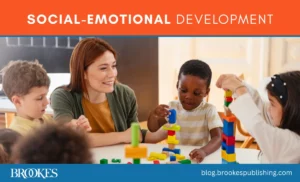
A cornerstone of the February curriculum is the emphasis on Social-Emotional Learning (SEL), particularly through themes of friendship and kindness. While Valentine’s Day often serves as the cultural catalyst for these discussions, the educational objective extends far beyond the exchange of cards. Educators utilize this month to formalize "Kindness Circles" and social-skills training, which are critical for developing empathy and conflict-resolution abilities.
The Chronology of Social Development in the Classroom
In the early months of the school year, social interaction is often "parallel," where children play near each other but not necessarily with each other. By February, there is a documented shift toward "associative" and "cooperative" play. Activities designed for this month capitalize on this developmental leap by encouraging partner work and group problem-solving.

Key strategies employed in the classroom include:
- The Kindness Circle: A daily or weekly forum where children are encouraged to identify and articulate "kind acts" they observed in their peers. This reinforces positive behavior through social validation.
- Collaborative Art Projects: Moving away from individual "product-based" crafts toward large-scale murals or shared sensory experiences that require negotiation and turn-taking.
- Problem-Solving Roleplay: Using puppets or stories to model how to handle common playground disagreements, providing children with a verbal script for empathy.
Literacy and Communication via Thematic Engagement
Valentine’s Day in a professional preschool setting is repurposed as a vehicle for emergent literacy. Rather than focusing on the commercial aspects of the holiday, educators use the concept of "sending messages" to introduce the mechanics of writing and the purpose of written communication.

Integrating Literacy Centers
The introduction of a "Post Office" dramatic play center is a standard but highly effective February intervention. In this environment, children engage in "functional literacy." They are not just drawing; they are "writing" letters, "addressing" envelopes, and "sorting" mail. These activities provide a meaningful context for:
- Letter Recognition: Identifying the first letters of their friends’ names on mailboxes.
- Fine Motor Development: The act of placing stamps, using tape, and folding paper strengthens the intrinsic muscles of the hand, which is vital for later handwriting proficiency.
- Phonemic Awareness: Using rhyming puzzles—such as matching two halves of a heart that feature pictures of "cat" and "hat"—helps children isolate and manipulate sounds in language.
Data from literacy development studies indicate that children who engage in purposeful, play-based writing at age four show higher levels of reading readiness upon entering kindergarten. The February "message-sending" theme provides the high-frequency repetition necessary to solidify these concepts.

Scientific Inquiry and Winter Observation
Despite the thematic focus on warmth and hearts, February remains a peak winter month in many regions, providing an ideal laboratory for meteorological and physical science observations. The preschool science curriculum in February typically shifts from the "wonder" of the first snowfall to more analytical observations of temperature, states of matter, and animal behavior.
Hands-on STEM Exploration
Scientific inquiry in the classroom is often facilitated through sensory tables and observation stations. Common February scientific explorations include:

- Ice and Phase Changes: By bringing snow or ice into the classroom, children observe the transition from solid to liquid. Educators introduce vocabulary such as "melting," "freezing," and "temperature."
- Winter Wildlife Tracking: Observing bird feeders or looking for tracks in the snow introduces basic biological concepts and the idea of environmental adaptation.
- Magnification and Detail: Using magnifying glasses to examine the crystalline structure of ice or the texture of winter evergreen branches encourages children to notice fine details, a precursor to scientific data collection.
These experiences are designed to be concrete. For a preschooler, the abstract concept of "winter" is best understood through the tactile sensation of cold water or the visual evidence of a thermometer rising when brought indoors.
Mathematical Foundations and Predictable Centers
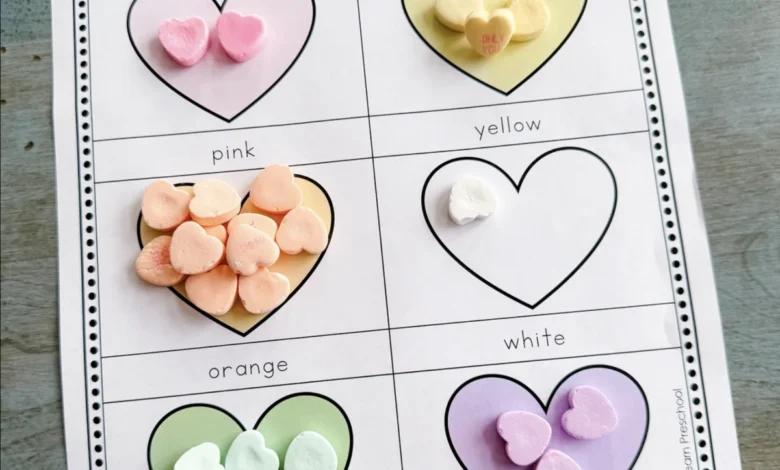
Mathematics in February focuses on number sense, one-to-one correspondence, and pattern recognition. To maintain the "steady feel" of the month, educators often use the same manipulatives used in previous months but with a thematic twist. Counting mats that previously featured pumpkins or snowflakes are replaced with hearts or flowers.

Core Mathematical Concepts Addressed:
- One-to-One Correspondence: Ensuring a child understands that one physical object (like a red gem) corresponds to the number "one."
- Subitizing: The ability to look at a small group of objects (such as 1-3 hearts) and know the quantity without counting them individually.
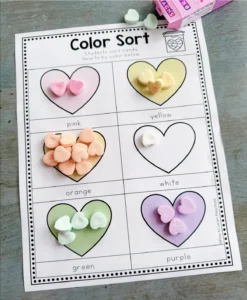
- Sorting and Classification: Organizing materials by color (shades of pink, red, and white) or size, which is a foundational skill for algebraic thinking.
By keeping the instructional format predictable, children can devote their cognitive energy to the mathematical task rather than trying to understand how the game is played. This leads to higher rates of "task completion" and a greater sense of mathematical agency.
Dramatic Play and Cognitive Flexibility
Dramatic play centers, such as a "Flower Shop" or "Valentine Post Office," are essential for developing executive function. When children take on roles—such as a florist, a customer, or a mail carrier—they must engage in "inhibitory control" (staying in character) and "working memory" (remembering the steps of a transaction).

Professional analysis of dramatic play suggests that these scenarios are complex social laboratories. A child running a flower shop must:
- Use expressive language to describe the product.
- Use math skills to "charge" for the flowers.
- Use social skills to greet the customer.
These activities are highly flexible, allowing children of different developmental levels to participate simultaneously. A younger student might simply enjoy the sensory experience of smelling silk flowers, while an older student might create a complex inventory list.

Analysis of Broader Impact and Implications
The structured yet flexible approach to February preschool activities has long-term implications for student success. The emphasis on "routines and conversation" during this month addresses the "word gap" that can exist between children of different socioeconomic backgrounds. By prioritizing high-quality interactions and purposeful play, educators ensure that all children are developing the oral language skills necessary for future reading comprehension.
Furthermore, the focus on kindness and friendship during this period serves as an early intervention against bullying. By teaching three- and four-year-olds how to recognize their emotions and respect the physical and emotional space of others, schools are laying the groundwork for a positive school culture that can persist through the elementary years.

In conclusion, February in the preschool classroom is far more than a month of holiday-themed crafts. It is a strategic period of reinforcement and deepening of knowledge. By leveraging the stability of established routines and the engagement of seasonal themes, educators provide a robust framework for cognitive, social, and physical development. The activities of this month—from the scientific observation of melting ice to the social negotiation of a dramatic play center—are essential components of a comprehensive early childhood education that prepares students for the rigors of the primary grades.