Building Independence in Preschool: How Early Self-Reliance Shapes Lifelong Learning and Confidence

The phrase most frequently heard in modern early childhood classrooms is deceptively simple: “I can do it.” Whether a four-year-old is meticulously attempting to zip a stubborn winter jacket, carefully pouring water into a snack cup without spilling, or choosing which building blocks to integrate into a towering structure, this innate desire for autonomy marks a critical developmental milestone. Far from being mere demonstrations of stubbornness, these everyday acts of agency form the bedrock of self-help skills, emotional resilience, and lifelong academic confidence.
According to developmental psychologists and early education experts, independence is not a trait that appears overnight. Rather, it is a gradual, carefully scaffolded progression built upon predictable daily routines, purposefully arranged classroom environments, and the steady guidance of educators and parents who recognize the delicate balance between offering assistance and stepping back to let children try.
The Evolution of Self-Reliance in Early Childhood

The journey toward preschool independence begins long before a child steps foot inside a classroom. In infancy and toddlerhood, self-reliance starts with sensory exploration and basic motor control, such as finger-feeding or grasping toys. As children transition into the preschool years—typically spanning ages three to five—their cognitive and physical capabilities expand exponentially.
Historically, early childhood education prioritized strict compliance and teacher-directed instruction. However, over the past several decades, extensive research from organizations such as the National Association for the Education of Young Children (NAEYC) and the Child Mind Institute has revolutionized pedagogical approaches. Contemporary educational frameworks emphasize child-centered learning, recognizing that true cognitive development occurs when children are active participants in their own daily experiences rather than passive recipients of instruction.
Developmental data indicates that children who are encouraged to practice autonomy between the ages of three and five exhibit stronger executive function skills later in life. Executive function—which encompasses working memory, mental flexibility, and self-control—is heavily reinforced when children must navigate transitions, remember multi-step classroom routines, and solve minor conflicts with peers without immediate adult intervention.
Why Independence Matters: The Core Benefits

The implications of fostering independence in early childhood extend far beyond the preschool walls. When young children are consistently provided with opportunities to attempt tasks independently, they cultivate an internal locus of control. They begin to understand that their actions yield direct results, reinforcing a growth mindset that treats mistakes not as failures, but as essential steps in the learning process.
Key developmental domains positively impacted by early independence include:
- Cognitive Development: Problem-solving skills are sharpened when children must figure out how to unwrap a stubborn food container, balance an uneven block tower, or figure out where a specific puzzle piece belongs.
- Social and Emotional Growth: Negotiating roles in dramatic play or sharing materials in an art center requires empathy, compromise, and self-regulation. Children learn to manage frustration independently, which directly lowers anxiety during stressful transitions.
- Motor Skill Refinement: Fine and gross motor skills are continuously challenged and improved through practical life tasks, such as manipulating clothing fasteners, pouring liquids, and sweeping up classroom spills.
- Academic Readiness: Confidence derived from mastering daily routines translates into greater risk-taking during academic tasks, such as letter recognition, early math investigations, and storytelling.
Integrating Independence into Daily Classroom Routines
One of the most effective ways educators foster self-reliance is by embedding autonomy directly into the architecture of the daily schedule. Arrival times, snack periods, and classroom transitions are not merely logistical necessities; they are prime learning opportunities designed to transition responsibility from the adult to the child.

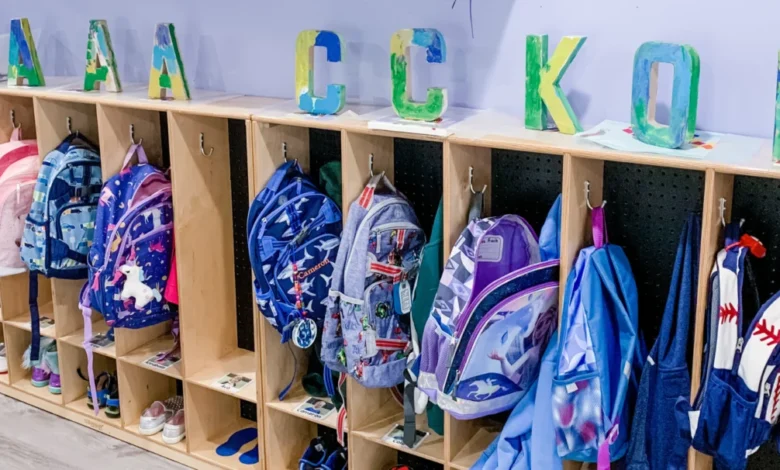
During the morning arrival window, classrooms are deliberately arranged to encourage ownership. Low cubbies, clearly labeled hooks, and visual sign-in stations empower children to manage their own personal belongings. Instead of a teacher hanging up a child’s coat and backpack, the environment is structured so that the child can complete the task independently, fostering a sense of personal responsibility for their space.
Similarly, snack and lunch times serve as practical laboratories for self-help skills. Allowing children to pour their own drinks, open containers, and utilize designated “spill stations” to clean up minor messes teaches accountability and practical life management. When a spill occurs, it is reframed not as an accident to be reprimanded, but as an opportunity for the child to practice problem-solving and self-sufficiency.
Furthermore, the implementation of visual schedules—utilizing picture cards and icons to outline the progression of the day—reduces reliance on constant adult direction. When children can look at a visual board to determine what activity comes next, they gain a sense of predictability and control over their environment, significantly minimizing anxiety and behavioral friction during transitions.
Classroom Centers as Incubators for Choice and Exploration

Beyond structured routines, preschool learning centers play a pivotal role in cultivating independence. Environments such as dramatic play, block construction, art stations, and sensory tables are specifically designed to give children the freedom to make choices, test hypotheses, and carry out creative ideas alongside their peers.
In the dramatic play area, accessible props allow children to orchestrate their own narratives, negotiate social roles, and clean up materials without heavy adult orchestration. In the block and construction center, open-ended access to diverse building materials invites children to plan, build, and adapt when their architectural designs encounter structural failures.
Art and sensory centers are similarly stocked with open-ended supplies stored in low, clearly labeled bins. This accessibility encourages uninhibited creativity and experimentation. Rather than following rigid, step-by-step adult directions to produce identical craft projects, children utilize these spaces to explore texture, color, and medium on their own terms, learning to trust their unique creative instincts.
The Crucial Role of the Educator: Scaffolding vs. Over-Assisting

A delicate balance exists between providing necessary support and fostering true independence. Early childhood educators are trained in the art of "scaffolding"—a teaching method that offers temporary support to a child mastering a new skill and gradually withdraws that support as the child becomes more proficient.
The primary challenge for many educators and parents alike is resisting the urge to step in too quickly. When an adult rushes to tie a child’s shoes, zip a jacket, or solve a peer dispute simply because it is more efficient, they inadvertently communicate to the child that they are incapable.
Professional educators employ specific strategies to support autonomy without fostering frustration:
- Waiting Patiently: Allowing extra time for children to process instructions and attempt physical tasks independently.
- Asking Open-Ended Questions: Instead of providing answers, teachers ask guiding questions such as, "What could we try next?" or "How can we solve this problem together?" to stimulate critical thinking.
- Establishing Clear, Consistent Boundaries: Providing a structured framework where children know what is expected of them, allowing them to navigate their choices safely within those parameters.
Bridging the Gap: Communicating with Families

One of the most persistent hurdles in fostering early independence is bridging the expectations between the classroom and the home environment. Families frequently experience time crunches during morning departures or evening routines, making it tempting to complete tasks for their children to save time. Additionally, well-meaning family members may view tasks like messy sensory play or self-feeding as inefficient or overly chaotic.
To address this, early childhood programs place a heavy emphasis on parent communication. Educators utilize parent-friendly handouts, workshops, and digital newsletters to explain the long-term cognitive and emotional value of early self-reliance. By providing families with practical strategies—such as setting aside extra time in the morning for children to dress themselves or involving them in simple kitchen meal-prep tasks—schools ensure that the momentum of independence is maintained outside the classroom.
Broader Implications and Future Outlook
As educational landscapes continue to evolve, the emphasis on foundational socio-emotional skills like independence remains paramount. Educational analysts note that early childhood programs prioritizing self-reliance produce students who demonstrate higher levels of adaptability and resilience when faced with the more rigorous academic and social demands of elementary school and beyond.

Ultimately, building independence in preschool is not about rushing children to grow up or demanding that they manage complex tasks prematurely. It is about honoring their innate capability through small, consistent moments of trust repeated day after day. By providing structured environments, thoughtful routines, and patient guidance, educators and families lay an enduring foundation where every child feels empowered to declare, with well-earned confidence, “I can do it.”
Related posts: