The Power of the Affirmative: How Extended Family Dynamics and the Role of the Modern Aunt Are Shaping Family Support Systems

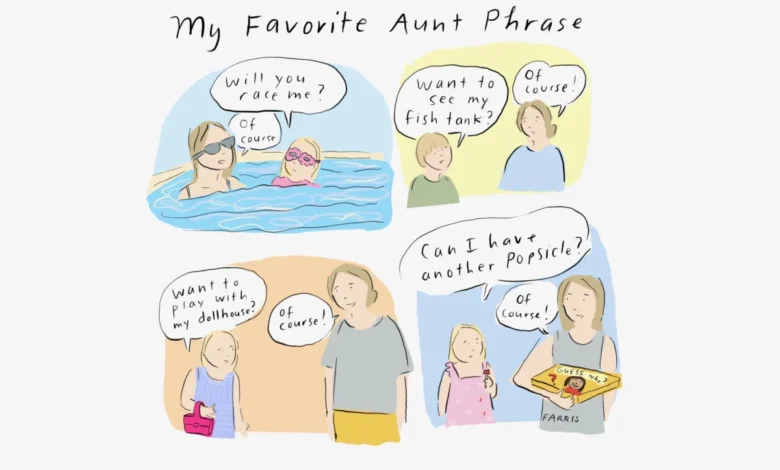
In contemporary family sociology, the architecture of child-rearing and familial support has evolved significantly beyond the traditional nuclear household. Recent community discussions and sociological observations highlighted in mid-September 2026 have cast a spotlight on an often-underestimated demographic within the family unit: aunts, uncles, and chosen extended family members. Often encapsulated by the cultural phenomenon of the "yes aunt" or the instinctive response of unwavering affirmation—frequently summarized by the phrase "of course"—extended family members are playing an increasingly vital role in emotional regulation, child development, and the overall resilience of family networks. This article examines the psychological impact of affirming adult figures, the logistical strategies used to maintain these bonds across geographical divides, and the broader socioeconomic implications of expanding the caregiving circle.
The Psychological Impact of Unconditional Affirmation
Child development experts have long emphasized the importance of positive reinforcement and validation in early childhood. While parents shoulder the daily burdens of discipline, routine establishment, and boundary enforcement, extended family members—particularly aunts and uncles—often occupy a unique relational space. Unencumbered by the primary disciplinary responsibilities of parenthood, these figures frequently adopt an overwhelmingly affirmative posture toward children’s requests, creativity, and exploratory endeavors.
Participants in recent public forums shared anecdotes illustrating this dynamic, noting that responding to a child’s request to share an experience or activity with enthusiastic validation—such as "heck yeah" or the quintessential "of course"—frequently elicits profound expressions of joy and surprise. Psychologists suggest that this dynamic fosters a sense of unconditional positive regard. When a child encounters an adult who greets their curiosity with unreserved enthusiasm, it validates their interests and strengthens their self-esteem.
Furthermore, this dynamic is not strictly unidirectional. For many adults, stepping into the role of an affirming aunt or uncle provides emotional restoration. Individuals facing fertility challenges, childlessness, or geographical separation from traditional family structures frequently report that investing love into their nieces and nephews—often referred to affectionately in modern parlance as "nibblings"—alleviates feelings of isolation and provides a profound sense of purpose. For adults navigating grief, estrangement, or the complexities of modern life, these relationships serve as a vital anchor of emotional continuity.
Geographical Challenges and Modern Bridge-Building Strategies
As domestic and international migration patterns disperse family members across vast distances, maintaining close-knit relationships between aunts, uncles, and young children presents substantial logistical hurdles. Contemporary families have increasingly relied on digital innovations and creative communication strategies to bridge the physical gap, particularly when dealing with toddlers and young children who may lack the attention span for conventional telephone conversations.
To evaluate how modern families overcome distance, researchers and family therapists have cataloged several effective engagement techniques currently practiced across households:
- Asynchronous Video Exchanges: Rather than relying solely on real-time video calls, family members engage in recorded question-and-answer exchanges. A child and an aunt or uncle might trade daily inquiries about favorite foods, daily activities, or imaginative scenarios, allowing the relationship to compound organically over time.
- Targeted Physical Mail: In an era dominated by digital screens, the receipt of physical mail—ranging from postcards and stickers to pop-rocks and hand-drawn pictures with return envelopes—provides tactile excitement for young children.
- Virtual and Shared Activities: Families separated by oceans have utilized synchronized baking challenges, collaborative puzzle-solving, and the exchange of custom photo board books featuring family members to maintain cognitive and emotional familiarity.
- Themed Traditions: Establishing recurring rituals, such as dedicated annual days where a child’s wishes are met with unconditional affirmation within safe boundaries, creates anticipated milestones that reinforce familial bonds.
These interventions demonstrate a deliberate shift from passive familial presence to active, intentional relationship-building, ensuring that geographical distance does not equate to emotional detachment.
Case Studies in Extended Family Support Systems
The societal value of extended family networks extends far beyond casual recreation; they frequently act as vital safety nets during critical life transitions. Case examples from across North America illustrate how aunts and uncles step into essential caregiving roles when parents face medical emergencies, logistical conflicts, or unexpected life crises.
In instances where parents are unable to attend significant milestones—such as university orientation weekends due to scheduled surgeries or health emergencies—extended family members frequently step in as trusted proxies. This institutionalized flexibility relieves immense pressure on primary caregivers, ensuring that children do not miss out on pivotal life events due to familial constraints.
Similarly, sentimental exchanges within extended families—such as the transfer of cherished personal items during periods of anticipated medical procedures—underscore the deep emotional currency these relationships hold. Sociologists note that these tangible expressions of solidarity reinforce a sense of intergenerational continuity and mutual care that is increasingly vital as modern nuclear families face rising levels of social isolation.
Sociological Implications and the Future of Chosen Kinship
The growing cultural emphasis on the role of the "nearby aunt" reflects a broader transformation in how society conceptualizes family structures. With shifting marriage rates, changing birth demographics, and the rise of urban migration, traditional support systems are being reconfigured to accommodate "chosen family" and non-traditional kinship models.
Public commentary and community engagement surrounding these dynamics suggest a collective yearning for hyper-local community support. Individuals residing in metropolitan areas without biological relatives nearby frequently seek out neighborhood aunt and uncle figures to recreate the village dynamic historically associated with tight-knit communities. This phenomenon points to an innate human requirement for distributed caregiving—a system where the responsibility of nurturing the next generation is shared among a wider circle of invested adults.
Public policy analysts and family sociologists suggest that recognizing and supporting these extended networks could have positive downstream effects on public health and community resilience. As institutional child care costs rise and work-life balance pressures intensify, robust extended family and chosen-kin networks provide essential respite for overburdened parents while enriching the social and emotional landscape of growing children.
Ultimately, whether expressed through an enthusiastic "of course" in response to a childhood request, the mailing of a thoughtful postcard across state lines, or stepping in during a time of medical crisis, the modern extended family continues to adapt. By prioritizing intentional engagement, emotional availability, and unconditional support, aunts, uncles, and mentors are proving that the architecture of family is defined less by biological proximity and more by the conscious choice to show up—enthusiastically and repeatedly—for one another.