Transforming the Early Childhood Classroom: How Educator-Designed Bear Themes Integrate Multi-Disciplinary Learning

Early childhood educators across the country are increasingly turning to thematic units to satisfy developmental milestones in preschool classrooms. Among the various animal-based curriculums implemented in early education, bear-themed units have emerged as a premier pedagogical tool. From fuzzy teddy bears found in home toy chests to enormous polar bears navigating arctic ice flows, bears naturally capture the imagination of young learners. By pivoting instructional strategies around ursine species, educators successfully weave science, mathematics, literacy, and dramatic play into a cohesive and functional framework.
The implementation of a bear unit offers a seamless transition from large-group circle time discussions into individualized learning centers. According to early childhood education specialists, thematic learning allows children to build cognitive scaffolding by examining a single subject through multiple academic lenses. Rather than teaching math, science, and reading in isolation, a comprehensive bear unit contextualizes these disciplines, yielding heightened student engagement and enhanced knowledge retention.
Taxonomic Explorations and Anatomy Recognition

The foundational phase of any comprehensive bear curriculum typically begins with species identification. Because young children often possess a generalized concept of what constitutes a bear, educators introduce photographic evidence of diverse species—including grizzly bears, black bears, giant pandas, and sun bears—to foster comparative analysis.
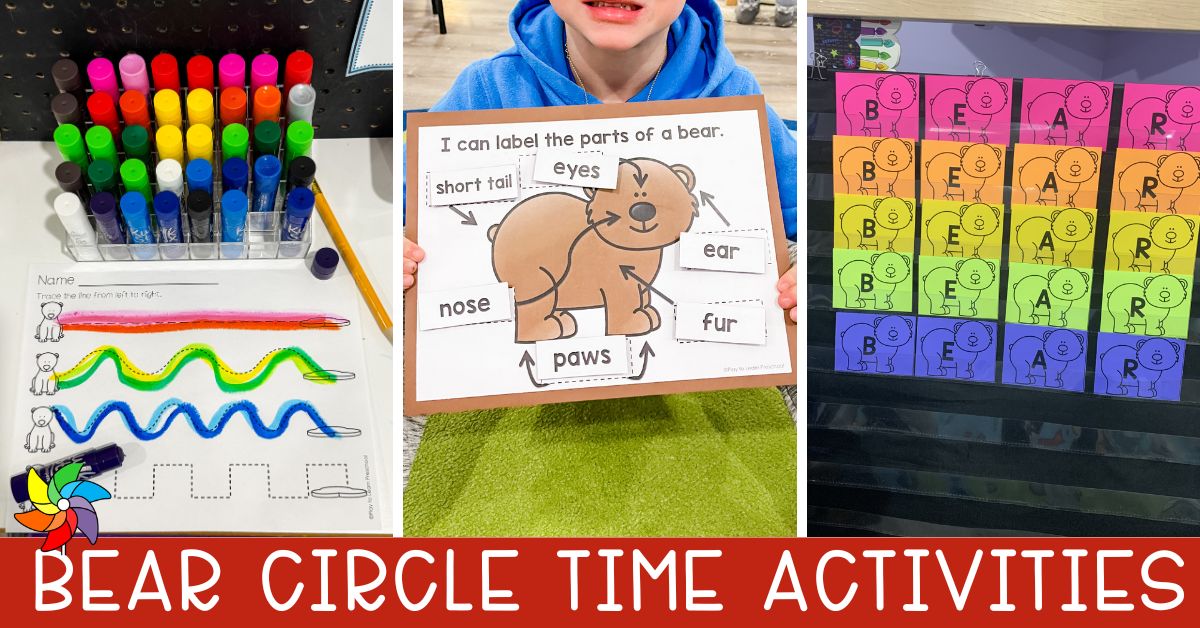
Classroom activities frequently incorporate sorting mechanisms, challenging students to distinguish between bears and non-bear animals based on physical attributes. Educators highlight key anatomical features such as rounded ears, short tails, robust paws, dense fur, and non-retractable claws. To support foundational scientific vocabulary, classrooms utilize labeled anatomical diagrams, introducing students to basic biological nomenclature at an early age.

This taxonomic inquiry serves a vital developmental purpose. Cognitive development research indicates that children aged three to five learn best through comparative classification. By analyzing differences in size, coloration, and geographical distribution, preschoolers develop critical observation skills that lay the groundwork for formal scientific inquiry in later grade levels.
Real-Time Wildlife Observation via Digital Integration

While direct physical observation of live bears in a traditional classroom setting remains impractical and unsafe, modern educational technology has bridged the gap between the classroom and the wild. Educators increasingly incorporate live-streaming webcams into their daily routines, allowing students to observe wildlife in real time.
Prominent institutions have made their animal enclosures accessible for educational use. The Smithsonian National Zoological Park offers a widely utilized Giant Panda Cam, while the Wolong National Nature Reserve in China broadcasts live feeds across multiple panda habitats. For North American species, the North American Bear Center provides multi-habitat viewing of black bears, and Katmai National Park in Alaska offers live footage of brown bears hunting salmon at Brooks Falls. Additionally, polar bear habitats can be monitored via the San Diego Zoo’s specialized webcams.

To translate passive viewing into active learning, educators establish dedicated observation stations equipped with clipboards, pencils, and structured recording charts. Students document observed behaviors—such as feeding, foraging, climbing, or resting—while older preschoolers aggregate this data using simple tally systems. This integration of technology and data collection introduces foundational empirical research methods to early learners.
Seasons and Survival: The Science of Hibernation

A critical component of any ursine curriculum is the scientific study of hibernation, an evolutionary adaptation that introduces students to seasonal changes and animal biology. Through structured science center activities, preschoolers explore how bears prepare for winter by consuming large quantities of food and locating secure dens.
The introduction of specialized vocabulary, including terms such as hibernation, adaptation, and habitat, significantly accelerates linguistic development among young learners. Educators frequently construct simulated dens—often referred to in the classroom as "caves"—using natural materials like pinecones, rocks, and shredded paper. These tactile environments encourage experiential learning, allowing children to physically manipulate materials to understand how animals survive adverse environmental conditions.

Mathematical Applications and Sensory Integration
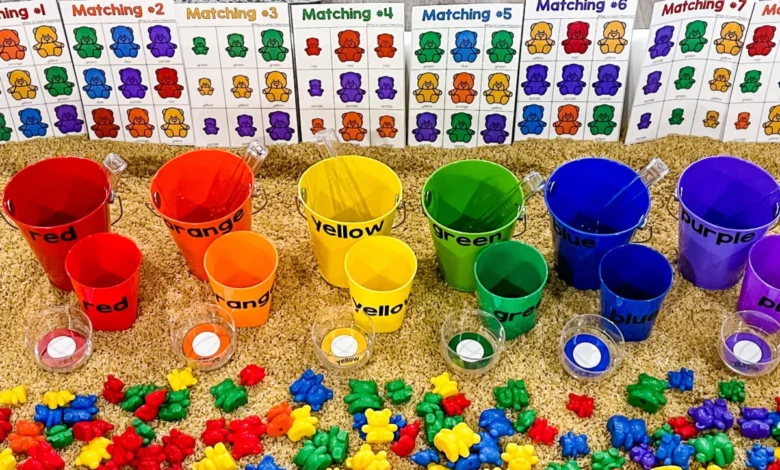
Beyond biological sciences, bear themes provide a versatile backdrop for mathematical instruction and sensory exploration. Educators frequently utilize standardized plastic bear counters in small-group settings to teach fundamental mathematical concepts, including counting, color sorting, size comparison, and pattern recognition.

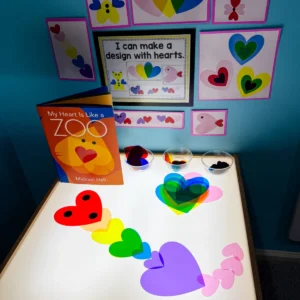
By utilizing manipulative objects, students explore early algebraic and geometric thinking. Children practice comparative terminology—such as more, fewer, and equal—by grouping bears into designated containers. The inclusion of translucent bear counters at light-table stations further enhances visual stimulation, allowing students to explore light refraction while engaging in numerical exercises.
Sensory tables are similarly transformed into miniature forest habitats. Filled with tactile elements like sensory beans, artificial moss, and miniature figurines, these stations encourage fine-motor skill development through scooping, burying, and sorting exercises. Educators frequently integrate measurement tasks by providing graduated containers, prompting students to explore concepts of volume and capacity within a thematic context.

Literacy Development and Narrative Retelling
Language arts integration forms a pillar of the preschool bear curriculum, leveraging classic literature and contemporary children’s books to foster pre-reading skills. While traditional fairy tales such as Goldilocks and the Three Bears remain staples of early education, modern titles—including Karma Wilson’s Bear Snores On—are frequently utilized to expand literary exposure.
To cultivate a welcoming reading environment, classrooms often feature cozy reading corners populated with soft, stuffed teddy bears, encouraging children to engage in emergent literacy behaviors by "reading" to their plush companions. Furthermore, educators utilize felt boards and laminated character cut-cs equipped with hook-and-loop fasteners to facilitate story retelling.
Literacy specialists emphasize that interactive storytelling significantly improves comprehension and narrative sequencing among preschoolers. By physically manipulating characters on a flannel board as a story progresses, children internalize plot structures, vocabulary, and sentence syntax, directly supporting future reading proficiency.

Socialization and the Traditional Teddy Bear Picnic
The culmination of a comprehensive bear unit traditionally involves a community-building event: the teddy bear picnic. This experiential activity encourages students to bring a personal stuffed bear from home, fostering a bridge between the home environment and the formal classroom setting.

During the event, children participate in oral presentations by introducing their bears to their peers, thereby practicing public speaking and social communication skills in a low-stakes environment. Classroom activities during the picnic often include collaborative sorting exercises, where students categorize the gathered bears by physical characteristics such as size, coloration, or clothing accessories. The event typically concludes with a communal snack, occasionally featuring thematic culinary projects such as teddy bear-shaped toast.
Broader Pedagogical Implications and Industry Reception

The sustained popularity of bear-themed preschool curriculums highlights a broader shift toward holistic, inquiry-based education in early childhood settings. Educational analysts note that thematic units successfully counteract the fragmentation of early education by unifying distinct academic disciplines under a single, highly engaging umbrella.
Curriculum developers report high demand for structured, pre-planned thematic units that reduce lesson-planning burdens for educators while maintaining high academic standards. As school districts increasingly prioritize experiential, hands-on learning paradigms, the integration of science, math, and literacy through animal-based themes remains a cornerstone of effective early childhood pedagogy. Through careful balance of digital observation, tactile experimentation, and narrative storytelling, bear units continue to prove their enduring value in shaping foundational cognitive and social skills for the youngest learners.