Selecting the appropriate infant car seat represents one of the most significant logistical and safety-oriented decisions new parents must make. In the current market, UPPAbaby, a brand synonymous with premium juvenile gear, has solidified its position by offering a bifurcated strategy for infant mobility: the established, robust UPPAbaby Mesa series and the ultra-lightweight, innovation-forward UPPAbaby Aria. Understanding the technical specifications, safety engineering, and ergonomic differences between these two models is essential for families aiming to optimize both vehicle safety and daily convenience.
The Evolution of the UPPAbaby Infant Car Seat Portfolio
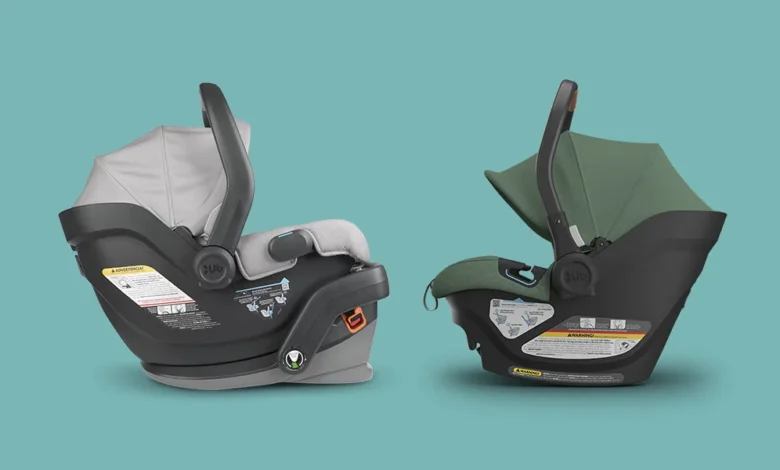
The UPPAbaby Mesa has long served as the flagship infant carrier for the company, celebrated for its ease of installation and seamless integration into the UPPAbaby stroller ecosystem. Since its inception, the Mesa has undergone several iterations, culminating in the V2 and Max models. The core philosophy of the Mesa series has remained consistent: high-density construction, intuitive LATCH systems, and a rigid, protective shell designed to absorb energy during impact.
Conversely, the introduction of the UPPAbaby Aria marks a strategic shift toward solving a common parental grievance: the physical strain associated with carrying heavy infant seats. By utilizing advanced, lightweight materials without compromising the rigorous safety standards UPPAbaby is known for, the Aria represents a modern evolution in seat design. Released to cater to urban dwellers and parents who prioritize mobility, the Aria bridges the gap between traditional heavy-duty safety seats and the need for a portable, maneuverable solution.
Comparative Analysis: Engineering and Physical Specifications
When evaluating the Mesa against the Aria, the most immediate discrepancy is the weight. The standard Mesa V2 weighs approximately 9.9 lbs (excluding the canopy and insert), a weight profile consistent with industry standards for high-end, feature-rich carriers. This weight is largely attributed to the reinforced shell and the integrated safety mechanisms that provide the "tank-like" security parents often associate with the UPPAbaby brand.
In stark contrast, the UPPAbaby Aria represents a masterclass in weight reduction. At approximately 5.9 lbs (without canopy and insert), the Aria is significantly lighter than the Mesa, providing a weight reduction of roughly 40%. This drastic difference is achieved through the use of high-strength, lightweight polymers and a streamlined structural design. For parents navigating public transit, climbing stairs to an apartment, or those who simply find the traditional 10-lb carriers physically taxing, the Aria’s weight profile offers a compelling value proposition.
However, this weight reduction necessitates a trade-off in the upper growth limits. The Mesa is rated for infants weighing between 4 and 35 lbs and up to 32 inches in height. The Aria is rated for 4 to 30 lbs and up to 30 inches. While both cover the critical first months of a child’s development, the Mesa provides a slightly longer usage lifespan, which may be a deciding factor for parents concerned about the duration of the seat’s utility.
Ventilation, Canopy Design, and Thermal Comfort
Thermal regulation is a critical, yet often overlooked, aspect of car seat design. Infants are highly susceptible to overheating, particularly when strapped into a seat that lacks adequate airflow.
The Mesa features a substantial UPF 25+ hideaway canopy that provides excellent protection from UV rays and environmental elements. However, it lacks the integrated ventilation channels found in the newer Aria model. Recognizing the needs of families living in diverse climates, UPPAbaby equipped the Aria with a comprehensive ventilation system. The Aria’s canopy includes back panel ventilation and a pop-out extended sunshade. This configuration facilitates a constant cross-breeze, significantly reducing the heat retention often reported in more enclosed infant seats. Furthermore, the Aria’s shell is engineered with enhanced ventilation, promoting airflow throughout the carrier to ensure the child remains at a comfortable temperature during extended travel.
Headrest Systems and Harness Mechanics
The harness and headrest configuration dictates not only the safety of the child but the ease of use for the parent. The Mesa series employs a 4-position, two-handed adjustable headrest paired with a no-rethread 5-point harness system. The no-rethread feature is a significant convenience, as it allows the harness to grow with the child without requiring the parent to disassemble and re-thread the straps.
The Aria takes a different approach, focusing on granular adjustability. It features a 25-position headrest. While it does not offer the same "no-rethread" simplicity as the Mesa, the sheer range of positions allows for a highly customized fit, accommodating the specific growth patterns of an infant with greater precision. Both seats utilize two-handed adjustment mechanisms, ensuring that while they differ in the number of positions, the operational experience remains consistent for the caregiver.
Safety Features and Installation Infrastructure
Both the Mesa and the Aria leverage UPPAbaby’s proprietary SmartSecure® system. This includes an auto-retracting LATCH connector and a built-in vehicle seat belt lock-off, both of which are designed to eliminate the most common errors in car seat installation. The "Red to Green" visual indicator provides immediate, objective feedback, confirming that the base has been installed with the correct tension—a feature that has been widely lauded by safety advocates and certified child passenger safety technicians (CPSTs).
It is important to note that the Mesa Max and the Aria both include a load leg and an Anti-Rebound+ panel, which significantly enhance stability and reduce rotation during a collision. These features are standard in the higher-tier UPPAbaby offerings and provide an added layer of safety that exceeds basic regulatory requirements. The presence of these features in both the high-end Mesa and the lightweight Aria demonstrates that UPPAbaby does not prioritize weight reduction at the expense of core safety performance.
Material Science and Environmental Standards
A significant selling point for both the Mesa and the Aria is the commitment to chemical-free materials. Both models utilize fabrics and foams that are entirely free from fire-retardant chemicals. This is a crucial consideration for modern parents, as the juvenile product industry has moved away from traditional flame retardants in favor of inherently fire-resistant materials and designs.
Both seats are GREENGUARD® Gold Certified, meaning they meet rigorous standards for low chemical emissions, contributing to better indoor air quality in the vehicle. The fabrics in both lines are machine washable, acknowledging the reality of the spills and messes inherent in infant care.
Financial Implications and Market Positioning
The pricing structure of these models reflects their specific engineering goals. The Mesa V2, typically retailing at $329.99, is positioned as the standard-bearer for the brand. The Mesa Max, which includes advanced safety features like the load leg, is priced at $399.99. The Aria, priced at $349.99, occupies a unique space in the market: it is more expensive than the base Mesa but offers specialized features—namely the weight reduction and advanced ventilation—that the standard model lacks.
For the consumer, the choice between these seats is a calculation of lifestyle requirements versus budget. The Mesa is an investment in a proven, high-durability system, while the Aria is an investment in ergonomic efficiency and thermal comfort.
Summary of Differences
| Feature | Mesa V2 | Mesa Max | Aria |
|---|---|---|---|
| Weight (Carrier) | 9.9 lbs | 9.9 lbs | 5.9 lbs |
| Max Child Weight | 35 lbs | 35 lbs | 30 lbs |
| Headrest Positions | 4 | Infinite | 25 |
| Ventilation | Limited | Shell-based | Enhanced Shell/Canopy |
| Load Leg | No | Yes | Yes |
Broader Impact and Conclusion
The competition between the Mesa and the Aria reflects a broader trend in the juvenile products industry: the diversification of product lines to meet the specific needs of modern families. While the Mesa remains a reliable, high-performance choice for those who value a traditional, heavy-duty carrier, the Aria addresses the physical demands of modern parenting in high-density or high-activity environments.
Ultimately, the choice between these two UPPAbaby products should be dictated by the specific usage patterns of the family. Those who prioritize the maximum weight capacity and a proven, long-term track record may gravitate toward the Mesa series. Conversely, those who prioritize the ease of physical handling and optimized comfort in warm-weather environments will likely find the Aria to be the superior choice. Regardless of the decision, the fact that both seats adhere to the same stringent safety protocols, including GREENGUARD® Gold Certification and advanced, fire-retardant-free material construction, ensures that parents can make their selection with confidence in the structural integrity of their choice. As the market for infant travel systems continues to evolve, UPPAbaby’s commitment to providing distinct options within a high-safety framework remains a critical component of their continued market leadership.