Empowering Student Success Through Executive Function: The Evolution and Impact of the Unstuck and On Target Curriculum

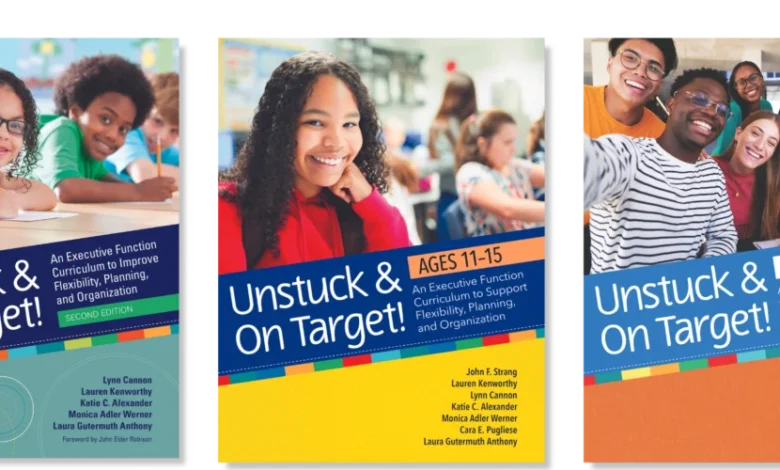
In an educational landscape increasingly defined by the need for cognitive flexibility, emotional regulation, and persistent goal-directed behavior, the development of executive function (EF) skills has emerged as a cornerstone of student success. As schools grapple with rising rates of student anxiety and behavioral challenges, evidence-based interventions have become vital tools for educators. Among these, the Unstuck and On Target! curriculum has established itself as a significant resource for school districts, recently expanding its scope with the launch of a dedicated program for adolescents and young adults aged 14 to 22.
The Foundation of Executive Function
Executive function refers to the neurocognitive processes that enable individuals to manage their thoughts, actions, and emotions to achieve specific goals. These skills include working memory, inhibitory control, and cognitive flexibility—the ability to adapt to changing circumstances. In the classroom, deficits in these areas often manifest as an inability to transition between tasks, difficulty following multi-step instructions, or significant emotional dysregulation when faced with obstacles.
The Unstuck and On Target! curriculum was designed to bridge the gap between neurological development and classroom performance. By utilizing small-group instruction, the program employs visual aids, engaging scripts, and interactive role-play scenarios to teach students how to identify "stuck" points and develop "flexible" responses. Since its initial debut in 2011, the program has undergone rigorous refinement, moving from its roots in elementary education to a comprehensive, multi-tiered system that now spans the developmental spectrum from early school years through early adulthood.
A Chronology of Development
The trajectory of the Unstuck curriculum reflects a decade-long shift in pedagogical approaches toward social-emotional learning (SEL).
- 2011: The original Unstuck and On Target! curriculum is released, primarily targeting elementary students struggling with executive function challenges often associated with autism spectrum disorder and ADHD.
- 2012–2015: Early implementation studies begin in Title I schools, focusing on diverse populations to test the efficacy of the curriculum in varied socioeconomic contexts.
- 2016–2020: Data analysis from these pilot programs confirms that the curriculum does more than just improve behavior; it fosters academic gains by reducing time spent on behavioral redirection.
- 2023–2025: Developers identify a critical need for an older demographic as teens transition into secondary and post-secondary environments.
- 2025: The release of the newest iteration of the curriculum specifically tailored for the unique cognitive and social demands of students aged 14–22.
Empirical Validation and Performance Data
The efficacy of Unstuck and On Target! is rooted in comparative research. During the program’s development, researchers conducted studies in Title I elementary schools, placing the curriculum against standard Contingency Behavior Management (CBM) programs. The findings were statistically significant: students who participated in the Unstuck modules demonstrated a greater capacity for flexible problem-solving and goal attainment than their peers in the control groups.
Beyond academic metrics, qualitative data collected through student interviews underscores the program’s impact. One participant noted that the primary benefit of the intervention was the development of "multiple plans." The student explained that by creating contingency plans, they were able to navigate frustration more effectively, avoiding the "stuck" state that often led to conflict. Another student reported that the curriculum provided a cognitive pause button—a moment to reflect on whether a specific emotional reaction was necessary or helpful, thereby fostering better social outcomes with peers and teachers.
Institutional Implications for Districts
The adoption of an executive function curriculum involves a strategic investment of time and resources. For school administrators, the justification for implementing Unstuck lies in the "recovery of instructional time." Teachers frequently report that a significant portion of the school day is consumed by managing behavioral interruptions. By front-loading these skills through structured lessons, the curriculum aims to transform the classroom environment from one of reactive management to proactive self-regulation.
The implications for student outcomes are longitudinal. Unlike interventions that offer temporary behavioral fixes, the skills taught in this curriculum are designed to be generalized. Once a student learns the language of "being flexible" or "staying on target," these concepts become internalized, allowing them to apply the same strategies in home, community, and future professional environments.

Flexibility in Implementation
One of the primary challenges for modern educators is the "initiative fatigue" caused by the introduction of numerous competing programs. Developers of the Unstuck series have accounted for this by prioritizing flexibility. The curriculum is modular, allowing teachers to integrate lessons into existing schedules without requiring a complete overhaul of the classroom structure.
Furthermore, the program addresses the essential home-school connection. Each lesson includes a "home extension" component. These materials provide parents with the tools to reinforce the same terminology and strategies used in the classroom. This consistency is vital, as research indicates that when students practice executive function strategies across multiple settings, their ability to retain and generalize those skills increases significantly.
Addressing the Needs of Adolescents and Young Adults
The 2025 launch of the teen-focused version of the curriculum acknowledges that the executive function demands placed on 14- to 22-year-olds are distinct from those placed on younger children. At this developmental stage, executive function is tied to autonomy, complex social navigation, and the beginning stages of independent living.
The newest modules focus on goal-directed behavior that aligns with the realities of secondary education and the early workforce. This includes managing complex assignments, balancing competing social priorities, and navigating the emotional volatility that often accompanies adolescence. By providing a framework for these challenges, the curriculum serves as a scaffold for the independence that this demographic is expected to achieve.
Analyzing the Broader Educational Context
The shift toward explicit instruction in executive function is part of a broader trend in educational policy. As standardized testing becomes more rigorous and the digital age demands higher levels of sustained attention, the capacity for cognitive regulation has become as important as content mastery.
From an administrative perspective, investing in such curricula is increasingly viewed as a form of "preventative maintenance." By addressing the underlying cognitive barriers to learning, districts can reduce the long-term reliance on more intensive, costly special education interventions. While the initial investment—both in terms of purchasing materials and training staff—is tangible, the anticipated return is a more resilient student body and a more sustainable classroom environment.
Conclusion and Future Outlook
As schools continue to evolve, the integration of programs like Unstuck and On Target! highlights a move toward holistic education. By acknowledging that academic success is inextricably linked to cognitive and emotional regulation, the education sector is better positioning students for the complexities of the 21st century.
For districts considering the adoption of such resources, the evidence suggests that the impact of the curriculum extends far beyond the duration of the lessons themselves. Through the use of consistent language, visual reinforcement, and a focus on transferable life skills, the program provides a structural framework for long-term growth. As the latest iteration of the curriculum reaches classrooms, educators will continue to monitor how these interventions support the developmental trajectory of students, ensuring that they are not only "on target" for their academic goals but also equipped with the tools necessary for success in their personal and professional lives.
For schools aiming to implement these strategies, the emphasis remains on the practical application of these lessons. With a proven track record, a solid research foundation, and a clear focus on the needs of both teachers and students, the Unstuck and On Target! curriculum represents a significant, evidence-based advancement in the effort to improve executive functioning in educational settings.
Related posts: