Five Myths and Truths About Multi-Tiered Systems of Support for Young Children

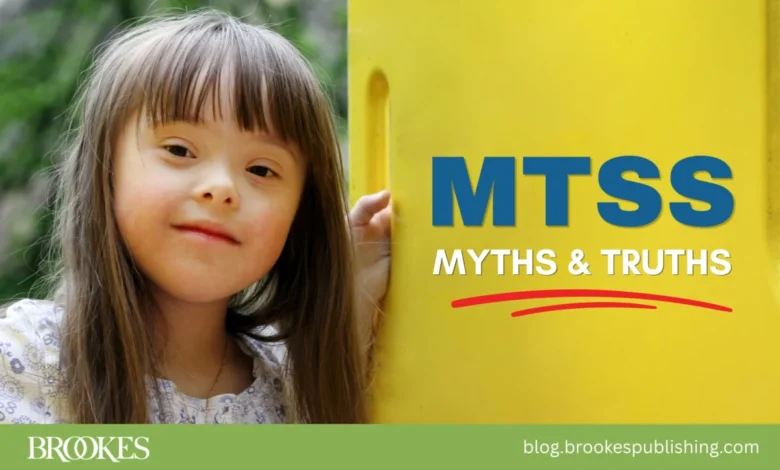
Multi-tiered systems of support (MTSS) have become a cornerstone of modern early childhood education, offering a structured framework to address the diverse learning needs of children before they enter kindergarten. By providing a graduated intensity of instructional support, MTSS ensures that educational interventions are data-driven, timely, and responsive to individual student growth. However, as these frameworks become increasingly ubiquitous in preschools and early learning centers, significant misconceptions have emerged regarding how these systems interact with special education services and students with identified disabilities. Addressing these misunderstandings is critical for educators, administrators, and parents to ensure that all children receive the support required to thrive.
The Evolution and Context of MTSS in Early Education
The origins of MTSS in early childhood education can be traced back to the broader Response to Intervention (RTI) models developed for K-12 education in the early 2000s. The core philosophy—that students should not have to wait for a total breakdown in learning before receiving help—was adapted for the preschool population to emphasize developmental readiness. By 2010, the U.S. Department of Education and the Office of Special Education Programs (OSEP) began promoting the integration of these models into early intervention systems to bridge the gap between universal screening and specialized instruction.
Today, MTSS is defined by a three-tiered structure. Tier 1 involves high-quality core instruction for all students. Tier 2 provides supplemental support for children who may need extra help to meet developmental milestones. Tier 3 offers intensive, individualized intervention for students with the most significant learning or behavioral challenges. Despite this clear architecture, the intersection of these tiers with the legal requirements of the Individuals with Disabilities Education Act (IDEA) remains a point of confusion.
Myth 1: The Exclusion of Students with IEPs
A pervasive myth suggests that students already receiving services under an Individualized Education Program (IEP) are ineligible for participation in MTSS. In reality, the two systems are complementary rather than mutually exclusive. Legal experts and educational policy advocates maintain that an IEP represents a legal contract for specific services based on a student’s identified disability, but it does not account for the entirety of a child’s instructional needs.
Data suggests that a child with a primary diagnosis, such as a speech-language impairment, may also experience temporary lags in early numeracy or social-emotional regulation. Under a robust MTSS framework, this student can receive specialized instruction for their communication goals via their IEP while simultaneously benefiting from Tier 2 math interventions. This approach prevents the "siloing" of services and ensures that students do not fall behind in areas outside of their primary disability.
Myth 2: MTSS as a Replacement for Special Education
There is a common, yet erroneous, belief that implementing MTSS allows districts to bypass the legal requirements of early childhood special education (ECSE). Educators and administrators must understand that MTSS is an instructional framework, not a legal pathway for service delivery under IDEA. If a child meets the eligibility criteria for a disability, they are legally entitled to an evaluation and, if found eligible, the provision of a free appropriate public education (FAPE).
MTSS serves as a mechanism to enhance the quality of instruction for all students, including those with disabilities. It does not replace the mandated individualized goal-setting required by an IEP. Policy analysts argue that treating MTSS as a replacement for special education would constitute a violation of federal law, as OSEP has repeatedly emphasized that no system may be used to obstruct or delay a parent’s right to request an evaluation for special education services.
Myth 3: The "Wait to Fail" Fallacy
Perhaps the most damaging myth in the educational sector is the notion that a child must progress through, and ultimately "fail," all three tiers of MTSS intervention before a school will consider a special education evaluation. This practice, often referred to as "waiting to fail," has been explicitly discouraged by federal regulators.
The timeline for intervention should be dictated by the child’s rate of progress and the intensity of their needs. If data from initial screenings or classroom observations indicate a significant disability, the referral process for an evaluation must begin immediately. MTSS is designed to provide rapid support, not to create a bureaucratic hurdle that prevents students from accessing the comprehensive assessments necessary for long-term development.
Myth 4: Disability Dictates Tiered Intensity
Another misconception is that the mere presence of a disability automatically places a child in the most intensive tier of support (Tier 3). In practice, the intensity of instruction is determined by a team-based problem-solving process that relies on progress-monitoring data rather than a medical diagnosis alone.
A student with a mild disability might make sufficient progress within a general education classroom with minor accommodations, while a student without a disability might require Tier 3 intensive intervention due to significant delays in foundational skills. The fluid nature of MTSS allows for "instructional mobility," where a student moves between tiers based on their demonstrated response to specific evidence-based strategies. This dynamic approach ensures that resources are allocated where they are most effective, rather than based on labels.
Myth 5: The Scope of Settings
Historically, MTSS was frequently associated only with blended or inclusive classrooms. However, research into early childhood programming has demonstrated that the framework is equally effective in self-contained special education settings. In these environments, students often have a wide range of skill levels, and the application of universal screening tools can help educators identify specific strengths and gaps.
For example, in a self-contained classroom, a teacher might use MTSS to group students for small-group instruction in emergent literacy, even if all students in the room have an IEP. This allows for more targeted instruction than a "one-size-fits-all" approach. By applying the principles of universal design and tiered intervention, teachers in self-contained settings can provide a more tailored learning experience, ensuring that students make consistent progress toward both their IEP goals and broader developmental benchmarks.
Supporting Data and Implementation Realities
Recent studies on early childhood MTSS implementation show that programs using data-based decision-making consistently outperform those that rely on subjective observation. According to reports from the National Center for Pyramid Model Innovations, when programs integrate social-emotional screening with academic progress monitoring, the rate of successful kindergarten transition increases significantly.
The implementation of MTSS, as outlined in academic texts such as Multi-Tiered Systems of Support for Young Children (edited by Dr. Judith J. Carta and Dr. Robin Miller Young), requires a paradigm shift. It demands that school leadership move away from viewing "special education" and "general education" as distinct territories. Instead, it encourages a unified system where every child is assessed for their specific instructional needs, regardless of their background or disability status.
Implications for Future Policy
The implications of these findings are substantial. For school districts, the challenge lies in providing ongoing professional development that helps teachers understand how to use data to inform instruction. For parents, the challenge is understanding that participation in MTSS is a right and a benefit, not a replacement for their child’s legal rights to special education services.
The long-term impact of a well-implemented MTSS framework is a reduction in the over-identification of students for special education and an increase in the early resolution of learning and behavioral barriers. By focusing on the "what" and the "how" of instruction rather than the "who," schools can create environments that are genuinely inclusive.
As the field of early childhood education continues to emphasize evidence-based practices, the distinction between myths and truths regarding MTSS will become even more vital. Educators, researchers, and policymakers must continue to collaborate to ensure that the framework remains a tool for student success rather than a source of confusion. By clarifying these misconceptions, the educational community can ensure that every child—regardless of ability—is provided with the precise level of support necessary to foster their development and future academic achievement.