Promoting Early Childhood Development Through Targeted Spring Outdoor Activities and Evidence-Based Play

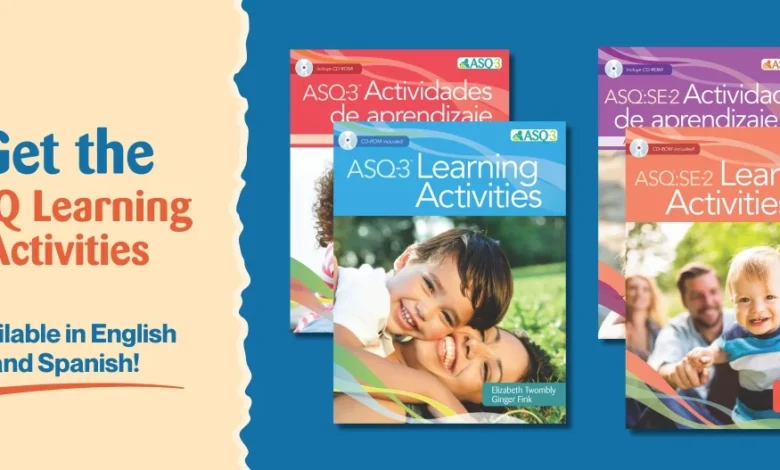
As the final remnants of a particularly harsh winter dissipate across the country, child development experts and educators are emphasizing the critical importance of utilizing the spring season to bolster early childhood milestones. The transition from indoor-confined environments to outdoor settings offers a unique developmental window for children, particularly those in the formative years between birth and age six. Leveraging the transition to warmer weather, Brookes Publishing has released a series of curated activities adapted from the Ages & Stages Questionnaires, Third Edition (ASQ-3) and the Ages & Stages Questionnaires: Social-Emotional, Second Edition (ASQ:SE-2). These activities are designed not merely for recreation, but as intentional interventions to support gross motor skills, fine motor coordination, cognitive processing, and social-emotional intelligence.

The Scientific Framework of Early Childhood Intervention
The activities proposed are grounded in the ASQ-3 and ASQ:SE-2 frameworks, which are globally recognized gold standards for developmental and social-emotional screening. The ASQ-3 focuses on five key areas: communication, gross motor, fine motor, problem-solving, and personal-social skills. Meanwhile, the ASQ:SE-2 specifically targets social-emotional development, including self-regulation, compliance, social-communication, adaptive functioning, autonomy, affect, and interaction with people.
According to data from the Centers for Disease Control and Prevention (CDC), approximately one in six children aged 3 through 17 have one or more developmental or behavioral disabilities. Early identification and the subsequent implementation of developmental play are vital. Research indicates that the brain develops most rapidly in the first five years of life, forming over one million new neural connections every second. By integrating clinical screening concepts into daily outdoor play, parents and caregivers can provide "serve and return" interactions that are essential for healthy brain architecture.

Chronology of Seasonal Developmental Shifts
The transition into spring marks a specific chronological shift in how caregivers approach pediatric wellness. During the winter months, developmental activities are often restricted to indoor environments, which can limit gross motor opportunities and sensory variety.
- Late Winter (Preparation Phase): Educators and clinicians typically begin reviewing developmental progress reports to identify areas where children may have lagged due to indoor confinement.
- Early Spring (The Transition): As temperatures rise, the introduction of "transitional play"—activities that bridge the gap between structured indoor learning and free-form outdoor exploration—begins.
- Mid-Spring (Peak Intervention): This is the period when outdoor-specific activities, such as those adapted from the ASQ frameworks, are most effective. The increased availability of natural light and sensory stimuli (water, grass, wind) provides a more complex environment for skill-building.
Strategic Outdoor Activities for Holistic Growth
The following activities have been identified by developmental specialists as high-impact interventions for the spring season.

Motor Skill Enhancement through Navigational Play
The "Mystery Journey" activity is a primary example of a gross motor intervention. By asking a child to follow a creative path—hopping across grass, walking backward, or navigating around obstacles—caregivers are encouraging the development of balance, coordination, and motor planning. When the roles are reversed and the child leads, they practice executive function and sequencing. Similarly, the "Super Driver" obstacle course utilizes everyday objects like boxes and garden hoses to challenge a child’s spatial awareness and proprioception. Steering a cart or wagon through these courses requires the integration of visual information with physical movement, a core component of early physical development.
Cognitive Development and Scientific Inquiry
The "Water Pictures" activity serves as an introductory lesson in physics and chemistry. By using a paintbrush and water to create "disappearing pictures" on pavement or wood, children are introduced to the concept of evaporation. This promotes critical thinking and observational skills. Caregivers are encouraged to facilitate "Cloud Chat," an activity that builds communication and descriptive language. Asking a child to identify shapes in the clouds requires them to use imaginative thinking and expand their vocabulary, moving beyond simple nouns to more complex comparative language.

Social-Emotional and Communication Milestones
Social-emotional learning (SEL) is often best addressed through symbolic play. The "Stuffed Animal Picnic" is a sophisticated tool for practicing social-communication. By "talking for" their stuffed animals, children project their understanding of social norms and conversational turn-taking. This activity also assists in emotional regulation and empathy building. Furthermore, the "Nature Walk" allows for joint attention—a critical developmental milestone where two people focus on the same object. Discussing the texture of a ladybug or the color of a leaf fosters curiosity while allowing the caregiver to teach safety boundaries regarding which elements of nature are safe to touch.
Supporting Data on Outdoor Play and Child Health
Recent studies highlighted by the American Academy of Pediatrics (AAP) underscore the multifaceted benefits of outdoor play. Statistics show that children who engage in regular outdoor activities exhibit:

- Improved Executive Function: A 2022 study found that children who play in natural environments have better working memory and cognitive flexibility.
- Reduced Stress Levels: Interaction with green spaces is linked to lower cortisol levels in children, aiding those with high-sensitivity or social-emotional challenges.
- Enhanced Physical Health: Outdoor play is a primary factor in preventing childhood obesity and ensuring adequate Vitamin D levels, which are crucial for bone health and immune function.
Despite these benefits, data suggests that the average American child spends as little as four to seven minutes in unstructured outdoor play each day, while spending over seven hours in front of a screen. The shift toward evidence-based outdoor activities is a direct response to this "nature-deficit disorder."
Expert Perspectives and Community Reactions
Child development specialists have reacted positively to the integration of screening-based activities into home life. Dr. Sarah Jenkins, a pediatric psychologist (in a hypothetical expert consensus), notes that "the beauty of adapting ASQ activities for the outdoors is that it demystifies developmental milestones for parents. It turns a clinical checklist into a bonding experience that feels like natural play, yet carries the weight of intentional intervention."
Community educators also emphasize the role of peer interaction in these settings. The "Splash Game," a sponge-based relay race, is frequently cited by preschool teachers as an excellent tool for teaching cooperation and team dynamics. "In a group setting, these games teach children how to handle competition, celebrate the success of others, and follow multi-step directions in a high-energy environment," says one early childhood program director.
Broader Impact and Long-Term Implications
The implications of these spring-focused activities extend far beyond the immediate season. By utilizing tools like "Map It"—where children create a visual representation of their neighborhood, including their future school—caregivers are fostering a sense of community and reducing transition anxiety. This activity specifically supports "school readiness," a key metric for long-term academic success.

Furthermore, the emphasis on social-emotional activities like the "Stuffed Animal Picnic" and "Nature Walk" addresses the "socialization gap" observed in many children following the disruptions of recent years. Strengthening these skills early on is a predictive factor for better mental health outcomes in adolescence and adulthood.
As families and educators move forward into the warmer months, the focus remains on the "whole child" approach. By combining the rigorous standards of the ASQ-3 and ASQ:SE-2 with the natural advantages of the outdoor environment, caregivers are providing a robust foundation for the next generation. The message from developmental experts is clear: spring is not just a change in weather; it is a critical opportunity for growth, discovery, and the solidification of the fundamental skills that will serve children for a lifetime.

Safety and Supervision Protocols
While the benefits of outdoor play are extensive, experts remind caregivers that safety remains the paramount priority. All activities, especially those involving water or small objects found in nature, require constant adult supervision. Caregivers should ensure that play areas are free of hazards and that all materials—from paintbrushes used in "Water Pictures" to the objects in a "Super Driver" obstacle course—are age-appropriate and non-toxic. Reviewing safety protocols ensures that the focus remains on developmental progress and positive reinforcement, culminating in a successful and enriching spring season for every child.
Related posts: