The Morphological Awareness Test for Reading and Spelling MATRS A Diagnostic Breakthrough for Elementary Literacy Assessment

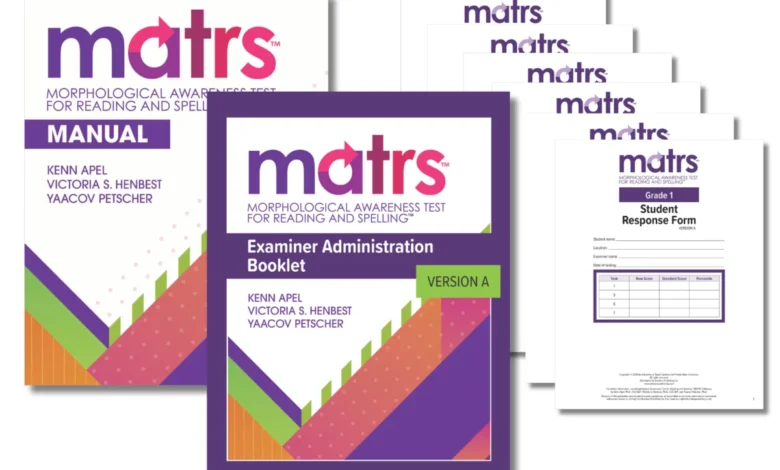
The landscape of elementary literacy instruction is undergoing a significant transformation as educators and clinicians increasingly prioritize the "Science of Reading," a body of research that emphasizes the structural components of language necessary for decoding and comprehension. Within this evolving framework, a critical yet frequently overlooked component of literacy has emerged as a primary driver of student success: morphological awareness. To address a long-standing gap in diagnostic capabilities, Dr. Kenn Apel and Dr. Victoria Henbest have introduced the Morphological Awareness Test for Reading and Spelling (MATRS), a standardized, norm-referenced assessment designed specifically for students in Grades 1 through 6. This tool arrives at a pivotal moment when national literacy scores have plateaued, and school districts are seeking more precise methods to identify the underlying causes of reading and spelling disabilities, including dyslexia.
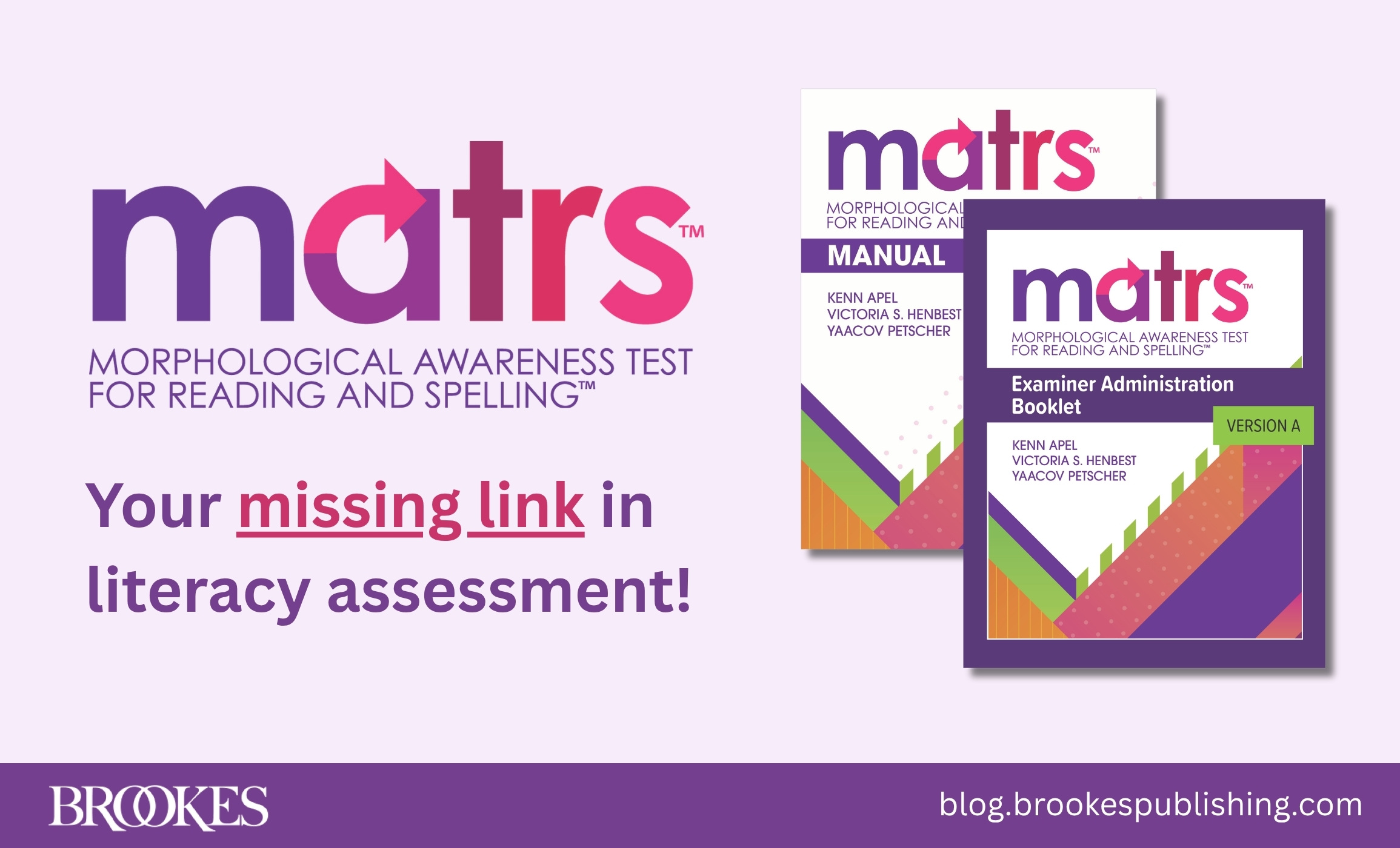
Morphological awareness refers to the ability of a student to consciously consider and manipulate morphemes, which are the smallest units of meaning in a language. In the English language, these units include base words—such as "act," "play," or "sense"—as well as the prefixes and suffixes attached to them, such as the "-ed" in "acted," the "re-" in "replay," or the "-ion" in "action." Because English is a morphophonemic language, meaning its spelling system represents both sounds (phonemes) and meanings (morphemes), a deficiency in morphological processing can lead to profound difficulties in both decoding complex words and accurately spelling them. The MATRS tool is positioned as the "missing link" for practitioners who have found that traditional phonological assessments fail to explain why certain students continue to struggle despite receiving standard phonics intervention.
The Scientific Context of Morphological Awareness in Literacy
The development of MATRS is rooted in decades of linguistic research highlighting the correlation between morphological knowledge and reading achievement. Historically, literacy instruction in the United States focused heavily on phonemic awareness—the ability to identify individual sounds in words. While phonemic awareness is a foundational prerequisite for reading, research conducted over the last twenty years suggests that morphological awareness begins to play an increasingly dominant role as students move from the primary grades into upper elementary school. As texts become more complex, the proportion of multisyllabic words derived from Latin and Greek roots increases, requiring students to look beyond simple sound-letter correspondences to find meaning.
Data from the National Assessment of Educational Progress (NAEP) consistently shows that approximately two-thirds of fourth graders in the United States read below the "proficient" level. Experts suggest that a significant portion of these students may lack the "structural literacy" required to navigate the transition from "learning to read" to "reading to learn." When students cannot recognize that "magician" is related to "magic" or that "sign" is related to "signature," their vocabulary growth and reading comprehension suffer. The MATRS assessment provides a structured way to measure this specific cognitive ability, offering a clearer picture of a child’s linguistic profile than previously available through general reading inventories.
Addressing the Diagnostic Gap in Dyslexia and Learning Disabilities
One of the most compelling arguments for the adoption of MATRS is its alignment with the International Dyslexia Association’s (IDA) formal definition of dyslexia. According to the IDA, dyslexia is characterized by underlying difficulties with both phonological and morphological processing. Despite this definition, many standardized batteries used for special education eligibility focus almost exclusively on phonological processing (the sound system) and orthographic processing (the visual system), often leaving the morphological component unexamined.
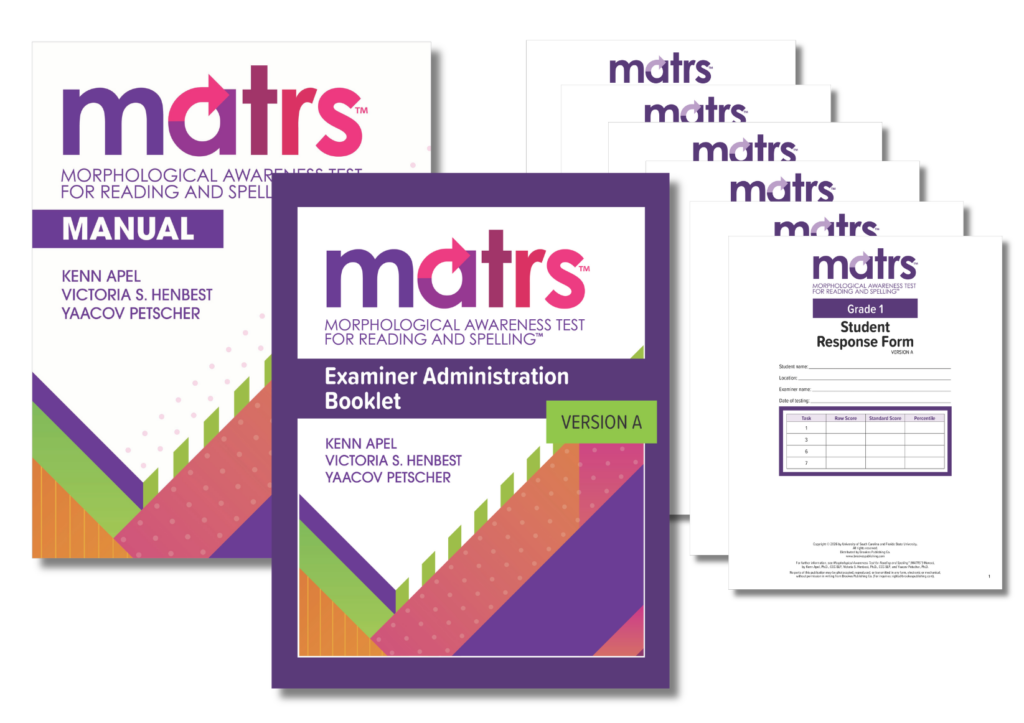
This diagnostic oversight creates a "hidden" population of students who may perform within the average range on phonics-based tests but fail to progress in reading fluency and spelling. These students often hit a "wall" in third or fourth grade when the vocabulary demands of the curriculum shift toward more complex, morphologically rich language. By providing a norm-referenced measure, MATRS allows school psychologists and speech-language pathologists (SLPs) to quantify a student’s morphological deficits relative to their peers. This data is essential for qualifying students for services under the Individuals with Disabilities Education Act (IDEA), as it provides objective evidence of a specific learning disability that traditional tests might overlook.
The Four Pillars of the MATRS Assessment
To provide a comprehensive diagnostic profile, MATRS evaluates students across four distinct components of morphological awareness. These components represent the various ways a child must interact with word structures in a classroom environment:
- Identification: The ability to recognize whether a word contains a specific morpheme or if two words share a common root.
- Production: The ability to generate the correct form of a word when given a base word and a sentence context (e.g., "The man is a great ____," given the base word "paint").
- Decomposition: The ability to break down a complex word into its constituent parts to determine its meaning.
- Relational Knowledge: Understanding how changes in a word’s morphological structure affect its grammatical category or spelling (e.g., how "decide" becomes "decision").
By isolating these four areas, the MATRS tool allows educators to pinpoint exactly where the breakdown in communication is occurring. A student who excels at identification but struggles with production requires a different instructional approach than a student who cannot decompose words at all.

Operational Efficiency and Practical Implementation
In the modern school environment, where time is a premium resource, the design of assessment tools is as important as their scientific validity. Dr. Apel and Dr. Henbest designed MATRS to be both thorough and efficient. The test typically takes between 15 and 20 minutes to administer, making it a viable option for busy school clinicians.
Furthermore, the assessment includes features that streamline the transition from testing to teaching. The MATRS manual provides specific instructional suggestions based on the student’s performance profile. This prescriptive nature ensures that intervention time is used effectively. Rather than applying a "one-size-fits-all" literacy program, teachers can target the specific prefixes, suffixes, or root-word strategies that the student has not yet mastered. The inclusion of clear scoring rubrics and norm-referenced tables ensures that the results are reliable across different examiners, a critical factor for legal compliance in IEP (Individualized Education Program) meetings.
Chronology of Development and Research Background
The release of MATRS is the culmination of years of collaborative research by Kenn Apel, a professor at the University of South Carolina, and Victoria Henbest, an assistant professor at the University of Arkansas. Their work has long focused on the intersection of language and literacy, specifically how speech-language pathologists can support reading outcomes.

The development process involved extensive field testing to ensure that the "norm-referenced" aspect of the test was accurate. Norming a test involves administering it to a large, diverse sample of students across the country to establish what "average" performance looks like at each grade level. This rigorous process distinguishes MATRS from informal checklists or teacher-made assessments, providing it with the psychometric weight necessary for clinical and educational diagnoses.
Broader Implications for Education Policy and Practice
The introduction of MATRS has broader implications for how schools approach literacy instruction at a systemic level. As more states pass "Science of Reading" legislation, there is a growing mandate for schools to use evidence-based assessments and interventions. Morphological awareness is now recognized as a key pillar of "Structured Literacy," an instructional approach that is explicit, systematic, and cumulative.
For Title I schools and districts serving high-risk populations, the ability to identify morphological deficits early—in the first and second grades—can serve as a powerful preventative measure. Research suggests that early intervention in morphological awareness can "buffer" students against later reading failure. By integrating MATRS into the Multi-Tiered System of Supports (MTSS) or Response to Intervention (RTI) frameworks, schools can provide targeted Tier 2 and Tier 3 supports before a student falls significantly behind their peers.

Conclusion: A New Standard for Literacy Assessment
The Morphological Awareness Test for Reading and Spelling (MATRS) represents a significant advancement in the field of educational diagnostics. By addressing the "missing link" of morphological awareness, Dr. Apel and Dr. Henbest have provided educators with a specialized lens through which to view student struggles. As the educational community continues to grapple with the complexities of the English language and the challenges of universal literacy, tools like MATRS offer a clear, evidence-based path forward.
For the student who can sound out "cat" but stumbles over "categorical," or the student who spells "jumped" as "jumpt," the issue is rarely a lack of effort. Instead, it is often a lack of morphological insight. With the implementation of standardized testing for these skills, schools can finally move beyond general observations of "struggling" and toward precise, effective, and life-changing literacy instruction. The investment in such tools is, ultimately, an investment in the future success of students, ensuring they have the linguistic tools necessary to navigate an increasingly complex world.
Related posts: