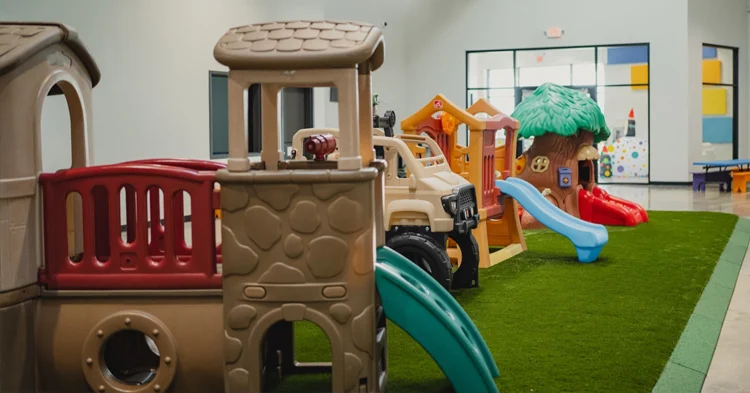
The landscape of Prescott Valley, Arizona, has undergone a significant architectural and social transformation as Heights Church reimagined its role within the community, pivoting from traditional expansion plans to address a critical infrastructure deficit. By converting a vacant former grocery store into the Upside Preschool and Park Collective, the organization has created a multi-use facility designed to tackle the chronic shortage of licensed child care in Yavapai County. This initiative represents a growing trend in adaptive reuse where community-based organizations prioritize social services—specifically early childhood education and safe communal spaces—over conventional sanctuary expansion. The project arrives at a pivotal moment for rural Arizona, where the lack of affordable and accessible child care has become a primary driver of workforce instability and economic strain for young families.
The Magnitude of the Rural Child Care Crisis in Yavapai County
In Yavapai County, the disparity between the demand for early childhood services and the available supply has reached a critical threshold. Recent data indicates a 25% gap in child care availability across the region, a statistic that translates to thousands of families lacking access to licensed, high-quality care. This shortage designates much of the county as a "child care desert," a term used by sociologists and urban planners to describe areas where the number of children under age five significantly outpaces the number of available slots in licensed facilities.
For families in rural and semi-rural areas like Prescott Valley, the implications of this gap are profound. When licensed care is unavailable, parents are often forced into a "patchwork" system of care, relying on a rotating schedule of relatives, neighbors, or unregulated providers. In many instances, the lack of reliable care necessitates that one parent—most frequently the mother—withdraw from the workforce entirely. This withdrawal not only impacts household income and long-term career trajectory but also stifles the local economy by reducing the available labor pool for regional employers. The 25% gap identified in Yavapai County is reflective of a broader statewide challenge in Arizona, where the high cost of facility maintenance and the low profit margins of child care centers have led to a stagnation in the growth of new providers.
From Sanctuary to School: The Chronology of the Heights Church Transformation
The inception of the Upside Preschool and Park Collective began not with a desire to enter the education sector, but with a standard plan for church expansion. Heights Church had initially acquired the former grocery store property with the intention of converting it into a traditional worship center to accommodate its growing congregation. However, the leadership team initiated a period of community listening and needs assessment before breaking ground on the original designs.
The feedback from Prescott Valley residents was overwhelming and consistent. Rather than expressing a need for more religious meeting space, community members highlighted the desperate lack of after-school programs, early childhood education centers, and indoor spaces where families could congregate safely, particularly during the extreme weather months common in high-desert climates.
Recognizing that the community’s "felt need" was structural rather than spiritual, the church leadership made the strategic decision to scrap their initial blueprints. Between 2022 and 2024, the project underwent a massive redesign. The vast, open floor plan of the former grocery store—once filled with aisles of produce and dry goods—was reconfigured into modern classrooms, secure play areas, and a community hub known as the Park Collective. This transition from a commercial retail space to an educational facility required significant investment in specialized infrastructure, including meeting stringent state licensing requirements for safety, sanitation, and square footage per child.
Upside Preschool and the Park Collective: A Multi-Generational Solution
The resulting facility, Upside Preschool, is more than a standard daycare center. It is designed as a high-standard early learning environment that emphasizes both cognitive development and social-emotional growth. By integrating the preschool with the "Park Collective," the church has created a "third space"—a location outside of home and work where community members can build social capital.
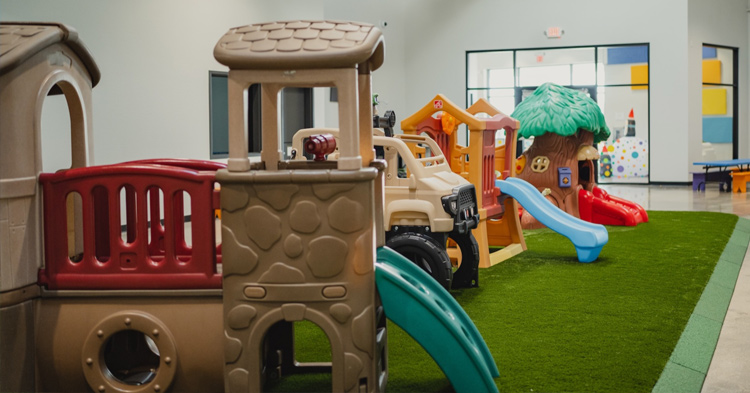
The Park Collective serves as an indoor community park, offering a safe haven for children to play and for parents to connect. This is particularly vital in rural Arizona, where public infrastructure like parks can be sparse or subject to seasonal limitations. The facility also addresses the "after-school gap," providing structured environments for school-aged children whose parents are still at work during the late afternoon hours.
Amy Buettner, the Director of Upside Preschool, emphasized the intentionality behind this shift in focus. "Community members said instead of another church, they needed child care, after-school care, and a safe place for their family to play and hang out," Buettner stated. "Heights Church made a commitment to best serve their community by addressing their needs." This statement underscores a shift in how faith-based organizations are viewing their real estate assets, moving toward a model of "common good" development that serves the secular and social needs of the broader population.
The Economic Logic of Investing in Early Childhood Education
The transformation of the Prescott Valley facility is supported by a wealth of economic data suggesting that early childhood investment is one of the most effective drivers of regional prosperity. Economists, including Nobel Laureate James Heckman, have long argued that the Return on Investment (ROI) for high-quality early childhood programs is significantly higher than almost any other form of economic development.
When a community closes the child care gap, several immediate economic benefits emerge:
- Workforce Participation: Reliable care allows parents to enter or remain in the workforce, increasing the local tax base and reducing reliance on social safety nets.
- Business Attraction and Retention: Companies are more likely to relocate to or expand in areas where their employees have access to stable child care. In the modern economy, child care is increasingly viewed as an essential infrastructure component, similar to roads or high-speed internet.
- Long-Term Educational Outcomes: Children who attend high-quality preschools are statistically more likely to graduate from high school, attend college, and earn higher wages in adulthood. They are also less likely to require costly remedial education or enter the criminal justice system.
In the context of Prescott Valley’s growth, the Upside Preschool serves as a stabilizing force. By providing 25% more capacity in a region starved for options, the facility helps mitigate the "brain drain" that occurs when young, skilled families move to urban centers like Phoenix in search of better support services.
Broader Implications for Arizona’s Rural Development
The success of the Upside Preschool and Park Collective project offers a blueprint for other rural municipalities and non-profit organizations across Arizona. As the state continues to grapple with a housing crisis and rising costs of living, the "adaptive reuse" of commercial spaces like grocery stores or "big box" retailers presents a viable solution for rapid infrastructure deployment.
Furthermore, the project highlights the importance of public-private-nonprofit partnerships. While the church provided the capital and the venue, the project aligns with the goals of state organizations like First Things First, Arizona’s early childhood agency. Such collaborations are essential in rural areas where the private market alone often fails to provide child care services due to the high overhead costs and low profit margins inherent in the industry.
The "Park Collective" model also addresses the social isolation that can occur in rapidly growing suburban-rural fringes. By providing a centralized hub for families, the facility fosters a sense of belonging and community resilience. This "social infrastructure" is often overlooked in economic development plans but is crucial for the long-term health of a municipality.
Conclusion: A Model for Future Community Engagement
The conversion of a grocery store into a thriving preschool in Prescott Valley is a testament to the power of community-led development. By prioritizing the immediate, documented needs of Yavapai County families over traditional institutional goals, Heights Church has addressed a critical 25% gap in child care services that was previously hindering local families and the economy.
As rural Arizona continues to evolve, the Upside Preschool and Park Collective stands as a physical manifestation of a new philosophy in community service: one that is data-driven, responsive to feedback, and focused on the foundational importance of the early years. The project proves that when local organizations listen to the needs of their neighbors, they can transform underutilized spaces into engines of social and economic progress. For the families of Prescott Valley, the opening of this facility is not just about a new building; it is about the restoration of choice, the ability to work, and the assurance that their children are learning in a safe, high-quality environment.
Related posts: