The Evolution of the Literacy Debate
The Science of Reading refers to a vast, multi-disciplinary body of research—spanning cognitive psychology, neuroscience, and linguistics—that explains how the human brain learns to read. In recent years, a national movement has pushed for state-level legislation to mandate the use of SOR-aligned curricula in K-12 settings. According to the National Center for Education Statistics (NCES), reading proficiency rates among fourth graders have remained stagnant or declined over the past decade, prompting policymakers to call for a return to structured, explicit literacy instruction.
Conversely, the DAP framework, codified by the National Association for the Education of Young Children (NAEYC), centers on the idea that children learn best through active exploration, play, and interactions that respect their developmental stages. Historically, proponents of DAP have expressed concern that the rigorous, structured nature of SOR might lead to "push-down" curricula—where primary-grade academic demands are forced upon toddlers and preschoolers, potentially stifling their emotional and social growth.
Bridging the Divide: A Chronology of Conflict and Reconciliation
The tension between these two approaches reached a boiling point in the early 2020s as states began passing "Right to Read" acts. Early childhood programs found themselves in a precarious position: caught between state mandates requiring systematic literacy instruction and their foundational commitment to play-based learning.

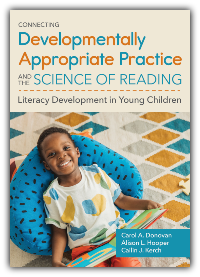
By 2024, leading educational researchers began to argue that the perceived dichotomy was a false one. A pivotal shift occurred when educators began to document that explicit instruction does not necessitate the abandonment of play. Instead, the current consensus among experts—such as Carol A. Donovan, Alison L. Hooper, and Cailin J. Kerch—is that the most effective classrooms utilize the "Science of Reading" to inform the "what" of instruction, while using "DAP" to determine the "how."
Debunking Three Persistent Myths
The professional discourse surrounding these methodologies is often clouded by misconceptions that prevent effective implementation.
Myth One: The Instructional Balance
A common narrative suggests that DAP relies exclusively on child-led exploration, effectively ignoring the need for structured literacy. In reality, DAP promotes intentional teaching. This means educators must balance child-initiated play with purposeful, teacher-led lessons. Under an integrated model, a teacher might use a small-group session to teach phonemic awareness (the SOR component) while facilitating a block-building activity where children label their structures (the DAP component).
Myth Two: Rigor vs. Creativity
Critics of the Science of Reading often argue that it prioritizes rote memorization over creative expression. However, evidence suggests that students with strong decoding skills are better equipped to express complex ideas through writing. Similarly, the notion that DAP lacks rigor is largely refuted by current pedagogical standards. A rigorous DAP classroom involves high-level scaffolding where educators challenge children to extend their vocabulary and comprehension during play, rather than leaving them to explore without guidance.
Myth Three: Scope and Priority
A significant misunderstanding exists regarding the goals of each framework. While SOR is often associated strictly with phonics, it also encompasses oral language, vocabulary, and background knowledge—areas that DAP has long prioritized. Conversely, DAP is not merely "play for the sake of play"; it is a strategic approach that utilizes play as a vehicle for cognitive development. When educators understand that SOR provides the roadmap for literacy and DAP provides the vehicle for delivery, the two frameworks cease to be in conflict.
Data and Impact: Why Integration Matters
The importance of this integration is underscored by developmental data. According to the Early Childhood Longitudinal Study, children who engage in language-rich environments—those that blend explicit sound-symbol instruction with creative, play-based exploration—show significantly higher levels of reading readiness by age six.
Furthermore, a 2023 survey of early childhood directors indicated that 78% of respondents felt "confused" or "pressured" by the conflicting mandates of academic performance and play-based standards. The current shift toward professional development resources, such as the newly released Connecting Developmentally Appropriate Practice and the Science of Reading, is a direct response to this widespread anxiety. By providing educators with specific, actionable examples—such as singing rhyming songs or utilizing alphabet manipulatives during play—programs can meet state mandates without compromising the integrity of early childhood education.
Practical Application in the Classroom
The transition from theory to practice is often the most significant hurdle. Many educators, like the hypothetical teacher "Megan" in recent case studies, fear that adopting SOR means trading blocks and dress-up clothes for repetitive, sedentary flashcard drills.

However, professional development models are now showcasing a different reality. In an integrated classroom, a teacher might introduce a "sound of the day" while the children are at the water table, encouraging them to find objects that start with that specific phoneme. This maintains the play-based nature of the activity (DAP) while ensuring the instructional objective (SOR) is met. By embedding explicit literacy objectives into the daily routines of a classroom, teachers can provide the structure that the research demands without stripping away the joy that early childhood learning requires.
Broader Implications for the Educational Sector
The effort to bridge DAP and SOR has profound implications for teacher preparation programs and school district policies. If early childhood educators are not trained in both the cognitive science of reading and the developmental needs of young children, the cycle of pedagogical division will continue to hamper student achievement.
The integration of these frameworks suggests a "third way" for early childhood education: one that is highly structured in its goals but highly flexible in its execution. For school boards and policymakers, the takeaway is clear: legislation should not force schools to choose between play and phonics. Instead, investment should be directed toward training that empowers teachers to recognize the moments where explicit instruction can be woven into the tapestry of a child’s natural curiosity.
As the industry moves forward, the success of this integration will be measured by the reading outcomes of the next generation of students. By acknowledging the strengths of both DAP and SOR, the educational community is moving toward a more nuanced, research-backed, and child-centered approach that promises to elevate early literacy standards while protecting the essential, formative nature of early play. The challenge remains for school leadership to provide the necessary resources, professional development, and time for teachers to master this delicate, yet vital, balance.
Related posts: