Embracing Routine and Hands-On Learning: A Comprehensive Guide to February Preschool Activities

February marks a unique phase in the early childhood education calendar. By the time this shortest month of the year arrives, preschool classrooms have typically transitioned from the chaotic, adjustment-heavy months of autumn and early winter into a period of steady, predictable rhythm. Educators across the country note that children are well-acquainted with daily routines, classroom expectations, and peer dynamics by February. This established familiarity significantly reduces the cognitive load associated with classroom transitions, opening up valuable instructional time for deeper conversations, extended play exploration, and focused skill practice.
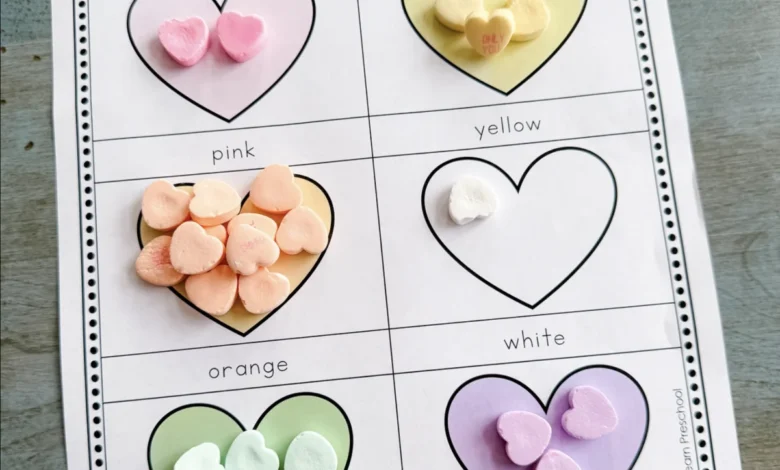
Rather than introducing entirely novel concepts or unfamiliar materials that require extensive orientation, educational specialists recommend using February as a time to leverage existing routines. By introducing subtle, seasonal variations to familiar learning stations—such as swapping standard counters for heart-shaped manipulatives or introducing a pink-hued sensory bin—teachers can spark renewed interest while reinforcing foundational developmental skills. This pedagogical strategy aligns with early childhood research emphasizing that repetition and hands-on experiences are vital for cognitive retention and confidence-building among children aged three to five.

The Main Facts: Maximizing Stability and Seasonal Engagement
The core philosophy guiding February preschool curricula centers on steady learning through tactile exploration and meaningful social interactions. Educational frameworks during this month generally focus on four primary pillars: communication-driven Valentine’s Day themes, social-emotional lessons on friendship and kindness, winter science observations, and predictable math and literacy centers paired with imaginative dramatic play.
According to early childhood educators, maintaining small group numbers and keeping base materials familiar allows children to direct their attention toward the core learning objectives rather than figuring out how to use the equipment. For instance, math and literacy centers that utilize standard sorting trays, dry-erase writing boards, and counting mats become significantly more effective when updated with seasonal motifs. Children who already understand the mechanics of a counting exercise can immediately apply their knowledge to counting paper hearts or matching rhyming picture cards, thereby boosting academic self-efficacy.

Chronology and Seasonal Progression: The Preschool Year in Context
To understand the strategic importance of February in the preschool classroom, it is helpful to examine the chronological progression of the academic year. The fall semester—spanning September through November—is predominantly dedicated to socialization, separation anxiety management, and the establishment of baseline classroom management protocols. December and January introduce the deeper winter cycle, focusing on weather changes, sensory adaptations, and foundational academic concepts.
By February, the groundwork laid during the first five months of school pays significant dividends. The transition time between circle room, free play, and meal times decreases noticeably. Data from early childhood developmental assessments frequently show a spike in peer-to-peer communication and cooperative play competencies during the late winter months. Educators capitalize on this developmental window by introducing structured cooperative activities, such as Kindness Circles and collaborative dramatic play setups like post offices and flower shops, just as children are developmentally primed for complex social negotiation.

Supporting Data and Developmental Implications
Child development experts and early childhood associations consistently highlight the importance of play-based learning during the preschool years. Studies tracking kindergarten readiness indicate that children who engage in structured, hands-on dramatic play and tactile math centers demonstrate superior executive function skills, enhanced vocabulary acquisition, and better conflict-resolution abilities compared to peers subjected to rigid, worksheet-heavy environments.
In February, these benefits are amplified by the deliberate focus on social-emotional learning (SEL). Statistics from preschool program evaluations show that explicit instruction in emotional vocabulary and kindness protocols during the winter months correlates with a measurable decrease in behavioral disruptions in the spring. By integrating kindness challenges into daily routines and utilizing cooperative dramatic play scenarios, classrooms foster an environment where empathy is practiced as rigorously as the alphabet.

Curricular Breakdown: Core Learning Areas for February
Communication and Literacy Through Seasonal Themes
Valentine’s Day in the modern preschool classroom has undergone a significant philosophical evolution. Rather than serving merely as an occasion for superficial crafts and candy exchanges, early childhood educators now utilize the holiday as a vehicle for communication, connection, and early literacy development.

Classrooms frequently incorporate alphabet-writing cards featuring tracing lines, dry-erase markers, and tactile heart manipulatives. These tools strengthen fine motor control—specifically the pincer grasp required for eventual handwriting—while familiarizing children with letter forms. Similarly, literacy centers often feature rhyming puzzles where children match word pairs, reinforcing phonological awareness, which is widely recognized as a critical precursor to successful reading acquisition.
Social-Emotional Growth: Friendship and Kindness Initiatives
Because themes of affection and caring naturally surface during February, educators find it an optimal time to formalize lessons on friendship, inclusion, and emotional regulation. Kindness Circle time units provide a structured platform for children to discuss what it means to be a good friend, how to share resources, and how to express gratitude.

Classroom strategies to support these conversations include read-alouds featuring diverse characters navigating social dilemmas, role-playing scenarios during circle time, and collaborative art projects where children contribute to a shared masterpiece. These activities directly support the development of theory of mind—the ability to understand that others have thoughts, beliefs, and feelings different from one’s own.
Winter Science and Empirical Observation
Even as February brings the promise of spring into view, winter conditions remain a dominant feature in many regions, offering rich opportunities for scientific inquiry. Preschool science centers frequently incorporate ice exploration tables equipped with magnifying tools, pipettes, water, and child-safe paintbrushes.

Through these investigations, children observe firsthand the processes of melting and freezing, explore the properties of water in different states, and learn basic vocabulary related to temperature and weather patterns. By recording their observations through drawings or guided group discussions, young learners are introduced to the scientific method in a concrete, accessible manner.
Math and Literacy Centers: Consistency Meets Novelty
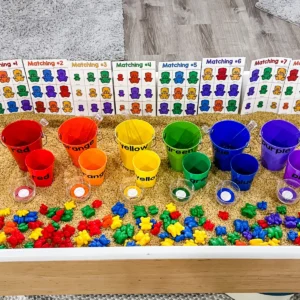
Maintaining consistency in center design while rotating thematic elements prevents cognitive overload. February math centers typically feature counting mats, unifix cubes shaped into towers, and sorting activities based on size, color, or quantity. Keeping the numbers small—typically focusing on quantities from one to ten—ensures that children achieve mastery without frustration. Literacy stations complement this by offering name-building activities with heart cutouts, letter-matching games, and simple sight-word recognition exercises integrated into seasonal themes.

Dramatic Play: Fostering Language and Negotiation
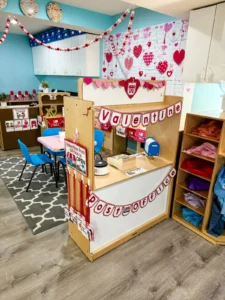
Dramatic play is widely regarded by early childhood specialists as the ultimate sandbox for social and linguistic development. In February, classrooms frequently transform dramatic play areas into flower shops or Valentine post offices. These open-ended centers require children to assign roles (such as postal worker, customer, florist, or recipient), negotiate rules of play, and utilize language for authentic, real-world purposes—such as writing notes, taking orders, and exchanging currency equivalents.
Because these centers are inherently flexible, children of varying developmental levels can participate meaningfully. A child with emerging language skills might point and hand a paper flower to a peer, while a more verbally advanced child might negotiate the price and delivery terms. This inclusivity ensures high levels of engagement across the entire classroom demographic.

Official Perspectives and Pedagogical Analysis
Educational directors and curriculum developers view the late winter period as a critical juncture for reinforcing foundational competencies. According to early childhood policy analysts, the deliberate choice to favor depth over breadth in February—revisiting known activities with minor variations—prevents burnout among both teachers and students while consolidating neural pathways formed earlier in the school year.
An analysis of modern preschool frameworks reveals a growing consensus against rote memorization in favor of experiential learning. By embedding mathematical concepts into counting valentines, literacy into postal sorting, and science into melting ice blocks, educators bridge the gap between abstract academic standards and the concrete, sensory-driven world of the young child.

Broader Impact on Kindergarten Readiness
The cumulative impact of a thoughtfully designed February curriculum extends far beyond the walls of the preschool classroom. As children master routines, build emotional resilience through kindness initiatives, and refine their fine motor and linguistic skills, they are actively constructing the scaffolding necessary for a successful transition to kindergarten.
The emphasis on self-regulation, cooperative play, and independent problem-solving equips students with the non-cognitive skills that longitudinal studies identify as key predictors of long-term academic success. By keeping February activities structured, familiar, and rich in hands-on exploration, early childhood educators ensure that children finish the winter season confident, capable, and eager for the spring months ahead.