Tracing Lineage, Loss, and Legacy: Acclaimed Author Kate Beaton Explores Grief in New Children’s Picture Book Rebecca

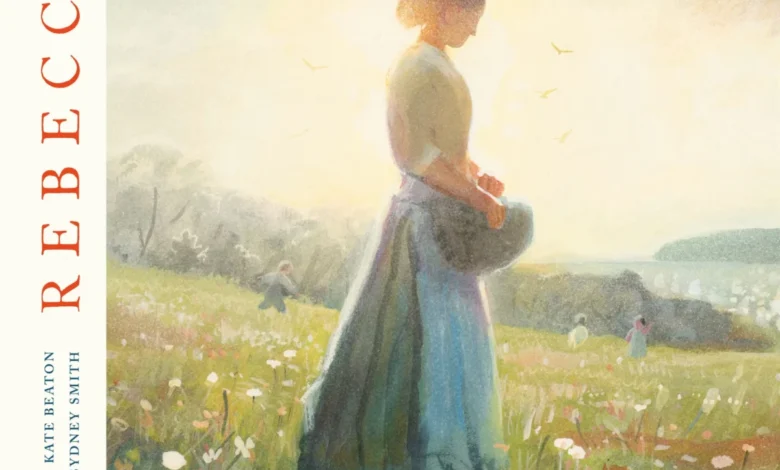
Renowned Canadian cartoonist and author Kate Beaton has expanded her literary repertoire with the release of her latest children’s picture book, Rebecca. Published by Roaring Brook Press, the book breaks conventional publishing boundaries by centering on an adult protagonist, themes of profound loss, and historical tragedy. Beaton, celebrated globally for her New York Times bestselling graphic works such as Hark! A Vagrant and the critically acclaimed graphic memoir Ducks: Two Years in the Oil Sands—which was selected by former President Barack Obama as one of his favorite books of 2022—draws deeply from personal trauma and ancestral history to craft this latest narrative.
The publication of Rebecca bridges Beaton’s deeply personal experiences of familial bereavement with the broader, universal human condition of navigating grief. Through a professional journalistic lens, this article examines the background, chronology, editorial reception, and cultural implications of Beaton’s newest literary release.
Main Facts and Literary Premise
Rebecca tells a story deeply rooted in both family history and historical tragedy. The book takes its name and inspiration from Rebecca Lombard Smith, a direct ancestor who lived in the late 18th and early 19th centuries in Nova Scotia. The narrative explores themes of motherhood, endurance, and sorrow, functioning as both a historical account and a psychological exploration of how families survive catastrophic loss.
Despite being formatted as a picture book—a medium traditionally reserved for young audiences with lighthearted or purely developmental themes—Rebecca confronts complex adult emotions. Publishing Director Connie Hsu of Roaring Brook Press noted the unconventional nature of the project.
"My initial reaction to Rebecca was awe," Hsu stated regarding the acquisition of the manuscript. "My brain began to think about all the usual ‘rules’ about picture book publishing. Here, the main protagonist is an adult, the book is about loss, and two people die in the book! But I just had to publish it."
Chronology of Events: From Personal Tragedy to Historical Roots
The genesis of Rebecca spans two distinct centuries, connecting a modern personal tragedy with an 18th-century maritime disaster.
The contemporary timeline began on May 14, 2018, when Beaton’s older sister, Rebecca—affectionately known as Becky—passed away at a young age following a rigorous, three-year battle with aggressive cervical cancer. Beaton has frequently described this loss as a profound bifurcation of her existence, separating her life into a period before her sister’s illness and the subsequent era shaped by grief.
One year following Becky’s death, Beaton experienced another major life transition with the birth of her first child. Although her daughter was due in June 2019, labor began prematurely on Mother’s Day, May 13. Mindful of the proximity to the anniversary of her sister’s death, Beaton navigated a complex emotional landscape of simultaneous joy and sorrow as her healthy baby girl was delivered safely. Subsequent years brought the birth of a second child, establishing a domestic routine defined by quiet evening hours putting the children to sleep. It was during these tranquil, repetitive moments in the dark that Beaton began mentally composing the lines of Rebecca.

To process her ongoing grief without directly detailing her sister’s contemporary medical struggles, Beaton looked backward into her family’s genealogy in Cape Breton, Nova Scotia. She focused on her great-great-great-great-grandmother, Rebecca Lombard Smith. In March 1789, Rebecca Smith was pregnant with her final child when her husband, whaling captain David Smith, fell through the ice near Port Hood Island and drowned.
While historical accounts traditionally emphasized Captain David Smith’s tragic demise, Beaton’s narrative centers on Rebecca Smith. Left entirely alone on an isolated island off the shore of Cape Breton, Rebecca successfully raised six sons and one daughter through immense hardship. She lived to the age of 76, passing away on November 30, 1821, and was laid to rest in the Old Protestant Graveyard in Port Hood. Her headstone bears a rare, personalized inscription erected by her surviving sons—Lewis, Parker, and David—signifying a unique familial tribute to a resilient mother.
Background and Context of Kate Beaton’s Career
Kate Beaton’s trajectory as an author and illustrator has been marked by critical acclaim and a unique ability to translate historical and personal narratives into accessible art. Raised in Cape Breton, Nova Scotia, she initially gained widespread prominence through her webcomic, Hark! A Vagrant, which developed a massive digital following and resulted in two bestselling collections published by Drawn & Quarterly.
In 2022, Beaton shifted toward long-form, deeply personal storytelling with Ducks: Two Years in the Oil Sands, a graphic memoir detailing her experiences working in the industrial camps of northern Alberta. The book received universal critical praise, winning multiple awards and securing a coveted spot on former U.S. President Barack Obama’s annual endorsement list.
With the launch of Rebecca, Beaton transitions from graphic memoirs and historical webcomics into the realm of illustrated children’s literature for mature storytelling, proving her versatility across different publishing formats.
Fact-Based Analysis of Implications
The release of Rebecca highlights a shifting paradigm within modern publishing regarding how grief and loss are communicated to multi-generational audiences. Traditionally, children’s literature has sanitized or heavily metaphorized death to protect young readers. However, contemporary authors and publishers are increasingly recognizing the value of authentic emotional literacy.
By anchoring a universal exploration of mourning in a specific historical event—the 1789 drowning of David Smith and the subsequent survival of Rebecca Smith—Beaton provides a framework for understanding that sorrow is not an acute phase with a definitive endpoint, but rather a permanent, manageable facet of the human experience. The book’s structural choice to honor maternal strength and ancestral continuity offers psychological validation for readers experiencing chronic grief, demonstrating that historical resilience can serve as an anchor for modern trauma.
Broader Impact and Industry Reception
Literary analysts note that Rebecca arrives at a time when cultural conversations surrounding mental health, grief management, and parental bereavement are receiving increased public attention. By refusing to shield readers from the harsh realities of mortality, Beaton and Roaring Brook Press have established a precedent for children’s books that treat children and families with emotional maturity.
As the book becomes available to the public, initial critical reviews emphasize its visual and textual poignancy. Through meticulous line work and sparse, evocative prose, Beaton bridges the gap between past and present, ensuring that the names and struggles of women like Rebecca Lombard Smith and Becky Beaton continue to resonate through generations.