Transforming Early Childhood Literacy: How Educators are Using Valentine’s Day Post Office Centers to Teach Foundational Skills

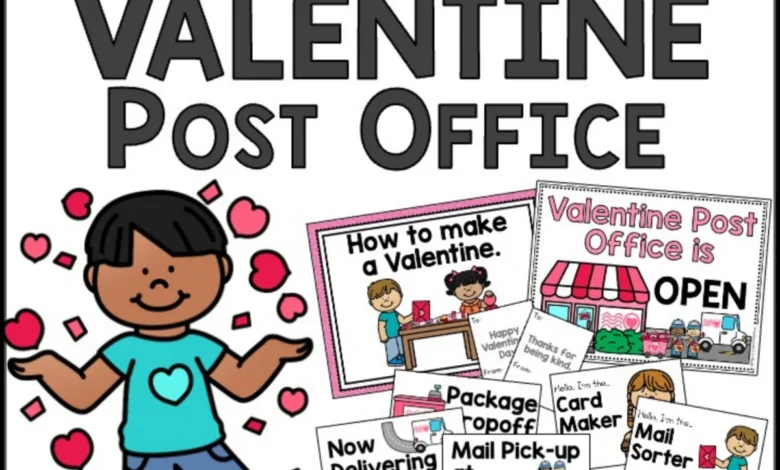
Early childhood education experts and preschool directors nationwide are increasingly turning to immersive, thematic dramatic play centers to accelerate foundational learning, blending social-emotional development with early literacy and pre-mathematics. Among the most successful seasonal initiatives gaining traction in Pre-K and kindergarten classrooms is the Valentine’s Day Post Office center. By transforming traditional play areas into functional postal hubs complete with mailboxes, stamps, and writing stations, educators have found a high-engagement method to address critical developmental benchmarks.
Background Context of Immersive Play in Early Childhood Education
For decades, early childhood pedagogy has recognized play as the primary vehicle through which young children make sense of the world. According to developmental psychologists and educational researchers, play-based learning stimulates neural connections in areas of the brain associated with executive function, language acquisition, and social negotiation. However, modern educational frameworks demand that play environments also align with rigorous early learning standards.

The Valentine’s Day Post Office concept addresses this dual requirement by anchoring play in functional literacy. Historically, writing centers in preschool classrooms have struggled to capture sustained attention, often viewed by young children as chore-like desk work. By embedding writing into a dramatic play scenario—where crafting a card serves the immediate social purpose of sending a message to a friend or family member—student motivation increases exponentially.
Structuring the Post Office and Writing Stations

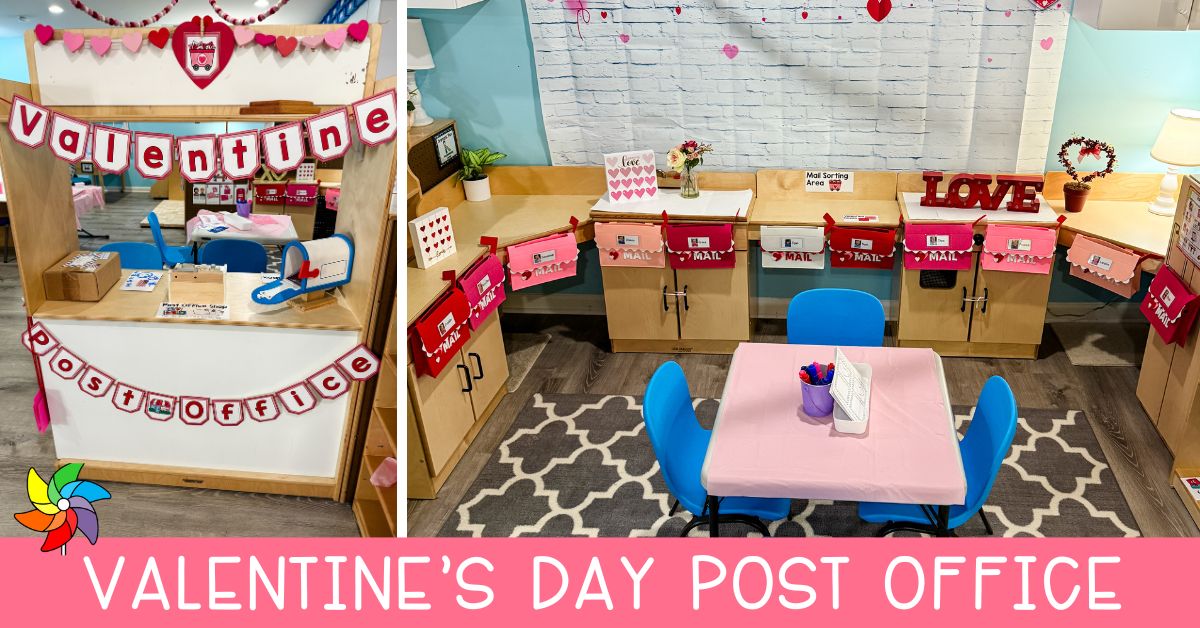
Implementing a classroom post office requires strategic spatial organization and resource allocation. Educators typically repurpose existing classroom inventory, such as play kitchen counters, dining tables, or grocery play stations, to establish a central service counter. Essential components of the center include labeled baskets containing envelopes, stickers, decorative cardstock, and mock stamps.
To maximize the literacy benefits of the environment, teachers incorporate environmental print throughout the station. Baskets are labeled with both words and corresponding pictures, exposing children to vocabulary in context. Furthermore, language boards are mounted near writing areas to assist students with spelling and letter formation.

According to classroom coordinators, the physical layout is typically divided into three primary zones:
- The Card-Making and Writing Station: Equipped with markers, crayons, folded cardstock, and stamps, allowing children to compose independent messages.
- The Sales Counter: Where customers interact with a designated student cashier to purchase supplies, weigh packages, and secure postage.
- The Sorting and Mailbox Hub: Featuring personalized mailboxes for every student in the class, identified by both a photograph and the child’s printed name to reinforce name recognition.
Chronology and Implementation Timeline

The rollout of a thematic post office typically spans a multi-week instructional window leading up to mid-February.
Phase One involves preparation and environmental setup. Teachers introduce the concept by reading literature related to mail delivery and community helpers. During this phase, students are familiarized with the various roles within a postal system—customer, cashier, mail sorter, and mail carrier—using visual aids such as role-designated lanyards.

Phase Two marks the opening of the center. Educators model interactions, demonstrating the step-by-step sequence of writing a message, enclosing it, purchasing a stamp, and placing it in the outgoing mail bin. As children rotate through the center, they practice fine motor skills by manipulating writing utensils, peeling stickers, and organizing paper goods.
Phase Three centers on processing and delivery. Designated mail sorters categorize incoming letters by inspecting the names on the envelopes, applying foundational pre-math and sorting skills. Finally, mail carriers distribute the correspondence directly to individual student mailboxes or hand-deliver the items across the classroom.

Supporting Data and Educational Implications
Research in early childhood literacy underscores the importance of contextualized writing. According to data compiled by early learning associations, children who engage in regular dramatic play involving written communication demonstrate a 30% higher retention rate of sight words and letter-sound correspondence compared to peers instructed solely through traditional worksheet methods.

Furthermore, the post office center inherently supports social-emotional learning (SEL). By focusing the activity on kindness, appreciation, and peer communication, children actively practice empathy. Writing notes of encouragement to classmates fosters a positive classroom climate and reduces behavioral disruptions during transition periods.
Statements and Reactions from Educators

Classroom teachers who have integrated the Valentine’s Day Post Office into their February curricula report overwhelmingly positive outcomes.
"When children sit down with a blank piece of paper, they often feel intimidated," said Sarah Jenkins, an early childhood curriculum specialist in the Midwest. "When that same piece of paper is a letter intended for their best friend’s mailbox, the hesitation vanishes. They want to write, they want to spell names, and they want to communicate. It transforms handwriting practice from a task into a purposeful act of friendship."

Administrators have similarly praised the cross-curricular applications of the model. Beyond literacy, the center integrates mathematics through sorting exercises, financial literacy through the exchange of mock currency or tokens at the sales counter, and fine motor dexterity through crafting and stamping.
Community Connection and Real-World Applications

Many participating preschools extend the classroom experience beyond school grounds by organizing a class walk to a local United States Postal Service collection box. This tangible field experience allows students to connect their classroom play to real-world community infrastructure.
For families, receiving a hand-delivered or mailed card crafted by a preschooler provides a meaningful keepsake that bridges the home-school connection. Education advocates note that these initiatives encourage parents to engage in literacy activities at home, reinforcing the lessons learned in the classroom environment.

Broader Impact on Early Learning Standards
As educational institutions continue to balance academic rigor with developmentally appropriate practices, the Valentine’s Day Post Office serves as a model for effective thematic instruction. By synthesizing reading, writing, mathematics, and social-emotional development into a cohesive play structure, educators are establishing a durable foundation for lifelong academic success. The widespread adoption of such centers highlights a broader industry shift toward experiential, student-led learning models that prioritize engagement alongside core developmental milestones.
Related posts: