Winnow Review: A Probiotic That Binds Microplastics and Navigates Contemporary Plastic Pollution

The ubiquity of synthetic polymer fragments in the modern biosphere has emerged as a paramount environmental health concern over the past decade. Microplastics—defined as particles measuring less than five millimeters in diameter—now permeate nearly every ecological niche, having been detected in marine environments, remote mountain snowpacks, the atmosphere, municipal water supplies, and human biological tissues, including the placenta and newborn infants. These particles infiltrate daily human life through an array of common sources, ranging from single-use food packaging and bottled water to synthetic textiles, household dust, and degraded kitchen utensils.
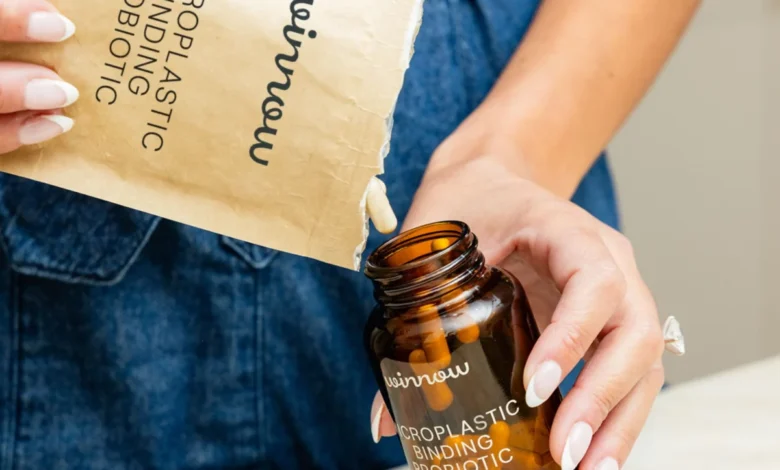
Amid growing scientific urgency surrounding the accumulation of synthetic particles in human tissue, a new intersection of biotechnology and gut health has materialized. Enter Winnow, a daily dietary supplement positioned as a dual-action probiotic designed to support gastrointestinal health while employing targeted bacterial strains capable of binding ingested microplastics during transit through the human digestive tract.
The Scale of Microplastic Exposure and the Search for Solutions
For years, public health advocates and zero-waste researchers have emphasized exposure reduction as the primary defense against synthetic particle accumulation. Individuals are routinely advised to avoid heating food in plastic containers, minimize reliance on single-use bottled water, transition to glass or stainless steel storage vessels, replace scratched plastic cutting boards with wood or stone alternatives, and upgrade household filtration systems.
However, environmental toxicologists note that complete avoidance has become practically impossible due to the sheer volume of ambient plastics circulating in the global ecosystem. Recognizing this limitation, researchers and supplement developers have begun exploring internal mitigation strategies, aiming to facilitate the safe clearance of ingested microplastics before they can cross intestinal barriers or induce localized inflammation.
Winnow represents a commercial manifestation of this emerging research area. Developed as a premium daily probiotic, the formulation combines traditional gut-health support with proprietary preclinical applications designed to intercept plastic particles within the gut lumen.
Mechanism of Action: Surface Adsorption in the Gastrointestinal Tract
The core scientific premise behind microplastic-binding probiotics relies on a biological process known as surface adsorption. As specialized bacterial strains transit the gastrointestinal tract, microplastic particles physically adhere to the exterior cellular structures of the microbes.
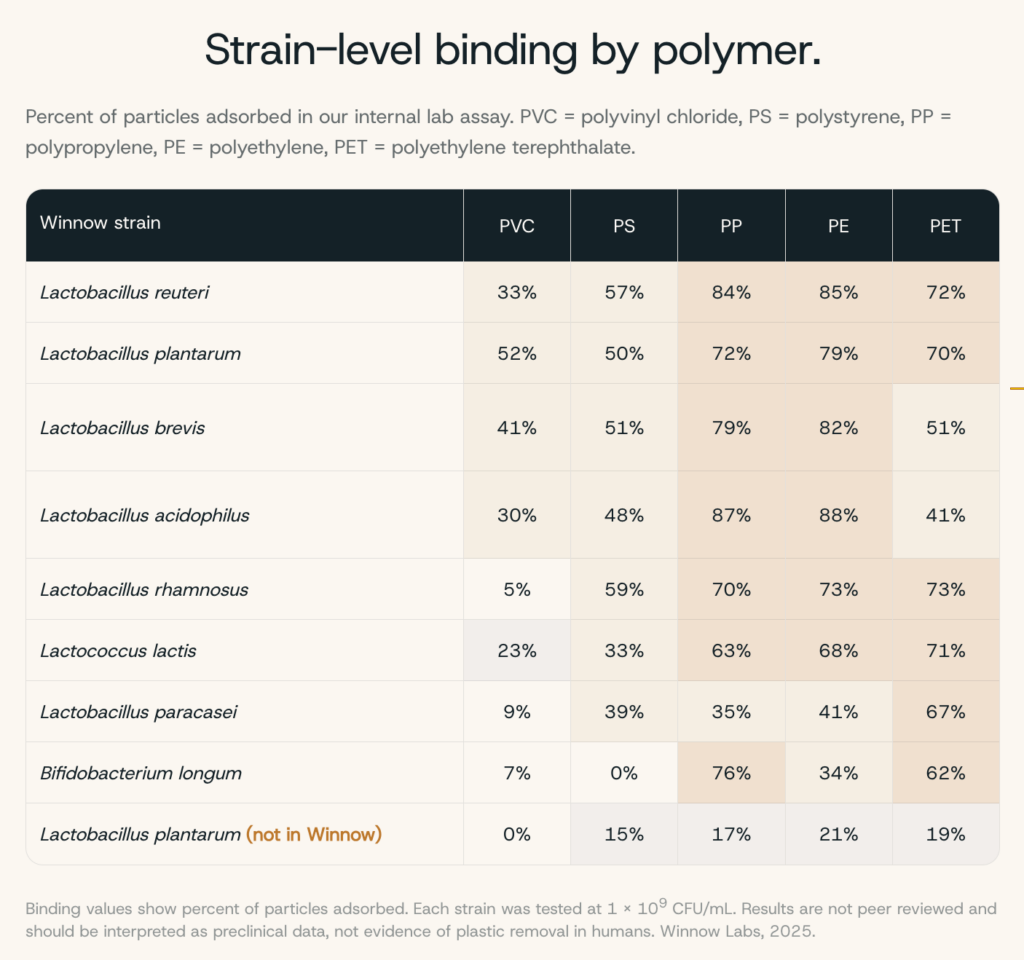
According to technical data provided by Winnow, the formulation leverages specific bacterial surface components—such as exopolysaccharides (EPS) and S-layer proteins—to act as binding sites for synthetic polymers. Internal laboratory testing conducted by the company demonstrated that binding efficacy varies significantly depending on the bacterial strain and the specific polymer type. Common synthetic polymers tested include polyethylene (PE), polypropylene (PP), polystyrene (PS), polyethylene terephthalate (PET), and polyvinyl chloride (PVC).
Data published on the company’s research portal indicates that a multi-strain consortium outperforms individual strains in isolation. Specifically, Winnow’s comprehensive formulation reportedly bound 1.8 times more of a standardized blended plastic mix than any single constituent strain evaluated in identical testing parameters.
Bridging Human Clinical Data and Preclinical Findings
Evaluating the scientific foundation of Winnow requires distinguishing between its two distinct layers of research: established human clinical data for gut health and newer preclinical data concerning microplastic adsorption.
On the digestive health front, the product incorporates well-documented probiotic strains with extensive peer-reviewed literature supporting their efficacy in human populations. These include Lactobacillus rhamnosus ATCC 53103, Lactobacillus reuteri DSM 17938, and Lactobacillus acidophilus ATCC SD5212. These specific strains have been investigated extensively for their roles in promoting digestive regularity, reinforcing the intestinal epithelial barrier, modulating immune responses, and alleviating gastrointestinal discomfort.
Conversely, the microplastic-binding mechanism operates primarily on preclinical data. While internal corporate studies illustrate promising adsorption rates across various polymer types, independent academic research is beginning to validate the broader concept. Notably, a peer-reviewed study published in early 2025 screened hundreds of bacterial strains to identify microbes with high-affinity microplastic adsorption capabilities. In subsequent animal trials, the administration of these targeted strains successfully enhanced the fecal excretion of microplastics and measurably reduced particle accumulation within intestinal tissues.
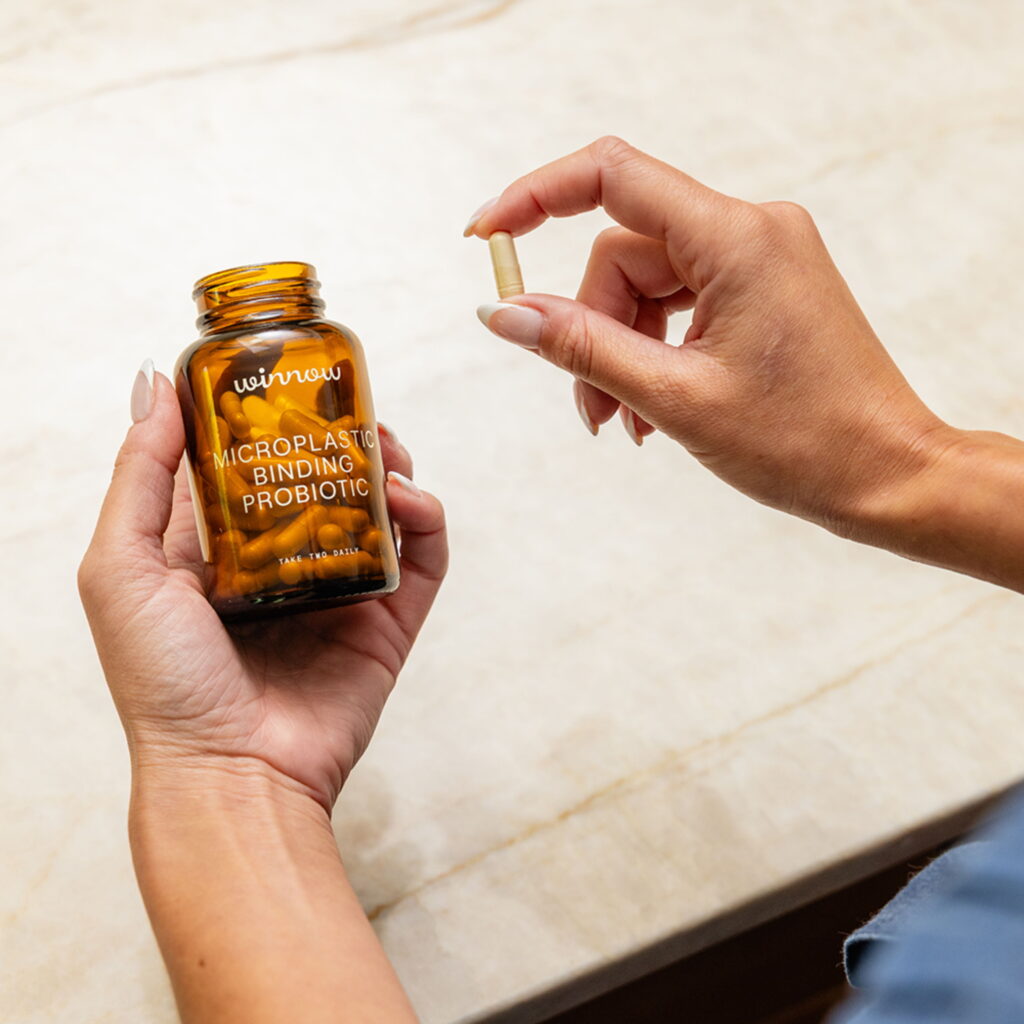
Despite these encouraging developments, independent toxicologists and industry analysts emphasize that probiotic supplements should not be viewed as a definitive cure for systemic plastic pollution. Experts maintain that capsules cannot substitute for systemic regulatory reforms, safer material sciences, enhanced waste management infrastructure, or corporate accountability regarding virgin plastic production. Instead, products like Winnow are increasingly framed as pragmatic harm-reduction tools tailored to the realities of contemporary environmental exposure.
Product Experience, Packaging, and Consumer Integration
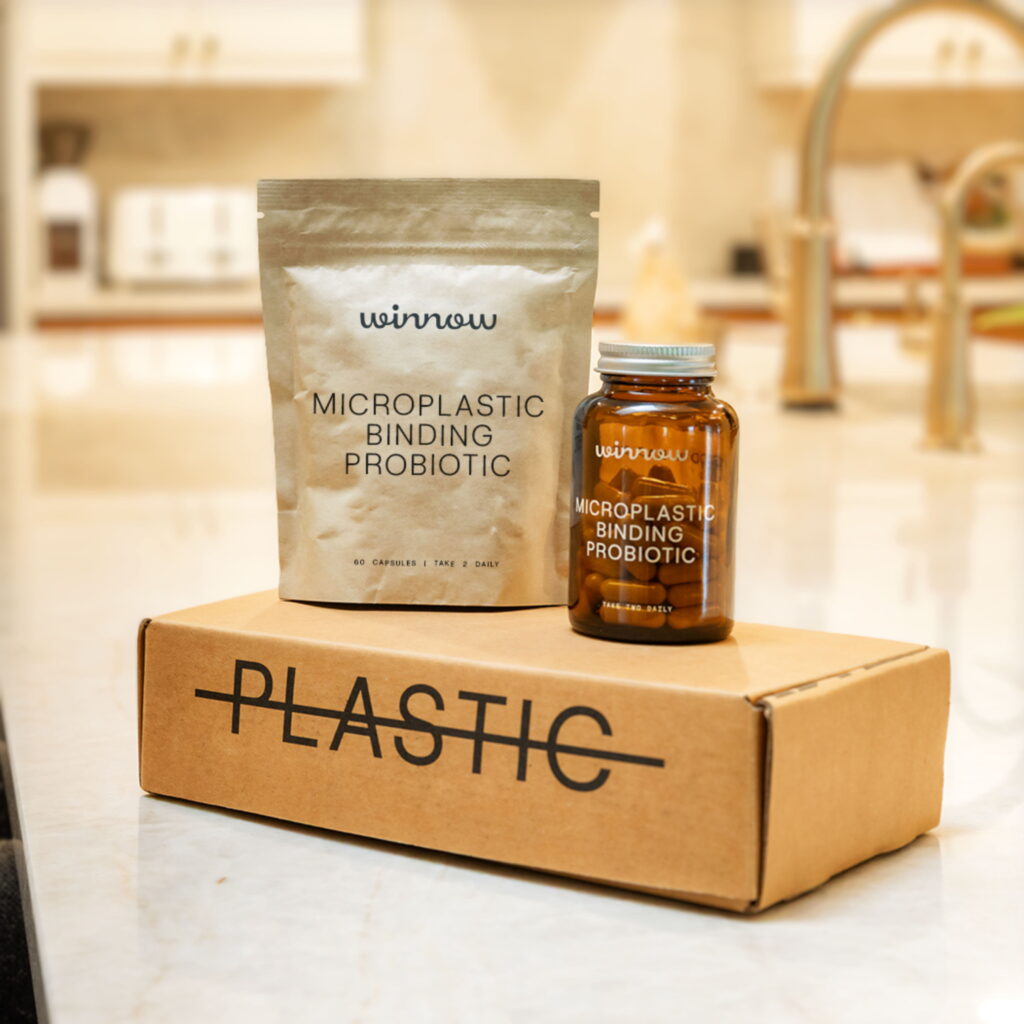
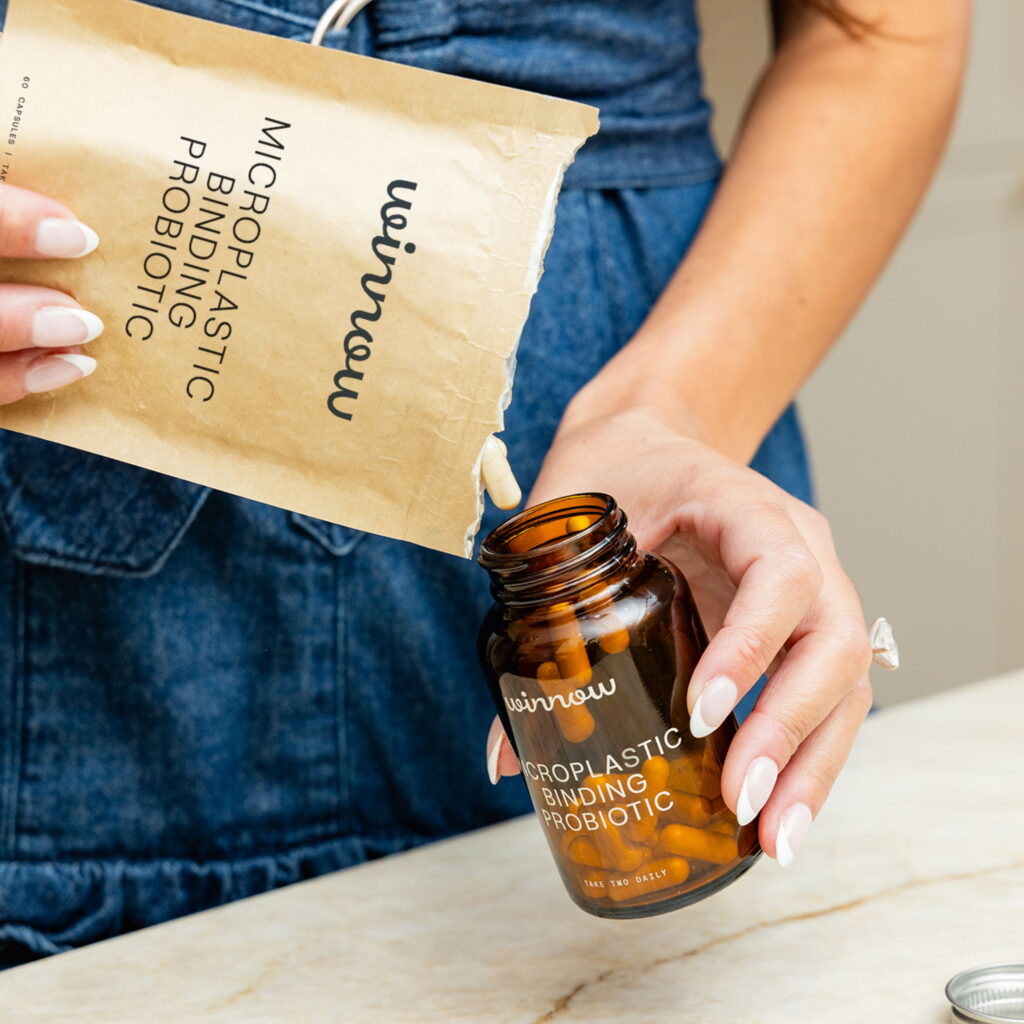
In terms of consumer experience, Winnow is formulated to integrate seamlessly into existing wellness routines, mirroring the administration and pricing structure of high-end daily probiotics. A notable differentiator in the product’s lifecycle approach is its commitment to entirely plastic-free secondary and primary packaging, aligning with zero-waste principles.
To assist consumers in evaluating their personal risk profile, the brand has introduced a digital exposure assessment quiz. This diagnostic tool evaluates lifestyle factors—such as the frequency of consuming bottled beverages, reliance on takeout containers, utilization of plastic food storage, and exposure to synthetic apparel—to estimate an individual’s relative plastic exposure index.
While individuals who have rigorously minimized plastic usage for years typically score lower on these evaluations, developers note that baseline ambient exposure remains virtually inescapable for urban and rural populations alike. Consequently, the supplement is marketed not as a replacement for lifestyle modifications, but as an additional physiological layer of defense.
Broader Implications for Public Health and Environmental Science
The introduction of microplastic-binding probiotics underscores a broader paradigm shift in how society addresses anthropogenic pollution. As environmental remediation technologies struggle to keep pace with escalating global plastic production, downstream consumer products are emerging to bridge the gap between planetary contamination and human internal health.
Public health researchers note that while preliminary laboratory and animal studies regarding microbial adsorption are promising, large-scale, randomized controlled trials involving human subjects are necessary to definitively quantify the long-term clinical benefits of such interventions. Researchers seek to determine whether increased fecal excretion of microplastics translates directly to a reduction in chronic inflammatory conditions or systemic toxicity over extended periods.
In the interim, the market for targeted microbiota-based interventions is expected to expand. As consumers grow increasingly cognizant of the invisible burden of synthetic particles in their bodies, scientific rigor, transparent data publication, and third-party verification will remain critical benchmarks for evaluating the legitimacy of emerging health technologies. For those seeking to manage their total systemic exposure, combining active lifestyle choices—such as water filtration and dietary adjustments—with targeted gut-support supplements represents a multi-faceted approach to navigating an increasingly synthetic world.
Related posts: