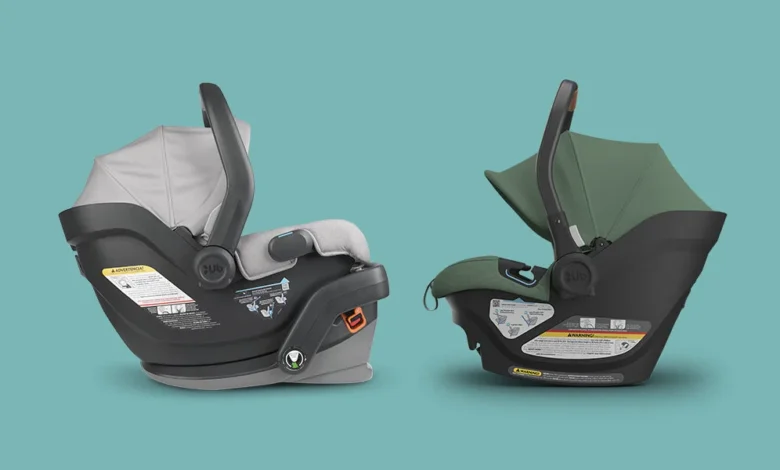
Selecting an infant car seat represents one of the most critical logistical and safety-oriented decisions expectant parents face. As the automotive safety landscape for infants continues to evolve, UPPAbaby has emerged as a market leader, consistently balancing rigorous safety standards with ergonomic convenience. The introduction of the UPPAbaby Aria alongside the established Mesa line has created a distinct divergence in the manufacturer’s product ecosystem, catering to different lifestyle needs. This report analyzes the technical specifications, safety infrastructure, and practical implications of choosing between the Mesa series and the newly introduced Aria, providing a data-driven framework for consumers navigating this selection process.
The Evolution of the UPPAbaby Infant Car Seat Lineup
UPPAbaby has maintained a dominant presence in the North American nursery market for over a decade. The Mesa series, which debuted several years ago, set a high bar for ease of installation, particularly through its signature "SmartSecure" system. The Mesa V2 and Mesa Max iterations have solidified the company’s reputation for integrating high-end safety features, such as anti-rebound panels and load legs, into a user-friendly package.
The launch of the Aria represents a strategic shift toward mobility and lightweight design. Recognizing that modern parents are increasingly urban-mobile, often traversing public transit or navigating multi-vehicle households, UPPAbaby engineered the Aria to be significantly lighter than its predecessors. While the Mesa remains the "workhorse" of the fleet, emphasizing robust construction and maximum weight capacity, the Aria addresses the physical strain associated with transporting infants, offering a substantial reduction in carrier weight without compromising the core safety ethos that defines the brand.
Comparative Technical Analysis: Weight and Maneuverability
The most striking difference between the two product lines lies in their mass. The Mesa V2 and Mesa Max are engineered with a focus on durability and structural density, resulting in a carrier weight of approximately 9.9 lbs (excluding canopy and insert). For many parents, this weight—while standard in the industry—can become cumbersome as the infant grows.
Conversely, the Aria is explicitly marketed as a lightweight alternative, weighing in at just 5.9 lbs without its accessories. This 4-pound difference is substantial in the context of daily usage. When navigating stairs, moving from vehicle to stroller, or carrying an infant across a parking lot, the Aria’s design significantly reduces the physical load. However, this weight reduction necessitates a slightly lower capacity limit. The Aria supports infants from 4 to 30 lbs and up to 30 inches, whereas the Mesa series accommodates up to 35 lbs and 32 inches. This distinction is vital for parents who prioritize longevity of use versus those who prioritize ease of transport during the first year of life.
Canopy, Climate Control, and Environmental Comfort
Thermal regulation is a growing concern in the design of modern car seats, particularly as extreme weather events become more frequent. The Mesa series features a robust, large UPF 25+ hideaway canopy, which provides extensive protection against ultraviolet rays and elements. However, the Mesa lacks active ventilation within the shell itself, relying on the breathable nature of its fabrics.
The Aria takes a different approach to climate management. It incorporates an extra-large UPF 25+ canopy with a dedicated back-panel ventilation system. This is paired with an extended pop-out sunshade. Furthermore, the carrier shell of the Aria is designed to facilitate increased airflow. For families residing in regions with high humidity or intense heat, this ventilation integration is a significant functional advantage. It reflects a broader trend in juvenile product manufacturing: moving beyond mere containment to active environmental management for the occupant.
Harness Systems and Ergonomic Adjustability
The internal architecture of the car seat—specifically the harness and headrest—determines the long-term safety and comfort of the child. The Mesa series utilizes a 4-position headrest with a no-rethread 5-point harness. This "no-rethread" feature is highly regarded by child passenger safety technicians (CPSTs) because it eliminates the risk of incorrect harness re-routing, which is a common source of user error.
The Aria, while lacking the "no-rethread" mechanism, offers a vastly more granular adjustment system: a 25-position headrest. This allows for a more precise, customized fit for the infant as they undergo the rapid growth spurts characteristic of the first year. While the two-handed adjustment requirement on the Aria may be perceived as slightly less convenient than the one-handed adjustments found on the Mesa Max, the sheer number of positions ensures that the harness and headrest remain perfectly aligned with the child’s shoulders throughout their development.
Safety Infrastructure and Installation Mechanics
Both product lines utilize UPPAbaby’s proprietary SmartSecure technology, which features a red-to-green tension indicator. This visual feedback loop is widely considered one of the industry’s most effective tools for reducing installation errors. Both the Mesa and Aria systems are compatible with all UPPAbaby strollers, maintaining the brand’s ecosystem-focused value proposition.
When it comes to the base, the differences become more pronounced. The Mesa Max and the Aria both incorporate a load leg and an anti-rebound panel, features that significantly improve stability during a collision by reducing the rotation of the seat. The load leg, in particular, has been proven in crash testing to reduce head injury criteria by absorbing energy that would otherwise be transferred to the infant. The standard Mesa V2, while still passing all federal safety standards, does not include these advanced energy-management components, making the Mesa Max and the Aria the superior choices for parents who prioritize the latest in impact-mitigation technology.
Chemical Composition and Sustainability
A notable achievement across the entire current UPPAbaby portfolio is the commitment to chemical safety. Both the Mesa and Aria lines utilize fabrics and foams that are entirely free from fire retardant chemicals. This is a critical development, as historical industry practices involved treating textiles with various chemical flame retardants that have raised health concerns. By utilizing inherently flame-resistant materials and smart design, UPPAbaby has obtained GREENGUARD Gold certification for these products. This implies that the car seats are verified to have low chemical emissions, contributing to better indoor air quality within the vehicle environment.
Market Implications and Economic Considerations
From a pricing perspective, the Mesa V2 enters the market at a lower entry point ($329.99), while the Mesa Max ranges higher ($399.99 to $429.99) due to its advanced base features. The Aria sits in the middle at $349.99. When evaluating these prices, parents must consider the "total cost of ownership," which includes the necessity of additional accessories like travel bags or extra bases for secondary vehicles.
The economic decision-making process is largely driven by the intended duration of use. If the parent plans to transition the child to a convertible car seat by the 10-month mark, the slightly lower weight capacity of the Aria (30 lbs) is negligible. However, if the family intends to use the infant seat for the full potential range of the Mesa (35 lbs), the investment in the Mesa series becomes more logical.
Conclusion: The Strategic Selection
The choice between the UPPAbaby Mesa and the UPPAbaby Aria is not a matter of one being "better" than the other, but rather which product better aligns with the family’s specific operational needs. The Mesa series is the definitive choice for those who value long-term utility, higher weight thresholds, and the convenience of a no-rethread harness system. It is a robust, well-tested platform that remains a gold standard in the industry.
Conversely, the Aria is a specialized tool for the modern, mobile parent. Its ultra-lightweight design, combined with superior ventilation and a highly adjustable headrest, makes it a sophisticated solution for families dealing with the physical realities of city life or warm-weather environments. By providing these two distinct paths, UPPAbaby ensures that safety does not have to come at the expense of convenience, allowing parents to tailor their equipment to their unique environment. As with all child passenger safety equipment, the ultimate recommendation remains consistent: regardless of the model chosen, the most important factor is a correct, verified installation in the vehicle.