Finding Strength and Resilience While Living with Diabetes: A World Diabetes Day Message

Living with diabetes is a persistent, multifaceted challenge that demands constant vigilance, physical endurance, and significant emotional fortitude. As the global medical community observes World Diabetes Day on November 14, organizations like DiabetesSisters are highlighting the unique intersection of gender and chronic disease management. This year, the focus shifts toward the psychological dimensions of the condition, utilizing frameworks such as the S.A.F.E. Resilience model to help women navigate the daily rigors of blood glucose management and the long-term implications of living with a chronic illness. By bridging the gap between clinical requirements and mental health support, these initiatives aim to move the discourse beyond mere biological maintenance to a more holistic approach of empowerment and self-advocacy.
The Global Context of World Diabetes Day 2026
World Diabetes Day, held annually on November 14, serves as the primary global awareness campaign for diabetes mellitus. The date was selected to commemorate the birthday of Sir Frederick Banting, who, along with Charles Best, was instrumental in the 1921 discovery of insulin. Today, the event is led by the International Diabetes Federation (IDF) and the World Health Organization (WHO), aiming to draw public attention to the rising global prevalence of the disease.
The theme for 2026, "Early Action on Diabetes," underscores a critical public health shift. As diabetes rates continue to climb—with the IDF estimating that over 500 million adults are currently living with the condition—the emphasis has moved toward early diagnosis and aggressive, proactive management. Early intervention is not merely a clinical recommendation; it is an economic and social imperative. When diabetes is detected early, the risk of severe complications—such as retinopathy, nephropathy, and cardiovascular disease—is significantly reduced, thereby preserving the quality of life for millions of individuals and lessening the burden on global healthcare systems.
The Emotional Labor of Diabetes Management
For women living with diabetes, the condition often presents distinct challenges. Research suggests that women with diabetes may face higher levels of diabetes-related distress, anxiety, and depression compared to their male counterparts. This is often attributed to the interplay of hormonal fluctuations—which can directly impact insulin sensitivity and blood glucose levels—and the traditional societal roles that often position women as primary caregivers, sometimes at the expense of their own self-care.
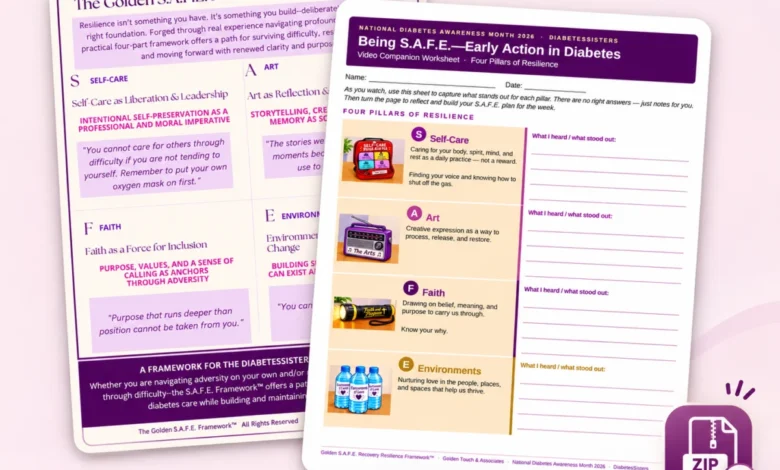
The S.A.F.E. Resilience Framework introduced in current programming provides a structured approach to addressing this emotional toll. By framing resilience not as an innate trait but as a skill set that can be developed, the initiative encourages patients to break down the "burnout" cycle. The framework emphasizes:
- Self-Awareness: Identifying triggers for emotional distress.
- Adaptability: Developing flexible responses to fluctuating glucose levels.
- Fortitude: Maintaining long-term commitment to care regimens.
- Engagement: Building robust support networks to combat the isolation of chronic disease.
By integrating these concepts, women are encouraged to view their health journey through a lens of agency. Rather than viewing themselves as passive recipients of medical directives, patients are urged to become active architects of their own well-being.
Statistical Landscape and the Need for Proactive Care
The necessity for these resilience-based programs is grounded in sobering statistics. According to data from the Centers for Disease Control and Prevention (CDC) and the International Diabetes Federation, the cost of managing diabetes has reached record highs, with global expenditures exceeding $900 billion annually. However, the true cost is often invisible: the emotional and psychological exhaustion of "diabetes fatigue."
Studies indicate that approximately 30% to 50% of people with diabetes experience significant diabetes distress at any given time. This distress is characterized by the feeling that the demands of the disease outweigh the resources available to manage it. This is precisely where the "Early Action" mandate intersects with mental health. If the medical community prioritizes the psychological state of the patient alongside their HbA1c levels, adherence to treatment plans—such as continuous glucose monitoring and insulin administration—tends to increase.
A Chronology of Advocacy and Education
The evolution of diabetes care has moved from the purely clinical to the intersectional. A brief timeline of modern diabetes advocacy illustrates this progress:
- 1921: Discovery of insulin, transforming diabetes from a terminal diagnosis to a manageable condition.
- 1991: The International Diabetes Federation and the World Health Organization launch World Diabetes Day in response to the growing threat to global health.
- 2010–2015: The rise of digital health tools, including CGM (Continuous Glucose Monitors) and closed-loop systems, shifts the burden of data management onto the patient, necessitating greater digital literacy and emotional resilience.
- 2020–2024: The global pandemic highlights the heightened vulnerability of the diabetic population, sparking a renewed focus on community support and telemedicine.
- 2026: The current focus on "Early Action" cements the necessity of integrating mental health and emotional resilience into standard care protocols.
Official Responses and Strategic Implications
Healthcare advocacy groups and medical professionals have increasingly echoed the need for a holistic approach. Organizations like DiabetesSisters emphasize that while medical technology—such as advanced pumps and automated insulin delivery systems—is vital, technology alone cannot solve the human experience of the disease.
Dr. Elena Vance, a clinical psychologist specializing in chronic disease management, notes, "We often see that the patients who struggle the most are not those who lack access to the latest technology, but those who feel isolated in their struggle. Resilience is a protective factor. When a patient feels empowered—when they possess the tools to advocate for themselves with their endocrinologists and understand their emotional triggers—they achieve significantly better clinical outcomes."
This perspective has led to a shift in clinical practice. Many modern endocrinology clinics are now integrating "diabetes educators" who are trained specifically in behavioral health, ensuring that the dialogue between patient and provider is not restricted to dosage adjustments but includes the reality of the patient’s lifestyle and mental state.
The Role of Community and Connection
A core pillar of the 2026 World Diabetes Day message is the importance of social connection. For many women, the stigma surrounding diabetes—often linked to misconceptions about diet, weight, and lifestyle choices—can lead to withdrawal. Programs that focus on "finding strength and resilience" often utilize group settings to normalize the experience of the disease.
By sharing personal narratives, such as the referenced story of Queen Esther, participants are encouraged to find courage in vulnerability. Using historical and literary archetypes to frame personal struggle provides a narrative structure that can make the daunting task of daily diabetes management feel more manageable. It shifts the internal monologue from "Why me?" to "How can I lead?"
Moving Toward a Healthier Future
The implications of the 2026 "Early Action on Diabetes" campaign are clear: early detection is the first step, but consistent, resilient, and supported management is the destination. The inclusion of resources, such as the S.A.F.E. Resilience worksheets, serves as a practical manifestation of this philosophy. By providing patients with tangible, actionable tools, organizations are moving the needle toward a more proactive, patient-centered model of care.
As the global community looks toward the future, the integration of mental health, community support, and early medical intervention will remain the tripod upon which successful diabetes management rests. The message remains consistent: while diabetes is a permanent component of life for those diagnosed, it does not have to define the limits of one’s capacity for strength, resilience, or future success. Through education, advocacy, and the deliberate cultivation of emotional health, individuals can navigate the complexities of this condition with clarity and confidence, ensuring that their health remains a priority rather than a point of despair.
The path forward, as highlighted by this year’s initiatives, involves a commitment to both the body and the mind. As awareness grows and technology improves, the focus must remain on the individual—the woman managing her glucose, the patient navigating the healthcare system, and the person striving for a life defined by her own goals rather than her diagnosis. On this World Diabetes Day, the focus is not just on the numbers on a monitor, but on the enduring strength of the human spirit.