Addressing the Perinatal Mental Health Crisis in Los Angeles County through Holistic and Culturally Responsive Care

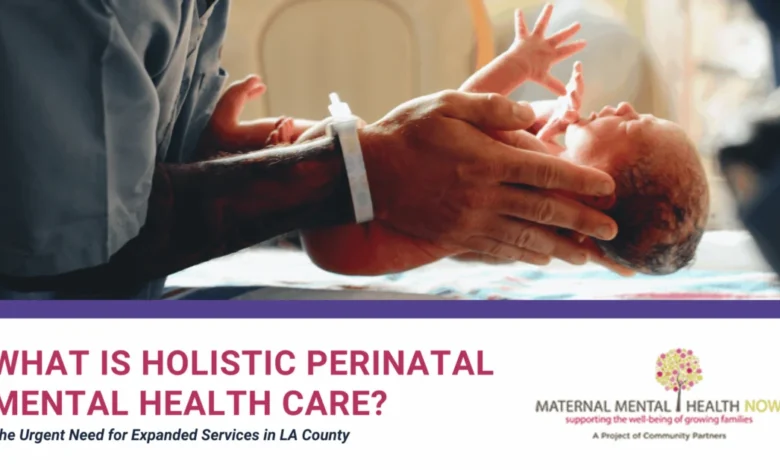
Los Angeles County, the most populous county in the United States, is currently facing a significant public health challenge regarding the mental well-being of its newest parents. Data derived from a 2018 Los Angeles Mommies & Babies (LAMB) study reveals a sobering reality for the region’s approximately 120,000 annual births: nearly one in four new parents, or 23.1%, grapple with postpartum depression, while 27.6% experience postpartum anxiety. These figures, while already substantial, are believed by experts to be a conservative estimate. Due to pervasive social stigma and systemic barriers to accessing healthcare, upwards of 50% of individuals experiencing these conditions are never formally identified or diagnosed.
The crisis is notably more acute within the Black community. Among Black birthing individuals in Los Angeles County, the rates of postpartum depression and anxiety soar to 33% and 30.5%, respectively. This disparity highlights a critical intersection of mental health and racial inequity, prompting organizations like Maternal Mental Health NOW (MMHN) to advocate for a vision where every birthing person and family has access to comprehensive, specialized support. The goal is a network of clinicians and community-based providers who are not only trained in perinatal mental health but are also culturally responsive to the diverse needs of the Los Angeles population.
The Provider Shortage and the Credentialing Debate
A recent report has intensified the conversation surrounding maternal mental health resources by identifying a staggering shortage of qualified professionals. The report claimed that there are only 111 maternal mental health providers currently operating in Los Angeles County. Based on the county’s birth rate and population density, the recommended number of professionals required for adequate coverage is 495. This leaves a deficit of nearly 400 providers, suggesting a massive "dark zone" in care availability.
However, the methodology of this report has drawn scrutiny from local advocacy groups. Maternal Mental Health NOW, while agreeing that the county is under-resourced, contends that the report employs an overly narrow definition of what constitutes a maternal mental health provider. The report specifically counted only those individuals who hold both a clinical degree and a Perinatal Mental Health Certification (PMH-C) from Postpartum Support International (PSI).
The PMH-C is widely recognized as a gold standard in the field, but the requirements to obtain and maintain it can be prohibitive. The process involves significant financial costs for training, examination fees, and continuing education. Consequently, many mental health clinicians and affiliated professionals who are actively serving the community are excluded from these counts. This includes those who cannot afford the certification or those who choose to practice through more holistic intervention approaches—focusing on physical health, nutrition, exercise, financial stability, and peer support—rather than traditional clinical therapy alone.
Barriers to Conventional Clinical Care
The reliance on traditional therapy as the primary intervention for perinatal mood and anxiety disorders (PMADs) presents several practical hurdles for the average Los Angeles family. One of the most significant barriers is financial. Of the 111 providers identified in the aforementioned report, as many as half operate on a "private pay" basis. This means they do not accept insurance, requiring patients to pay out-of-pocket for services that can cost hundreds of dollars per session. In a county with high living costs and significant wealth disparity, this effectively places clinical care out of reach for many.
Beyond cost, other factors contribute to the accessibility gap:
- Cultural Stigma: In many communities, seeking mental health treatment is still viewed with shame or as a sign of weakness, preventing individuals from reaching out to clinical institutions.
- Cultural Incongruence: Patients often struggle to find providers who share their cultural background or understand their specific lived experiences, leading to a lack of trust.
- Historical Harm and Oppression: Communities of color, particularly Black and Indigenous populations, have a historical basis for mistrusting medical and psychological institutions due to past systemic abuses and ongoing implicit bias in healthcare settings.
These barriers ensure that the communities most impacted by postpartum depression and anxiety are often the ones with the least access to the conventional medical model of care.
The Role of Holistic and Community-Led Interventions
To bridge the gap left by the clinical shortage, a variety of holistic, often Black-led, resources have emerged as vital lifelines in Los Angeles. Organizations such as Frontline Doulas, the Black Mamas Glowing support group, and the Therapeutic Play Foundation provide essential services that expand the definition of maternal care.
Frontline Doulas, for instance, offers a model of care that prioritizes the "fourth trimester"—the period immediately following childbirth. Doulas provide emotional support, physical comfort measures, and advocacy, which can significantly reduce the incidence of birth trauma and subsequent mental health struggles. Similarly, Black Mamas Glowing provides a safe, culturally specific space for support groups, allowing participants to process their experiences without the fear of judgment or the need to navigate the "white gaze" often present in mainstream medical settings.

The Therapeutic Play Foundation focuses on the intersection of mental health and social justice, utilizing play and creative engagement to foster wellness. These providers may not always hold the PMH-C credential, yet they are delivering timely, appropriate, and culturally informed support to historically marginalized families. Advocates argue that these community-based interventions are not just "alternatives" to clinical care but are integral components of a robust public health network.
Chronology of Maternal Mental Health Advocacy in California
The current state of maternal mental health in Los Angeles is the result of decades of evolving policy and advocacy.
- Early 2000s: Awareness began to grow regarding the "baby blues" versus clinical postpartum depression, leading to the formation of local task forces.
- 2010: The passage of the California Maternal Mental Health Assembly Concurrent Resolution (ACR 105) declared May as Perinatal Mental Health Awareness Month.
- 2018: The LAMB study provided the data-driven foundation for understanding the scale of the crisis in Los Angeles County. This same year, California passed AB 2193, requiring obstetricians and other prenatal care providers to screen pregnant and postpartum women for maternal mental health conditions.
- 2021-2023: The "California Momnibus" legislation was introduced and expanded, aiming to close the racial gap in maternal health outcomes through investments in the doula workforce and expanded Medi-Cal coverage for postpartum care.
This timeline shows a shift from mere awareness toward legislative action and the integration of diverse care models into the state’s healthcare infrastructure.
Supporting Data and Economic Implications
The economic impact of untreated maternal mental health conditions is profound. According to a study by Mathematica, the cost of untreated PMADs in the United States is estimated at $14.2 billion annually. These costs stem from lost productivity, increased emergency room visits, and poorer health outcomes for the children of affected parents, who may face developmental delays or behavioral issues.
In Los Angeles County, where 120,000 births occur annually, the localized economic burden is significant. Investing in a broader range of providers—including doulas, peer supporters, and community health workers—is increasingly seen not just as a moral imperative but as a fiscal necessity. By expanding the definition of care to include spiritual, emotional, and financial health, the county can potentially mitigate the long-term costs associated with untreated mental health crises.
Official Responses and the Path Forward
In response to the identified shortage, various entities are working to lower the barriers to professional training. For example, the Wellbeing4LA Learning Center offers free training on perinatal mental health for individuals working with expecting and postpartum persons in Los Angeles County. This initiative, supported by the Los Angeles County Department of Mental Health, aims to equip a broader workforce—including social workers, community health workers, and non-profit staff—with the tools to identify and support families in need.
Maternal Mental Health NOW continues to advocate for a paradigm shift. Their position is that while clinical certification is valuable, the priority must be on "meeting people where they are." This involves validating the work of community-based providers and ensuring they are integrated into the referral networks used by hospitals and insurance companies.
The vision for the future involves a "no wrong door" policy, where a birthing person can find support through their church, a local community center, a doula, or a licensed therapist, with all these paths leading to high-quality, culturally sensitive care.
Analysis of Implications
The debate over provider numbers in Los Angeles County serves as a microcosm for a larger national conversation about healthcare delivery. If the medical community continues to define "qualified care" solely through expensive, high-level certifications, the provider gap will likely never be closed. However, by embracing a multi-tiered approach that includes both clinical specialists and community-based practitioners, Los Angeles has the opportunity to create a more resilient and equitable support system.
The emphasis on culturally responsive care is particularly vital. As the data shows, the Black community in Los Angeles faces the highest risks but often has the lowest levels of trust in traditional systems. Addressing this requires more than just more doctors; it requires a diversification of the workforce and a validation of holistic practices that have long existed outside the traditional medical tent.
For families in Los Angeles County, the message from advocacy groups is clear: help is available, and it comes in many forms. Whether through a support group, a doula, or a specialized clinician, the goal is to ensure that the transition into parenthood is supported by a community that understands the unique pressures of the modern birthing experience. As the county moves forward, the success of these efforts will be measured not just by the number of certificates on a wall, but by the health and stability of the 120,000 families who begin their journey in Los Angeles each year.
Related posts: