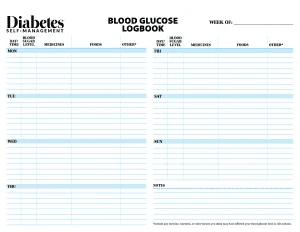
Understanding and monitoring blood glucose (sugar) levels is a cornerstone of diabetes prevention and management. This comprehensive guide outlines normal and diabetic blood sugar ranges, both before and after meals, alongside recommended A1C levels, which provide an average measure of glucose management over a two to three-month period. These metrics are crucial for individuals, healthcare providers, and public health initiatives in identifying, diagnosing, and effectively treating diabetes and prediabetes. The data presented reflects guidelines from leading health authorities, primarily the American Diabetes Association (ADA), emphasizing the critical role of these measurements in maintaining metabolic health.
Core Blood Sugar Reference Chart
The following chart summarizes the key blood sugar and A1C targets for individuals both with and without diabetes, providing a quick reference for these vital health indicators.
| Normal for person without diabetes | Official ADA recommendation for someone with diabetes | |
|---|---|---|
| Fasting | 70–99 mg/dl (3.9–5.5 mmol/L) | 80–130 mg/dl (4.4–7.2 mmol/L) |
| 1 to 2 hours after meals | Less than 140 mg/dl (7.8 mmol/L) | Less than 180 mg/dl (10.0 mmol/L) |
| A1C | Less than 5.7% | Less than 7.0% (eAG: less than 154 mg/dl [8.6 mmol/L]) |
Source: American Diabetes Association: Checking Your Blood Sugar, American Diabetes Association: Diagnosis
The Global Challenge of Diabetes and the Importance of Monitoring
Diabetes mellitus represents a significant and growing global health crisis. According to the World Health Organization (WHO), diabetes was the ninth leading cause of death in 2019, with an estimated 1.5 million deaths directly attributed to the disease. The International Diabetes Federation (IDF) reported that in 2021, approximately 537 million adults aged 20-79 years were living with diabetes worldwide, a number projected to rise to 783 million by 2045. A substantial portion of these individuals remain undiagnosed, highlighting the urgent need for effective screening and awareness campaigns. In the United States, the Centers for Disease Control and Prevention (CDC) estimated in 2020 that 37.3 million Americans (about 11.3% of the population) have diabetes, with another 96 million adults (38.0% of the adult population) having prediabetes. Many of these individuals are unaware of their condition, making routine blood sugar monitoring and diagnostic tests indispensable tools in addressing this epidemic.
Early detection through tests like fasting plasma glucose (FPG), oral glucose tolerance tests (OGTT), and A1C measurements is paramount. Timely diagnosis allows for the implementation of lifestyle modifications and medical interventions that can prevent or delay the onset of type 2 diabetes, mitigate complications, and improve long-term health outcomes for those already diagnosed. The economic burden of diabetes is also staggering, encompassing direct medical costs and indirect costs from lost productivity. Effective management, underpinned by consistent monitoring, can significantly reduce these costs and improve quality of life.
Fasting Blood Sugar: A Baseline Indicator
A fasting blood sugar test, often referred to as fasting plasma glucose (FPG), measures the amount of glucose in the blood after an individual has abstained from eating or drinking anything (except water) for at least eight hours. This test is a fundamental diagnostic tool commonly employed to screen for diabetes and prediabetes. The procedure typically involves a blood sample drawn from a vein in the arm and analyzed in a laboratory, or, less commonly for diagnostic purposes, a finger-stick blood sample using a lancet and a portable glucose meter.
Normal Fasting Blood Sugar for Non-Diabetic Individuals
For individuals without diabetes, a normal fasting blood glucose level falls within the range of 70 to 99 mg/dl (3.9 to 5.5 mmol/L). Levels within this range indicate healthy glucose regulation by the body’s metabolic systems, primarily the pancreas’s insulin production.
The ADA recommends routine screening for type 2 diabetes beginning at age 35 for all adults. If the initial results are normal, repeat screenings are advised every three years. However, certain risk factors necessitate earlier and more frequent screening. These risk factors include being overweight or obese, having a family history of type 2 diabetes, a history of gestational diabetes (diabetes developed during pregnancy), or belonging to certain racial/ethnic groups known to have a higher prevalence of diabetes (e.g., African American, Latino, Asian American, Pacific Islander, or Native American). For these individuals, healthcare providers may recommend screening commence sooner and be repeated more frequently than the standard three-year interval.
Children and adolescents also warrant special consideration for diabetes screening. Those presenting with diabetes symptoms, or who are overweight and possess additional risk factors such as a family history of type 2 diabetes, certain ethnic backgrounds (African American, Latino, Asian American, Native American, or Pacific Islander descent), or signs of prediabetes (e.g., acanthosis nigricans, high blood pressure, high cholesterol), or a mother who had gestational diabetes, should be tested. Screening for this younger demographic is typically recommended starting at age 10 or at the onset of puberty, whichever occurs earlier, with subsequent re-testing every three years.
A fasting blood sugar reading between 100 to 125 mg/dl (5.6 to 6.9 mmol/L) is indicative of prediabetes. Prediabetes signifies that blood glucose levels are elevated above the normal range but not yet high enough to meet the diagnostic criteria for full-blown diabetes. This condition is a critical risk factor for developing type 2 diabetes, heart disease, and stroke. Importantly, prediabetes is often reversible or manageable through targeted lifestyle interventions, which may include dietary changes, increased physical activity, and weight loss. In some instances, medication may also be prescribed.
ADA Recommendations for Fasting Blood Sugar in Diabetic Individuals
For most nonpregnant adults diagnosed with diabetes, the American Diabetes Association recommends a fasting blood sugar target range of 80 to 130 mg/dl (4.4 to 7.2 mmol/L). However, the ADA explicitly emphasizes the importance of individualizing these targets. Factors influencing tailored goals include the duration of diabetes, the individual’s age and life expectancy, cognitive status, the presence of other co-existing health conditions, the history of cardiovascular complications, and the presence of hypoglycemia unawareness (a condition where individuals do not experience the typical warning symptoms of low blood sugar). Healthcare providers play a crucial role in discussing and establishing personalized blood sugar goals with their patients, ensuring that treatment plans are safe, effective, and aligned with individual circumstances and overall health objectives.
Post-Meal Blood Sugar: Understanding Glucose Response
Blood sugar levels fluctuate throughout the day, particularly in response to food intake. Monitoring post-meal blood sugar levels provides valuable insight into how the body processes carbohydrates and the effectiveness of insulin, either naturally produced or administered.
Normal After-Meal Blood Sugar for Non-Diabetic Individuals
For individuals without diabetes, a normal blood sugar level one to two hours after eating is typically less than 140 mg/dl (7.8 mmol/L). The body’s efficient insulin response ensures that glucose from food is quickly absorbed by cells, preventing prolonged elevations.
A blood sugar reading between 140 and 199 mg/dl (7.8 to 11.1 mmol/L) two hours after a meal suggests prediabetes, indicating impaired glucose tolerance. A level of 200 mg/dl (11.1 mmol/L) or higher two hours after a meal can indicate diabetes. While individuals without diabetes generally do not routinely check their blood sugars, one of the primary diagnostic tests for diabetes and prediabetes, particularly for post-meal glucose response, is the oral glucose tolerance test (OGTT).
The OGTT involves a structured procedure: the individual fasts overnight, a baseline fasting blood sample is taken, and then a sugary drink containing 75 grams of glucose is consumed. Blood sugar is then re-checked two hours later. A modified version of the OGTT is also specifically used to diagnose gestational diabetes, which manifests during pregnancy. The OGTT is crucial for detecting impaired glucose tolerance, a condition that can often precede type 2 diabetes by many years.
ADA Recommendations for After-Meal Blood Sugar in Diabetic Individuals
For most nonpregnant adults with diabetes, the ADA recommends that blood sugar levels one to two hours after the beginning of a meal should be less than 180 mg/dl (10.0 mmol/L). This timeframe typically represents the peak blood sugar level in individuals with diabetes after eating. Similar to fasting targets, post-meal blood sugar goals may need to be individualized. Factors such as the duration of diabetes, age, life expectancy, cognitive function, other health conditions, cardiovascular complications, and hypoglycemia unawareness all contribute to determining appropriate personal targets. It is imperative for individuals with diabetes to engage in regular discussions with their healthcare providers to establish and refine these personalized blood sugar goals, ensuring optimal management and minimizing the risk of both hyperglycemia (high blood sugar) and hypoglycemia (low blood sugar).
A1C Test: A Long-Term Glucose Snapshot
The A1C test, also known as hemoglobin A1C, HbA1c, glycated hemoglobin, or glycosylated hemoglobin test, provides a valuable average measure of blood glucose levels over the preceding two to three months. Unlike fasting or post-meal tests, the A1C test does not require fasting, meaning individuals can eat or drink normally before the test. This convenience makes it a widely used and practical diagnostic and monitoring tool. The A1C test works by measuring the percentage of hemoglobin in red blood cells that is coated with sugar (glycated). Since red blood cells have a lifespan of about three months, the A1C reflects the average blood sugar exposure over that period. A higher percentage indicates higher average blood sugar levels.
While highly effective, the HbA1C test may not be accurate for all individuals. Certain conditions, such as anemias, specific treatments for HIV, and genetic variants common in people of African, Mediterranean, or Southeast Asian descent, can affect the accuracy of the A1C result. In such cases, alternative diagnostic or monitoring methods may be preferred. Beyond diagnosis, the HbA1C test is indispensable for individuals living with diabetes, serving as a key indicator of how well their condition is being managed over time.
Normal HbA1C for Non-Diabetic Individuals
For individuals without diabetes, a normal HbA1C level is below 5.7%. An A1C result ranging from 5.7% to 6.4% is indicative of prediabetes, signaling an increased risk for developing type 2 diabetes.
The CDC and ADA recommend that adults over the age of 45, or adults under 45 who are overweight and possess one or more risk factors for diabetes, should have a baseline A1C test. If the initial result is normal, the A1C should be re-checked every three years. If the result indicates prediabetes, more frequent monitoring, typically every one to two years, is advised to track progression and reinforce preventative measures.
ADA Recommendations for A1C in Diabetic Individuals
The American Diabetes Association recommends an A1C target of less than 7% for most nonpregnant adults with diabetes. However, the ADA recognizes the need for highly individualized A1C goals. A more stringent goal, such as less than 6.5%, may be appropriate for certain individuals, including those who have had diabetes for a shorter duration, younger patients, those without significant cardiovascular disease, or those whose type 2 diabetes is managed solely through lifestyle interventions or metformin. This lower target aims to minimize long-term complications, particularly in patients with a longer life expectancy.
Conversely, a higher A1C goal, such as less than 8%, may be more appropriate for individuals with a history of severe hypoglycemia, a limited life expectancy, advanced diabetes complications (such as kidney disease or severe neuropathy), multiple co-existing illnesses, or for whom achieving a lower A1C goal would entail an unacceptable risk of adverse events or a significant burden on their quality of life. The overarching principle is to balance the benefits of glycemic control with the risks of treatment. Regular discussions between patients and their healthcare providers are vital to establish and adjust these A1C targets, ensuring a personalized and effective diabetes management plan. For individuals with diabetes, A1C levels should typically be checked two to four times per year to monitor the effectiveness of their treatment regimen.
Broader Implications and the Path Forward
The fasting blood sugar, post-meal blood sugar, and A1C tests collectively form the cornerstone for diagnosing prediabetes and diabetes, as well as for evaluating the efficacy of ongoing diabetes management. The widespread prevalence of undiagnosed diabetes and prediabetes underscores the importance of public health campaigns that promote awareness and routine screening.
It is crucial for individuals to understand that self-diagnosis using a home blood glucose meter is not recommended for confirming diabetes. Diagnostic criteria are stringent and involve specific laboratory procedures and professional interpretation. Therefore, any concerns about diabetes or prediabetes should prompt a visit to a doctor’s office or a certified laboratory for accurate testing and diagnosis.
Upon receiving test results, open communication with a healthcare provider is essential. Patients should understand:
- The recommended frequency for specific tests, such as fasting blood glucose or A1C.
- The meaning and implications of their individual results.
- Their personalized blood sugar and A1C targets.
If an individual is not previously diagnosed with prediabetes or diabetes but their results fall outside the "normal" range, their doctor will likely recommend further confirmatory tests and discuss a comprehensive treatment plan. This plan frequently begins with foundational lifestyle modifications, including sustainable weight loss, adopting a healthy eating plan (often guided by a registered dietitian), and engaging in regular physical activity. For many, these changes can prevent or delay the progression from prediabetes to type 2 diabetes. In cases where lifestyle changes are insufficient or diabetes is already diagnosed, medical interventions such as oral diabetes medications, and potentially insulin therapy, may be initiated.
For those diagnosed with diabetes, learning how to regularly check blood sugars with a home glucose meter is an empowering step. This self-monitoring provides real-time data that, when shared with the healthcare team, allows for dynamic adjustments to the treatment plan, ensuring optimal blood glucose control and mitigating the risk of both acute and chronic complications.
The journey of diabetes management is a collaborative one, requiring active participation from the individual, consistent guidance from healthcare professionals, and a commitment to ongoing monitoring and lifestyle adjustments. By understanding these key blood sugar metrics, individuals can take proactive steps towards better health and a higher quality of life.