Cozy Caves and Sleeping Bears: Implementing Interactive Hibernation Science Activities in Early Childhood Education

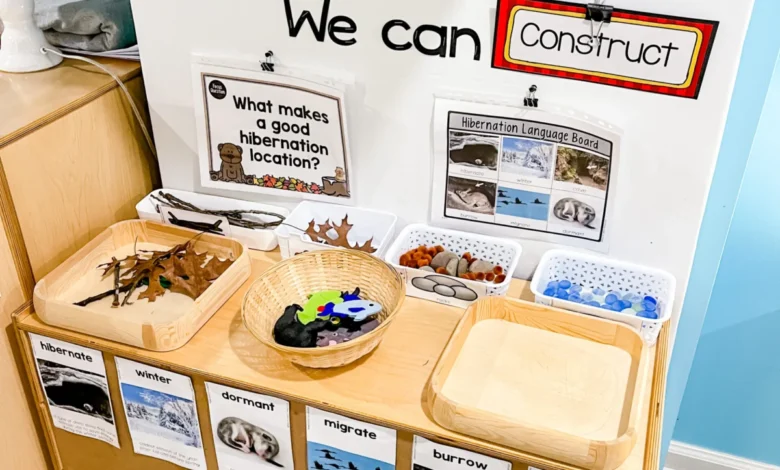
As winter temperatures drop and seasonal curricula shift across early childhood classrooms, educators are increasingly turning to nature-based themes to engage young learners. Among the most popular units of study during the colder months is animal hibernation. Far beyond a simple seasonal craft, teaching preschoolers about how wildlife copes with harsh winter weather offers a multidisciplinary approach to early education. Recent pedagogical strategies emphasize turning ordinary classroom spaces into dynamic science centers where children can explore biological concepts, enhance their motor skills, and expand their vocabularies through hands-on play.
The Evolution of Winter Science Curricula in Preschools
For decades, early childhood education has recognized the value of connecting children to the natural world. However, modern preschool frameworks place a heavier emphasis on inquiry-based learning and STEAM (Science, Technology, Engineering, Arts, and Mathematics) integration. When educators introduce the concept of hibernation, they are laying the groundwork for complex biological and ecological principles.

Historically, winter themes in schools were limited to snowmen, mittens, and basic color-matching exercises. Today, educators leverage children’s innate curiosity about animals to teach deeper concepts regarding seasonal adaptation, environmental science, and animal behavior. By shifting the focus from passive listening to active investigation, teachers help students connect classroom lessons to real-world ecological phenomena. Educational researchers note that children who engage in nature-based science activities during their formative years develop stronger critical thinking skills and a lifelong appreciation for wildlife conservation.
Multidisciplinary Learning Through Hibernation Stations
The implementation of a dedicated hibernation science center yields benefits that extend far beyond basic science knowledge. Experts in early childhood development outline several key developmental domains addressed through these interactive modules:
- Language and Literacy: The introduction of specialized vocabulary—such as "hibernate," "den," "torpor," and "habitat"—exponentially expands a preschooler’s lexicon. Text-rich environments featuring labeled reference posters, word-tracing cards, and themed picture books encourage early literacy skills, helping children recognize letter sounds and word patterns organically.
- Cognitive and Mathematical Development: Sorting and categorizing activities—such as matching specific animals to their correct winter environments—strengthen early math and classification skills. Children learn to analyze traits, compare sizes, and identify patterns.
- Motor Skill Enhancement: Gross motor skills are actively engaged when children build large-scale dens using building blocks, cardboard boxes, and sensory table materials. Conversely, fine motor dexterity is refined when students manipulate small animal figurines, trace laminated vocabulary cards, and handle craft supplies.
- Social-Emotional Growth: Collaborative play scenarios, where children pretend to be bears, hedgehogs, or bats preparing for a long winter sleep, foster empathy, imagination, and cooperative social interactions.
Designing the Classroom Hibernation Center
Creating an inviting and educationally sound hibernation station does not require expansive floor space or expensive commercial kits. Educators can utilize everyday classroom materials to construct two primary types of interactive learning zones: the "Examining Hibernation" station and the "Construction" station.

In the first setup, teachers utilize small cardboard boxes with custom-cut semi-circular entrances to represent underground caves or dens. Plastic or wooden animal figurines are either hidden within these enclosures for a scavenger-hunt style discovery game or placed on a central table for a matching exercise. This activity encourages spatial awareness and deductive reasoning as children determine which animal belongs in which type of habitat.
The second station transitions the learning process from observation to construction. Instead of simply locating pre-made dens, students are tasked with engineering safe, weather-resistant shelters for the animals. Utilizing classroom building blocks, felt pieces, natural items like twigs and leaves, and sensory fillers, children design protective structures capable of shielding hibernating animals from imaginary winter storms and predators. This engineering challenge promotes problem-solving, spatial reasoning, and collaborative teamwork.
Broader Educational Implications and Expert Perspectives
Early childhood specialists and educational curriculum developers advocate for the seamless integration of these thematic units across all classroom areas. Rather than confining science to a specific corner of the room, modern preschool strategies encourage teachers to weave hibernation themes into writing centers, dramatic play areas, and art stations.

For instance, writing centers can feature hibernation-themed prompts where children practice drawing and labeling animal tracks. Dramatic play areas can be transformed into cozy woodland caves complete with oversized blankets, stuffed bears, and hibernation logs, allowing children to physically embody the lessons learned during science time.
From a broader policy and developmental perspective, integrating science and literacy through nature studies aligns with national early learning standards. Educational analysts point out that early exposure to scientific inquiry closes achievement gaps, boosts engagement, and fosters positive attitudes toward STEM subjects that persist into elementary school and beyond.
As schools continue to seek innovative, cost-effective ways to enrich their early learning environments, resources focused on structured yet flexible science centers remain in high demand. By combining tactile exploration, literacy integration, and imaginative play, educators can transform a simple winter science lesson into a comprehensive, multi-sensory learning experience that resonates deeply with young students.
Related posts: