Sleep Safety for Babies: A Comprehensive Parent’s Guide to Ensuring Sweet Dreams and Reducing Risks

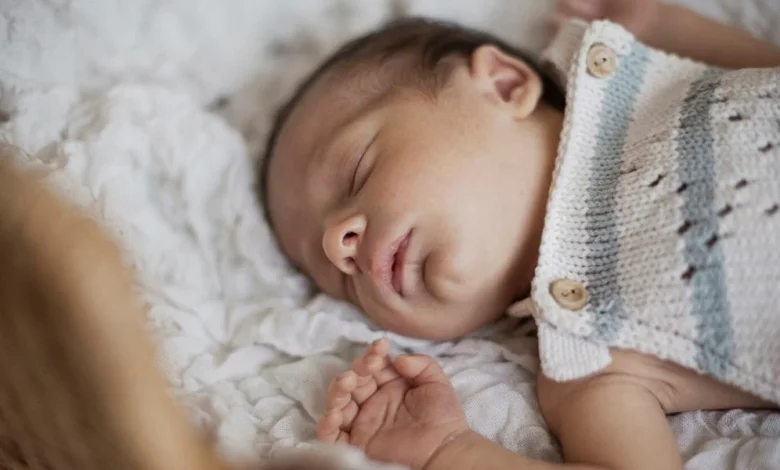
Ensuring the safety of an infant during sleep is a paramount concern for new parents and caregivers, forming a critical component of early childhood public health. Annually, thousands of infants succumb to Sudden Infant Death Syndrome (SIDS) and other sleep-related infant deaths (SUID), underscoring the vital importance of adhering to established safe sleep guidelines. This comprehensive guide delves into the foundational principles, historical context, and practical applications of safe sleep practices, drawing upon recommendations from leading health organizations to foster secure and peaceful sleep environments for infants.
The Foundational Principles: The ABCs of Safe Sleep
The cornerstone of infant sleep safety is encapsulated in the "ABCs" – Alone, Back, Crib. These three tenets, consistently advocated by organizations such as the American Academy of Pediatrics (AAP) and the Centers for Disease Control and Prevention (CDC), are designed to significantly mitigate the risk of SIDS and other fatal sleep incidents.
A – Alone: Minimizing Risk Through Independent Sleep
The recommendation for infants to sleep "Alone" signifies that a baby should be in their own separate sleep space, free from other individuals, pets, or objects. This principle directly addresses the risks associated with bed-sharing, often referred to as co-sleeping. While room-sharing—where the baby sleeps in the same room as the parents but in a separate sleep device—is highly recommended for at least the first six months, and ideally for the first year of life, bed-sharing introduces several dangers. These include accidental overlaying by a parent or caregiver, entrapment between the mattress and headboard or wall, and suffocation by soft bedding.
Studies have consistently demonstrated a heightened risk of SIDS and accidental suffocation when infants share a sleep surface with adults, particularly if the adults are fatigued, under the influence of alcohol or drugs, or are smokers. The AAP specifically advises against bed-sharing under any circumstances. Instead, room-sharing allows parents to easily monitor and feed their baby while eliminating the hazards of a shared sleep surface. Products such as bassinets or bedside sleepers that attach securely to the parent’s bed, like the Halo Bassinest, offer a practical solution, providing proximity for parental reassurance and ease of nighttime care without compromising the infant’s independent sleep space. This arrangement fosters bonding while maintaining a crucial safety boundary.
B – Back: The Safest Position for Infant Sleep
Placing an infant "Back" to sleep for every sleep session—naps and nighttime alike—is the single most effective action parents can take to reduce the risk of SIDS. This recommendation emerged from the groundbreaking "Back to Sleep" campaign, launched in the United States in 1994 by the National Institute of Child Health and Human Development (NICHD) in collaboration with the AAP, CDC, and other health organizations. Prior to this initiative, many parents were advised to place infants on their stomachs, a practice believed to prevent choking but which was later definitively linked to increased SIDS risk.
The impact of the "Back to Sleep" campaign was profound. SIDS rates in the U.S. declined by more than 50% within a decade of its implementation. Research indicates that back sleeping helps maintain an open airway and prevents rebreathing of exhaled air, which can lead to a buildup of carbon dioxide. Concerns about choking on spit-up while on the back have been largely debunked by scientific evidence, which shows that infants on their backs are actually less likely to choke. Their anatomy naturally protects their airway more effectively in this position. Once an infant is able to consistently roll from back to stomach and stomach to back on their own, they can be allowed to remain in their preferred sleep position. However, it is imperative that caregivers always initiate sleep by placing the infant on their back.
C – Crib: Ensuring a Secure and Uncluttered Sleep Environment
The final "C" stands for "Crib," representing any Consumer Product Safety Commission (CPSC)-approved sleep surface designed specifically for infants, including cribs, bassinets, and playards. The critical elements here are safety certification and the absence of hazardous items. The sleep surface must be firm, covered with a tightly fitted sheet, and free from any soft bedding, bumper pads, pillows, quilts, blankets, loose sheets, or stuffed animals.
Soft surfaces, such as adult beds, sofas, armchairs, or cushions, pose significant suffocation risks because they can conform to an infant’s head and face, obstructing breathing. Similarly, loose bedding and bumper pads present strangulation and suffocation hazards. The CPSC has issued stringent safety standards for cribs and bassinets, including requirements for slat spacing, mattress support, and construction materials, to prevent entrapment and falls. Parents should always ensure their baby’s sleep equipment meets current safety standards and should avoid using older, potentially unsafe cribs or bassinets, especially those with drop-side rails, which have been linked to numerous infant deaths and were subsequently banned. A firm mattress provides a stable and safe foundation, preventing the infant from sinking into the material and creating pockets of rebreathing air.
A Historical Perspective: The Evolution of Safe Sleep Guidelines
The understanding of SIDS and the development of safe sleep recommendations represent a significant public health triumph rooted in decades of scientific inquiry and advocacy. Before the 1990s, infant sleep practices varied widely, often influenced by cultural norms and anecdotal advice. Many healthcare professionals, based on limited evidence, even recommended stomach sleeping, believing it reduced aspiration risk.
The turning point arrived in the late 1980s and early 1990s with large-scale epidemiological studies, particularly from the United Kingdom, that identified a strong correlation between prone (stomach) sleeping and SIDS. This led to the launch of the "Back to Sleep" campaign in the UK in 1991, followed by similar initiatives worldwide. The U.S. campaign, launched in 1994, spearheaded a dramatic shift in parental behavior and healthcare provider guidance. The campaign utilized public service announcements, educational materials, and healthcare professional training to disseminate the "Back to Sleep" message effectively.
By 2005, the campaign was renamed "Safe to Sleep" to broaden its scope beyond just sleep position, encompassing other critical safe sleep recommendations like avoiding soft bedding and maintaining a smoke-free environment. This evolution reflects a growing, holistic understanding of the complex factors contributing to SIDS and other sleep-related infant deaths. The sustained reduction in SIDS rates globally stands as a testament to the power of evidence-based public health campaigns.
Understanding SIDS and Other Sleep-Related Infant Deaths (SUID)
SIDS is defined as the sudden, unexpected death of an infant younger than 1 year of age that remains unexplained after a thorough case investigation, including an autopsy, examination of the death scene, and review of the clinical history. It is a diagnosis of exclusion, meaning all other potential causes of death must be ruled out. While the exact cause of SIDS is not fully understood, current theories point to a "triple-risk model": a vulnerable infant (e.g., with underlying brainstem abnormalities), a critical developmental period (most SIDS deaths occur between 1 and 4 months of age), and an external stressor (e.g., unsafe sleep environment, overheating).
Sleep-Related Infant Deaths (SUID) is a broader category that includes SIDS, accidental suffocation and strangulation in bed, and other undetermined causes. The distinction is crucial because while SIDS is largely unpredictable even with safe practices, many SUID deaths are preventable by eliminating known hazards in the sleep environment. Data from the CDC indicates that in 2020, approximately 3,400 infants died suddenly and unexpectedly in the U.S. Of these, about 1,380 were due to SIDS, 1,060 to accidental suffocation and strangulation in bed, and 860 to other undetermined causes. These statistics highlight the ongoing imperative for universal adherence to safe sleep guidelines.
Creating the Optimal Sleep Environment
Beyond the ABCs, several other factors contribute to a safe and conducive sleep environment for infants.
Sleep Surface and Accessories: As reiterated, the sleep surface must be firm and designed for infant sleep. This includes cribs, bassinets, and playards that meet current CPSC safety standards. A firm mattress ensures the baby cannot sink into the surface, which could create a pocket of trapped air. The mattress must fit snugly, with no gaps larger than two fingers between the mattress and the sides of the crib. Only a fitted sheet should be used; no loose blankets, quilts, or comforters. Bumper pads, once common, are now strongly discouraged as they pose suffocation and strangulation risks without providing any proven safety benefits. Similarly, pillows and soft toys should be kept out of the sleep area.
Temperature Regulation: Overheating is a known risk factor for SIDS. Infants should be dressed in no more than one layer of clothing than an adult would wear to be comfortable in the same environment. A sleep sack or wearable blanket is an excellent alternative to loose blankets, providing warmth without the risk of covering the baby’s face. The room temperature should be kept comfortable for a lightly clothed adult, typically between 68 and 72 degrees Fahrenheit (20-22 degrees Celsius). Parents should check their baby for signs of overheating, such as sweating, flushed skin, or a hot chest.
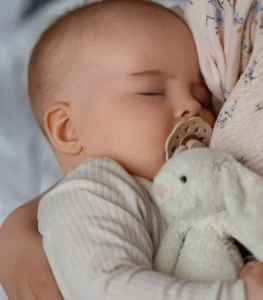
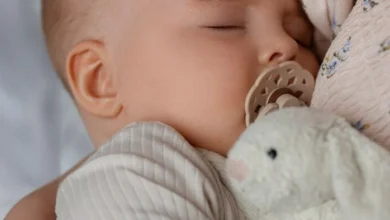
Pacifier Use: Offering a pacifier at naptime and bedtime is associated with a reduced risk of SIDS. While the exact mechanism is not fully understood, theories suggest that pacifier use may help keep the infant’s airway open or make it easier for the infant to arouse from sleep. It’s important not to force the pacifier if the baby refuses it. For breastfed infants, pacifier introduction should ideally wait until breastfeeding is well-established, typically around 3-4 weeks of age. Pacifiers should not be attached to the baby’s clothing or crib with cords or clips, as these pose strangulation hazards.
Beyond the ABCs: Additional Safe Sleep Practices
Several other practices contribute to a comprehensive safe sleep strategy:
- Room-Sharing Without Bed-Sharing: As emphasized, room-sharing for at least the first six months, and ideally up to a year, is recommended. This proximity allows for easier feeding and comforting, and it is associated with a lower SIDS risk compared to solitary sleeping in another room. However, the infant must have their own separate, approved sleep surface.
- Avoid Smoke, Alcohol, and Illicit Drugs: Exposure to tobacco smoke, both prenatal and postnatal, significantly increases the risk of SIDS. Parents and caregivers should maintain a smoke-free environment for the baby. Similarly, parental use of alcohol and illicit drugs impairs judgment and the ability to safely care for an infant, drastically increasing the risks associated with bed-sharing or accidental overlaying.
- Breastfeeding: Breastfeeding is associated with a reduced risk of SIDS. The protective effects may be related to improved immune function, greater arousal from sleep, or specific hormones in breast milk.
- Immunizations: Evidence suggests that infants who are fully immunized have a lower risk of SIDS. While the direct causal link is still being explored, it is another reason to ensure infants receive recommended vaccinations.
- Tummy Time: While infants must sleep on their backs, supervised "tummy time" when awake is crucial for development. It helps strengthen neck and shoulder muscles, preventing flat spots on the head (positional plagiocephaly), and preparing them for developmental milestones like crawling. Tummy time should always occur when the infant is awake and alert, and under direct adult supervision.
- Prenatal Care: Adequate prenatal care is linked to better infant health outcomes and may reduce the risk of SIDS. Addressing maternal health issues and receiving proper guidance during pregnancy sets a foundation for a healthy infant.
Addressing Common Parental Concerns and Misconceptions
Parents often have questions and concerns that extend beyond the basic guidelines.
- "What if my baby rolls over onto their stomach during sleep?" Once infants are developmentally capable of rolling from their back to their stomach and back again on their own, they can be allowed to remain in their chosen sleep position. The key is to always start by placing them on their back. Their ability to roll indicates sufficient muscle control to reposition themselves if their airway becomes obstructed.
- "My baby won’t sleep on their back." Some babies initially resist back sleeping. Consistency is key. Gently repositioning them, using a firm, flat sleep surface, and offering a pacifier can help. Swaddling can be effective for newborns, but it must be done correctly (snug below the shoulders, hips free) and discontinued once the baby shows signs of trying to roll over, typically around 2 months of age, to prevent entrapment.
- "Are inclined sleepers safe?" The CPSC has unequivocally stated that inclined sleepers, often marketed for babies with reflux, are unsafe for infant sleep. These products, which elevate an infant’s head, have been linked to numerous infant deaths due to positional asphyxiation. All inclined sleepers have been recalled and should not be used. Infants should always sleep on a flat, firm surface.
The Role of Product Safety and Consumer Awareness
The market for infant sleep products is vast, and vigilance is required to differentiate between genuinely safe items and those that pose risks. The CPSC plays a vital role in setting mandatory safety standards for infant sleep products and issuing recalls for dangerous items. Parents should always check for CPSC certification and ensure products meet current safety regulations. Purchasing new products from reputable retailers ensures they comply with the latest standards, as opposed to using older, potentially non-compliant hand-me-downs.
Reputable baby product retailers, such as PishPosh Baby, prioritize offering products that adhere to the highest safety standards. This includes a range of traditional cribs, bassinets, and playards designed with firm mattresses, proper ventilation, and durable construction, along with accessories like sleep sacks that replace hazardous loose bedding. Educated consumers are empowered to make choices that directly contribute to their infant’s safety.
Public Health Impact and Ongoing Efforts
The success of safe sleep campaigns in reducing SIDS rates is a testament to effective public health intervention. However, disparities in SIDS and SUID rates persist among different racial and ethnic groups, highlighting the need for targeted outreach and culturally sensitive educational programs. Factors such as socioeconomic status, access to healthcare, and differing cultural practices can influence adherence to safe sleep guidelines.
Ongoing research continues to explore the physiological mechanisms of SIDS, potential biomarkers for identifying vulnerable infants, and the most effective strategies for community-level education. Healthcare providers, including pediatricians, nurses, and lactation consultants, play a crucial role in consistently reinforcing safe sleep messages to new and expectant parents. Public awareness campaigns remain essential to ensure that every caregiver understands and implements these life-saving practices.
In conclusion, the journey of parenthood is filled with joy and responsibility, with infant sleep safety standing as a foundational priority. By adhering to the ABCs of safe sleep—Alone, Back, Crib—and embracing a comprehensive approach that includes a smoke-free environment, appropriate temperature control, and the informed selection of safety-certified products, parents can significantly reduce the risks of SIDS and other sleep-related infant deaths. The collective efforts of health organizations, product manufacturers, and vigilant parents contribute to a future where all infants can experience sweet dreams in a secure and nurturing sleep environment, fostering healthy development and providing peace of mind for families.