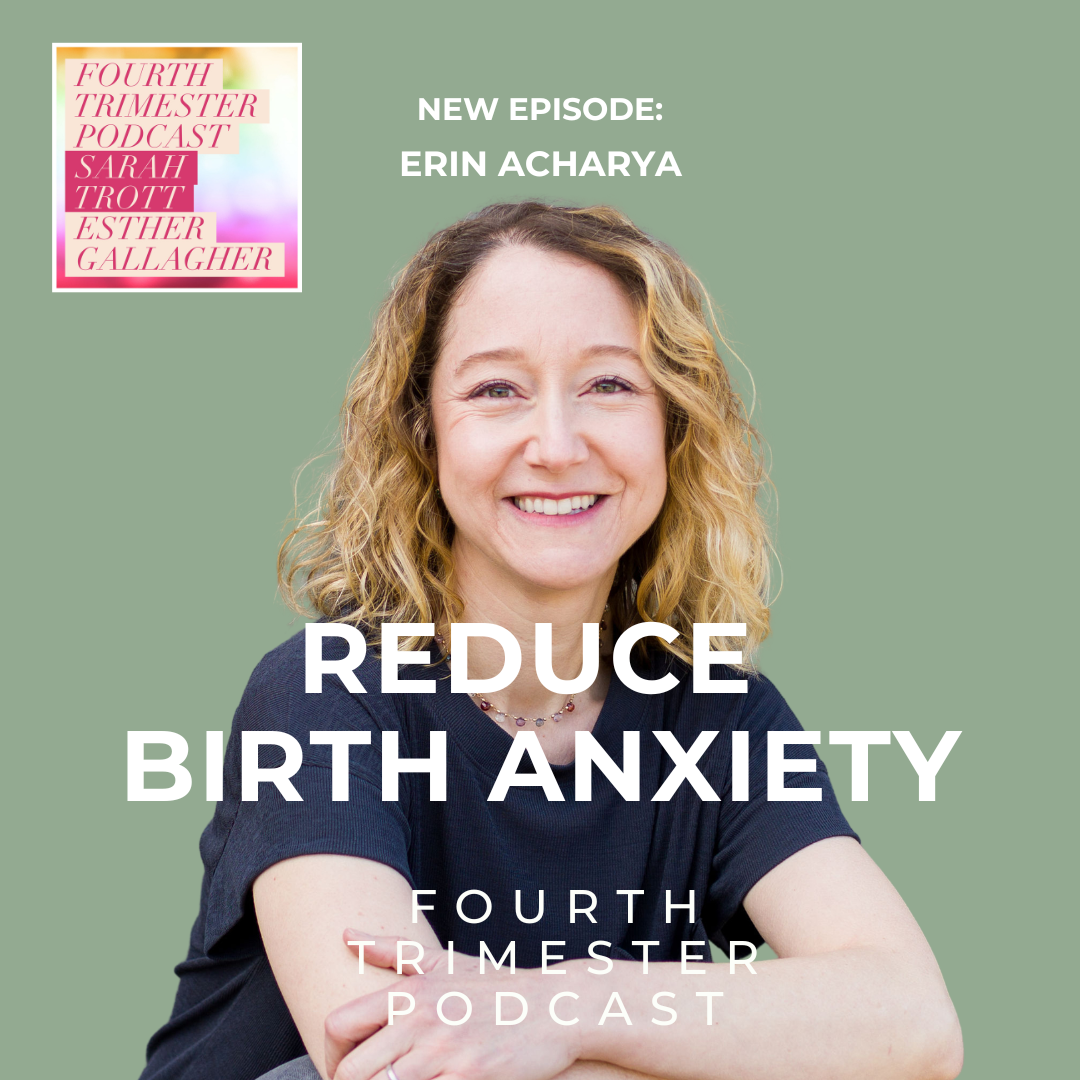
Fourth Trimester Podcast Episode 164: How to Reduce Birth Anxiety and Feel Calmer About Birth


The intersection of mental health and maternal care has become a focal point of modern obstetric discourse, as experts increasingly recognize that psychological preparation is as critical as physical readiness for labor. In the latest installment of the Fourth Trimester Podcast, host Sarah welcomes Erin Acharya, a certified clinical hypnotherapist and founder of Birth Evolved, to dissect the pervasive issue of birth anxiety. The discussion pivots away from the traditional focus on hospital logistics and diaper brands, instead prioritizing the internal landscape of the birthing person. Acharya, who transitioned from a career in K-8 education and administration to birth work following her own transformative experiences as a mother of three, argues that mental preparation is not merely an elective addition to a birth plan but a foundational requirement for a positive birth outcome.
The Rising Prevalence of Prenatal and Birth-Related Anxiety
Birth anxiety, ranging from mild apprehension to clinical tokophobia—a pathological fear of childbirth—affects a significant portion of the pregnant population. Recent clinical data suggests that approximately 20% to 25% of pregnant individuals experience high levels of anxiety regarding the birthing process. This phenomenon is often exacerbated by a modern medical environment that prioritizes risk management and intervention, sometimes at the expense of the birthing person’s sense of agency.
In the podcast, Acharya notes that traditional birth preparation classes often focus heavily on the mechanics of labor: the stages of dilation, the administration of epidurals, and the technicalities of newborn care. While these facts are necessary, they frequently fail to address the nervous system’s response to the intense physical and emotional demands of labor. When a birthing person enters a state of "fight or flight," the body produces adrenaline and cortisol, which can inhibit the production of oxytocin—the essential hormone responsible for driving contractions and facilitating a smooth labor progression.
The Physiological Mechanics of Fear and Labor
The biological impact of fear on the laboring body is a primary focus of Acharya’s work. When the amygdala—the brain’s emotional processing center—senses a threat (even a perceived psychological one), it triggers a sympathetic nervous system response. This physiological shift causes blood to move away from the uterus and toward the extremities, effectively slowing down or stalling labor. This cycle, often referred to in hypnobirthing circles as the "fear-tension-pain" cycle, suggests that fear creates physical tension, which in turn increases the perception of pain, leading to further fear.
Acharya emphasizes that by utilizing nervous system regulation tools, parents can learn to bypass this cycle. During the episode, she explains that the goal is not to eliminate all fear—an impossible task given the unknowns of birth—but to develop the capacity to remain grounded even when fear arises. This shift from a reactive state to a responsive state is what Acharya describes as "moving out of overwhelm and into calm, grounded confidence."
Chronology of Modern Birth Preparation and the Shift Toward Mindfulness
The evolution of birth preparation has seen several distinct phases over the last century. In the early 20th century, birth moved from the home to the hospital, leading to a highly clinical and often depersonalized experience. By the 1960s and 70s, the "natural birth" movement, led by figures like Dr. Grantly Dick-Read and later Marie Mongan (the founder of HypnoBirthing), began to reintroduce the concept of the mind-body connection.
The current era, characterized by the "fourth trimester" movement, seeks to bridge the gap between clinical safety and emotional well-being. Acharya’s approach represents the latest iteration of this chronology, integrating evidence-based hypnotherapy with modern neuroscience. Her work acknowledges that today’s parents are often "analytical and smart," frequently overwhelmed by the sheer volume of information available online. The timeline of a typical Birth Evolved student often begins with data-gathering and "outside noise" and ends with a return to internal trust and somatic awareness.
The NOW Method: A Tool for Real-Time Regulation
One of the practical highlights of the conversation is the introduction of the "NOW method," a technique designed to manage anxiety as it occurs. While the specific nuances of the method are explored in depth within Acharya’s curriculum, the overarching principle involves:
- Notice: Identifying the physical sensation of anxiety in the body (e.g., a racing heart or shallow breathing).
- Observe: Labeling the emotion without judgment, which helps detach the individual from the overwhelming feeling.
- Work/Within: Utilizing a specific breathwork or visualization tool to return the nervous system to a parasympathetic state.
This method aligns with the teachings of Eckhart Tolle, whose book The Power of Now is cited as a resource for parents seeking to stay present during the intensity of labor. By focusing on the "now," the birthing person avoids the "what-if" loops that characterize high-anxiety states.
Supporting Data on Hypnobirthing and Birth Outcomes
The efficacy of the methods discussed by Acharya is supported by various studies into the benefits of mindfulness and hypnotherapy in obstetrics. Research published in the Journal of Clinical Nursing has indicated that women who utilize relaxation and hypnosis techniques often report lower levels of fear and a greater sense of control during birth. Furthermore, some data suggest that these techniques can lead to a reduced need for pharmacological pain relief and shorter durations of the first stage of labor.
Acharya’s focus on "analytical parents" is particularly relevant given the high rates of burnout and anxiety among high-achieving professionals entering parenthood. For this demographic, the transition from a career where they have total control to the unpredictable environment of birth can be jarring. Mental preparation provides a framework for navigating this loss of control without falling into despair or panic.
Official Responses and Expert Analysis
Health advocates and doulas have long argued that the postpartum period—the "fourth trimester"—is heavily influenced by the birth experience itself. A birth characterized by trauma or a feeling of helplessness is a significant risk factor for Postpartum Depression (PPD) and Postpartum Anxiety (PPA).
"You can learn how to feel calm in birth. It’s something you can practice, not something you have to hope for," Acharya states during the episode. This perspective shifts the narrative from birth being something that "happens to" a person to an experience that a person can actively navigate. Expert analysis of this approach suggests that when parents feel empowered during birth, they enter the fourth trimester with higher levels of self-efficacy, which is a protective factor against parental mood disorders.
Broader Implications for Maternal Healthcare
The discussion between Sarah and Erin Acharya underscores a broader trend in maternal healthcare: the movement toward holistic, person-centered care. As hospitals and birthing centers continue to integrate doulas, hypnobirthing instructors, and mental health professionals into the care team, the definition of a "successful birth" is expanding. It is no longer measured solely by the physical health of the mother and baby, but also by the psychological health and autonomy of the birthing person.
The resources provided in the episode—including customizable birth plans and fourth-trimester guides—reflect a growing demand for autonomy. By offering parents tools to regulate their own nervous systems, educators like Acharya are reducing the reliance on external interventions for emotional stability. This shift has the potential to decrease the overall burden on the healthcare system by fostering a more resilient and prepared population of new parents.
In conclusion, Fourth Trimester Podcast Episode 164 serves as a comprehensive guide for modern parents navigating the complexities of birth anxiety. By combining clinical hypnotherapy with practical nervous system tools, Erin Acharya provides a roadmap for transforming the birth experience from a source of dread into an opportunity for grounded presence. As the conversation around maternal mental health continues to evolve, the emphasis on the "internal work" of birth preparation is likely to become a standard pillar of prenatal care, ensuring that parents are as mentally prepared for the arrival of their children as they are logistically.