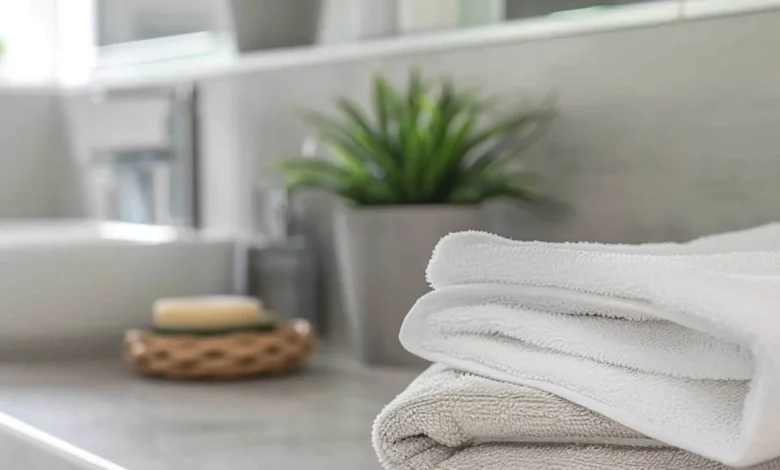
The escalating cost of domestic energy and a growing collective focus on environmental sustainability have prompted a significant shift in household laundry habits across the United Kingdom and Europe. As of mid-2024, with energy price caps fluctuating, the tumble dryer has emerged as one of the most expensive appliances to operate in a standard home. While the appliance offers the convenience of speed and a soft finish for textiles, its high energy consumption—averaging 3,000 watts per hour—now carries a substantial financial burden. For many households, the cost of operating a tumble dryer has reached approximately 78 pence per hour, a figure that becomes increasingly significant when considering multi-hour drying cycles for heavy loads such as towels.
The transition toward air-drying, whether via outdoor lines or indoor clotheshorses, represents a pragmatic approach to reducing utility bills and lowering a household’s carbon footprint. However, a persistent technical challenge remains: the tendency for air-dried towels to develop a stiff, abrasive texture often compared to sandpaper. This phenomenon is not an inherent flaw of air-drying but rather the result of chemical residues and a lack of mechanical agitation during the evaporation process. By understanding the underlying science of textile care and implementing specific laundry protocols, consumers can achieve "hotel-quality" softness without the need for high-heat machinery.
The Science of Textile Stiffness
The primary cause of the "crunchy" texture associated with air-dried towels is the accumulation of microscopic residues within the cotton fibers. Towels are typically constructed with a high "pile"—the loops of fabric designed to maximize surface area for water absorption. When these loops are saturated with water containing excess detergent or fabric softeners, the chemicals do not always rinse away completely. As the water evaporates during air-drying, these residues harden, effectively "gluing" the cotton fibers together in a rigid state.
Furthermore, the absence of movement plays a critical role. In a tumble dryer, the constant mechanical tossing of the fabric prevents the fibers from settling into a compressed, flat position. In contrast, line drying allows the fibers to remain stationary. Without intervention, the cellulose bonds in the cotton can become inflexible. Addressing this requires a multi-staged approach involving chemical management, mechanical agitation, and environmental control.
Optimizing the Wash Cycle: The Role of Detergent and Vinegar
The foundation of soft towels is laid during the wash cycle, long before the drying process begins. Professional textile experts and sustainability advocates suggest that the most common error in towel maintenance is the use of excessive laundry detergent. While it may seem counterintuitive, using more soap does not result in cleaner towels; instead, it leads to a buildup of surfactants that are difficult for standard rinse cycles to remove.
Data suggests that reducing detergent usage to one-half or even one-third of the manufacturer’s recommended dose is sufficient for towels, which generally do not encounter the same level of soil as outdoor workwear. This reduction ensures that the rinse cycle can effectively strip away soapy residue, leaving the fibers clean and pliable.

Simultaneously, the use of traditional fabric conditioners is increasingly discouraged for towel care. Fabric softeners work by coating fibers in a thin, waxy layer of chemicals (often containing silicone or tallow-based surfactants). While this provides an initial sensation of softness, it creates a hydrophobic barrier that significantly reduces the towel’s absorbency over time. This coating also traps bacteria and odors, leading to a "musty" smell.
A highly effective, eco-friendly alternative to fabric conditioner is the inclusion of distilled white vinegar in the rinse cycle. The acetic acid in white vinegar acts as a natural water softener and decalcifier. When added to the fabric softener dispenser, it is released during the final rinse to neutralize alkaline detergent residues and break down mineral deposits from hard water. Crucially, the vinegar scent completely dissipates during the drying process, leaving no olfactory trace on the fabric.
Mechanical Agitation: The "Shaking" Protocol
Because air-drying lacks the tumbling action of a machine, manual agitation is required to keep the cotton loops from flattening. The "shaking" method is a simple yet vital step in the process. When towels are removed from the washing machine, the fibers are often compressed by the centrifugal force of the spin cycle.
A rigorous shaking protocol involves:
- Initial Shake: Gripping the towel by its shorter edge and snapping it forcefully several times before hanging. This action "opens up" the pile and separates the individual loops.
- Repositioning: If drying indoors, occasionally turning the towel or giving it a secondary shake mid-way through the drying process can prevent the fibers from setting too firmly.
- Final Softening: Once the towel is fully dry, a final shake or a brief period of "rubbing" (holding two sections of the towel and vigorously rubbing them against each other) can break any remaining microscopic bonds between the fibers, restoring flexibility.
Environmental Factors and the Radiator Pitfall
The location and speed of drying are equally influential in determining the final texture of the textile. A common mistake during colder months is the use of radiators to dry towels quickly. While efficient in terms of time, the direct, intense heat from a radiator causes moisture to evaporate too rapidly. This "flash-drying" effect causes the cellulose fibers to contract and harden almost instantly, resulting in maximum stiffness.
Professional laundry guidelines recommend a slower evaporation process. Drying towels on a clotheshorse in a well-ventilated room, or ideally outdoors on a line where a light breeze provides natural agitation, is the gold standard for softness. Airflow is the critical variable; it mimics the movement of a tumble dryer on a much gentler scale, preventing the fabric from becoming stagnant and rigid.
Economic and Environmental Implications
The move toward air-drying is supported by significant economic data. Based on the 78p per hour operating cost, a household that runs five drying cycles per week could save over £200 annually by switching to air-drying. This does not account for the extended lifespan of the textiles themselves. The high heat of a tumble dryer gradually breaks down cotton fibers—evidenced by the "lint" collected in the dryer filter—which leads to thinning and eventual tearing of the towels. Air-drying preserves the structural integrity of the fabric, representing a long-term saving on household linens.

From a broader environmental perspective, the reduction in energy consumption aligns with international goals to decrease domestic carbon emissions. As laundry accounts for a significant portion of a home’s "hidden" energy use, these small procedural changes contribute to a larger impact on national energy demand.
Analysis of "Laundry Stripping" and Restoration
For households with towels that have already become "crunchy" due to years of detergent and softener buildup, a process known as "laundry stripping" may be necessary to restore them. This involves a deep-cleaning cycle using hot water and a high concentration of white vinegar or a mixture of sodium borate (borax) and washing soda. This process aggressively removes the waxy buildup and mineral deposits that standard washing cannot reach.
Following a restoration cycle, implementing the "less is more" detergent rule and the vinegar rinse will maintain the restored softness. If a household finds that air-drying still does not meet their tactile preferences, an "energy-hybrid" approach is recommended. This involves air-drying towels until they are roughly 90% dry, followed by a brief 5-to-10-minute cycle in the tumble dryer on a low-heat setting with wool dryer balls. This provides the necessary mechanical fluffing at a fraction of the cost of a full drying cycle.
Conclusion and Future Outlook
The methodology for maintaining soft towels without a tumble dryer is a combination of chemical mindfulness and physical intervention. As energy costs remain a central concern for the modern consumer, the revival of traditional laundry techniques—enhanced by modern scientific understanding—offers a path toward both financial savings and domestic comfort.
By rejecting the over-use of detergents, eliminating waxy conditioners, utilizing the natural properties of vinegar, and incorporating manual agitation, households can achieve premium results. This shift represents a broader trend in consumer behavior: a move away from high-energy "quick fixes" in favor of sustainable, intentional home management. The "sandpaper" towel is not an inevitability of the eco-conscious home, but rather a hurdle that can be easily overcome with the right technical approach.
Related posts: