Navigating the Teenage Piercing Request: A Parent Guide to Assessing Readiness, Safety, and Communication

The conversation rarely begins with a formal negotiation; it usually starts casually in the kitchen or during a routine car ride. A teenager looks up from their smartphone and asks a question that instantly signals a developmental milestone: Can I get a piercing? For many parents, the immediate impulse involves assessing the aesthetic appeal, the social implications, or the sheer shock value of metal in cartilage or facial tissue. However, child development specialists and pediatric healthcare providers suggest that before evaluating the request itself, the most critical step lies in examining how parents respond in the exact moment the child brings it up.
This initial reaction sets the tone for an ongoing dialogue. It dictates whether the teenager feels heard and respected or dismissed and driven to secretive rebellion. As adolescents navigate the complex terrain of identity formation, body autonomy, and peer influence, requests for body modifications become powerful proxies for broader desires for independence. Understanding the nuances behind these requests requires moving past generational friction and focusing instead on individual maturity, safety protocols, and long-term communication goals.
The Myth of the Magic Number: Age Versus Individual Readiness
In contemporary parenting discussions, the question of a universal "appropriate age" for piercings frequently arises. Society often attempts to assign specific numbers to milestones—sixteen for driving, eighteen for legal adulthood, and various arbitrary ages for body art and modifications. Yet, developmental psychology and pediatric guidelines paint a much more fluid picture.
A teenager may be entirely ready for one kind of piercing and completely unprepared for another. Furthermore, two teenagers of the exact same chronological age can operate at vastly different levels of emotional and physical maturity. The American Academy of Pediatrics (AAP), in its broad guidance on ear piercing, reflects this very focus on individual readiness rather than dictating a universal age threshold. Instead of pointing to a specific year on a calendar, pediatric guidance points to a much more practical metric: whether the child possesses the maturity required to safely care for the piercing site over the long weeks of the healing process. Chronological age forms part of the picture, but it certainly does not represent the entire story.
Readiness depends far more on a specific piercing’s inherent risk level and a teenager’s demonstrated history of responsibility than on a birthday. For example, a thirteen-year-old with a proven, strong hygiene track record and consistent self-care habits may be thoroughly prepared for a simple earlobe piercing. Conversely, a sixteen-year-old who still requires daily, regular reminders to shower, manage basic hygiene, or keep track of personal belongings may lack the organizational discipline required for proper aftercare. Evaluating a teenager’s request, therefore, demands an honest assessment of their daily habits rather than a glance at their birth certificate.
Categorizing Risk: From Simple Lobes to High-Stakes Dermal Modifications
Not all piercings carry the same weight, either medically or logistically. Understanding the hierarchy of risk associated with different types of body modifications helps parents make informed decisions and guide their teenagers toward safer choices.
Standard earlobe piercings generally represent the lowest tier of risk. They tend to feature simpler aftercare regimens and significantly lower complication rates compared to piercings located in cartilage, facial features, or the hands. Professional piercers and medical practitioners generally view lobes as the training wheels of body modification. However, parents and teens must remain cognizant that a safer procedure does not mean a risk-free one. Infection, allergic reactions to certain metals—such as nickel—and improper healing can still occur even with the most basic earlobe puncture.
As piercings move away from the fleshy lobe into cartilage—such as the helix, tragus, or daith—the healing timeline expands dramatically, and the potential for complications increases. Cartilage possesses a much poorer blood supply than the earlobe, making it inherently slower to heal and more susceptible to persistent irritation bumps, infections, and perichondritis, a serious cartilage inflammation.
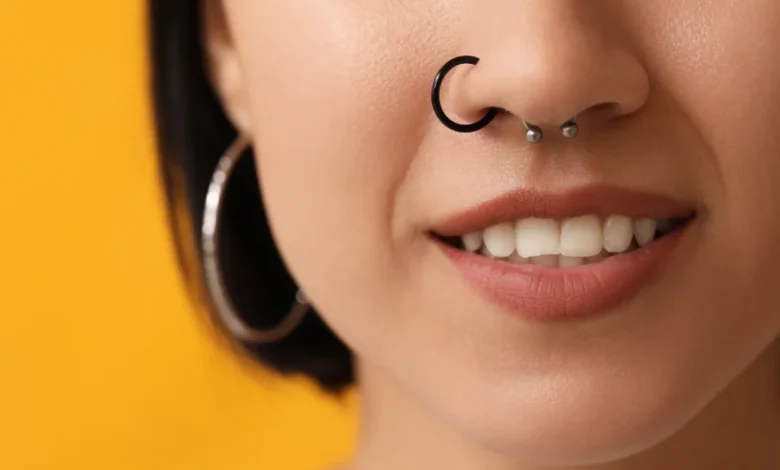
Moving further into facial and oral piercings—including eyebrows, lips, tongues, and the nose—introduces entirely new sets of anatomical challenges. Oral piercings, for instance, carry risks of dental damage, gum recession, and chronic swelling. Meanwhile, dermal piercings, which sit anchored beneath the skin in areas frequently subjected to physical friction or accidental impacts (such as the hands, collarbone, or cheeks), carry an elevated risk of migration, rejection, scarring, and permanent tissue damage compared to traditional entry-and-exit piercings. Dermal anchors require meticulous monitoring, as the body frequently identifies the flat anchor base beneath the skin as a foreign object and attempts to push it out.
The Broader Objective: Preserving the Parent-Teen Connection
When confronted with a sudden request for a piercing, parents frequently fall into the trap of viewing the discussion as a zero-sum game. They worry that saying yes compromises their authority, while saying no invites accusations of being overly strict or out-of-touch.
However, child psychologists emphasize that the ultimate goal of parenting an adolescent is not to win an argument about a piece of jewelry. The true objective involves raising a capable, emotionally intelligent young person who can make increasingly thoughtful, autonomous decisions—and who still actively wants to talk to their parents while they learn how to navigate those choices.
When a teenager’s request is met with an immediate, flat rejection without explanation, the conversation ends, but the desire often persists. Adolescents may then seek out unregulated, unsafe alternatives, turning to peers with piercing guns or unsterile equipment to bypass parental resistance. Conversely, using the request as a collaborative teaching moment transforms a potential conflict into a valuable exercise in critical thinking, research, and mutual respect.
A Structured Timeline for Evaluating the Request
To transition from a reactive argument to a thoughtful decision-making process, families can implement a structured timeline when a piercing request is introduced. This framework ensures that both parent and teen have adequate time to process the request, investigate the facts, and demonstrate maturity.
Phase One: The Initial Conversation and Cooling-Off Period (Days 1 to 3)
When the teen first brings up the idea, the parent’s immediate response should center on curiosity rather than judgment. Asking questions such as, "What made you interested in this specific piercing?" or "How much do you know about how it heals?" opens a constructive dialogue. Rather than giving an immediate yes or no, establish a mandatory cooling-off period of a few days or weeks. This pause serves a dual purpose: it tests the teenager’s genuine, sustained interest (acting as a filter for impulsive whims) and provides time for research.
Phase Two: Joint Research and Responsibility Assessment (Weeks 2 to 3)
During this phase, challenge the teenager to take ownership of the project. Ask them to research local, reputable piercing studios, investigate health department regulations, look up age-of-consent laws in your jurisdiction, and price out the procedure using implant-grade materials like titanium or 14-karat gold. Concurrently, parents can evaluate the teen’s recent track record regarding chores, schoolwork, and personal hygiene. If the teenager expects the parents to finance, monitor, and clean the piercing, they may not yet be ready for the responsibility.
Phase Three: Establishing Clear Boundaries and Aftercare Pacts (Week 4)
If the assessment yields positive results and the teen demonstrates a mature understanding of the risks and aftercare requirements, families can establish a clear agreement. This pact should outline who pays for the procedure and high-quality jewelry, who drives to a reputable, professional studio (noting that parental consent and identification are legally required for minors in most jurisdictions), and an explicit agreement that the teen bears sole responsibility for performing daily saline cleaning and adhering to healing guidelines.
The Psychological Implications of Body Modification in Adolescence
To fully grasp why teenagers are so drawn to piercings, adults must understand the psychological landscape of modern adolescence. Psychologists note that identity exploration represents the primary developmental task of the teenage years. Teens are actively trying to figure out who they are, where they fit in social hierarchies, and how they wish to be perceived by the world.
Body modification serves as a powerful, immediate tool for self-expression and reclamation of bodily autonomy. During a phase of life where teenagers often feel that adults control their schedules, academic environments, and daily lives, choosing what happens to their own skin offers a profound sense of agency. A piercing can signify membership in a peer group, memorialize a personal milestone, or simply provide a creative outlet for aesthetic exploration.
When parents approach these requests with empathy, acknowledging the psychological underpinnings while maintaining necessary health and safety boundaries, they validate their teenager’s developing identity. This balanced approach does more than just determine the fate of a piece of metal; it reinforces trust, models healthy negotiation skills, and lays the groundwork for open communication through even more complex adolescent challenges in the years to come.
Related posts: