New Diagnostic Tool Addresses Morphological Awareness as the Missing Link in Elementary Literacy Assessment

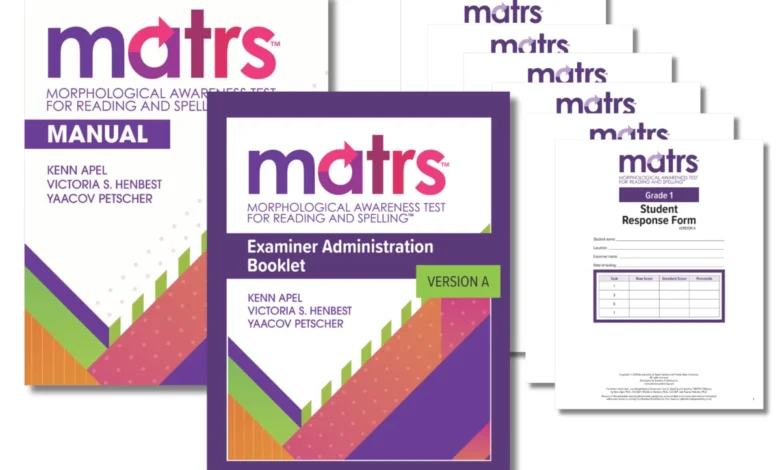
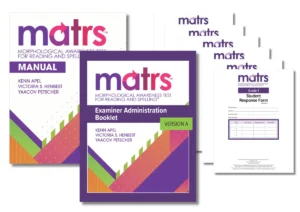
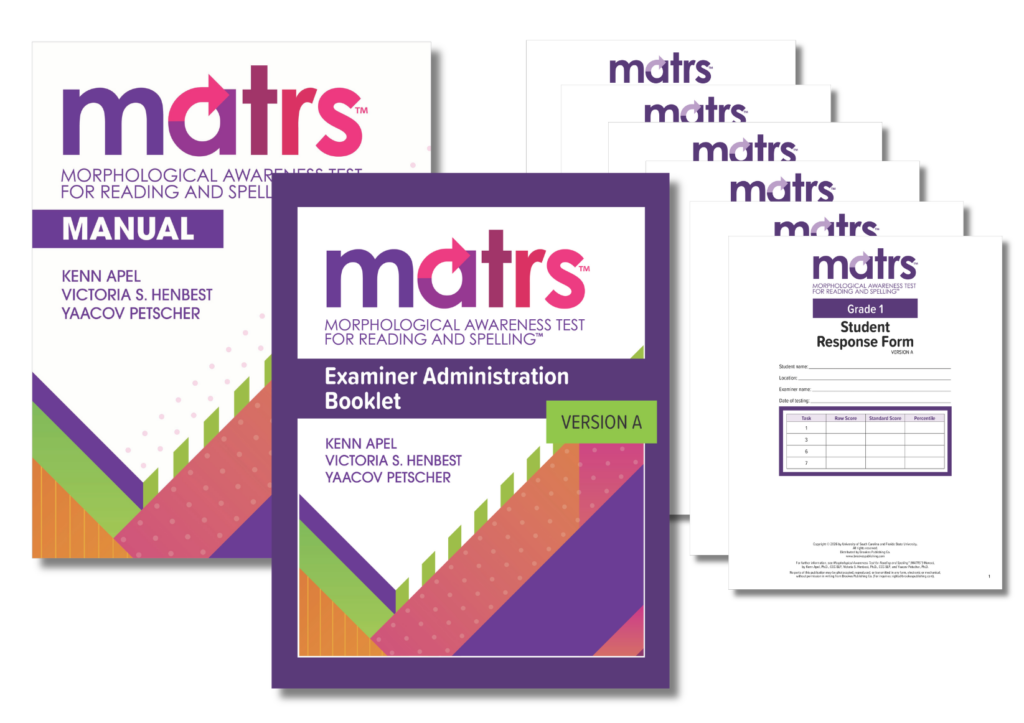
The landscape of elementary literacy education is undergoing a significant shift as educators and clinicians increasingly recognize that traditional phonological assessments may not capture the full spectrum of student needs. In response to this diagnostic gap, Dr. Kenn Apel and Dr. Victoria Henbest have introduced the Morphological Awareness Test for Reading and Spelling (MATRS), a standardized, norm-referenced diagnostic tool designed for students in grades 1 through 6. This new assessment aims to identify deficits in morphological awareness—the ability to understand and manipulate the smallest units of meaning in language—which is a critical but often overlooked component of reading and writing proficiency.
The Evolution of Literacy Assessment and the Role of Morphology
For decades, the primary focus of early literacy intervention has centered on phonological awareness, or the ability to recognize and manipulate the sounds of spoken language. While phonological skills are essential for decoding, researchers have increasingly found that they do not account for the entirety of a child’s reading and spelling development. Morphological awareness (MA) represents the next frontier in the "Science of Reading," offering a more comprehensive view of how children process complex words.
Morphological awareness involves the conscious awareness of morphemes, which are the building blocks of meaning. These include base words (e.g., "play"), prefixes (e.g., "re-"), and suffixes (e.g., "-ed"). In the English language, which is morphophonemic, spelling is governed not just by sound but by meaning and history. For instance, the "t" sound at the end of "jumped" is spelled with "-ed" to preserve the meaning of the past tense. Students who lack morphological awareness often struggle to decode multi-syllabic words or fail to grasp the spelling conventions of derived words, such as "magician" (from "magic").
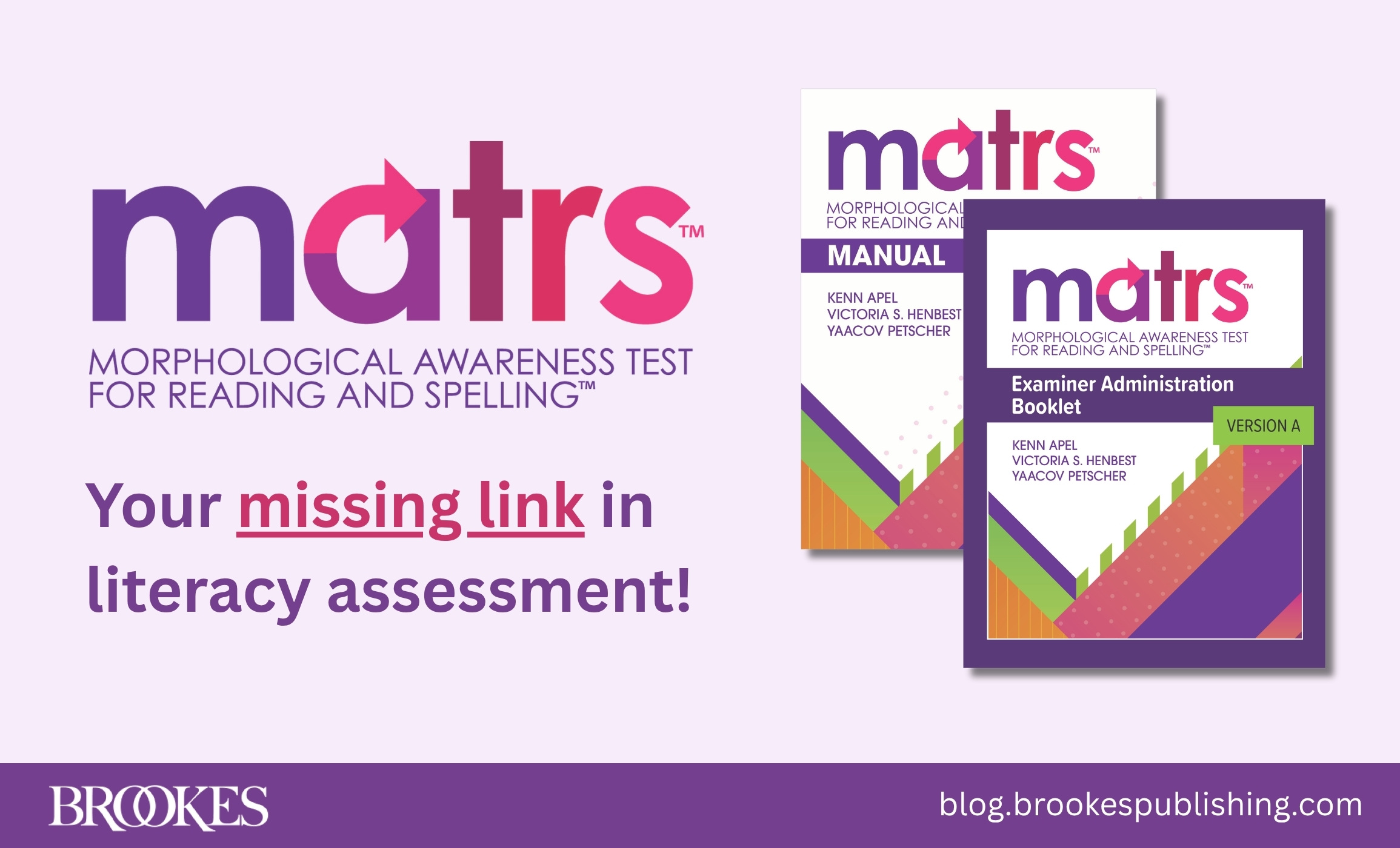
The development of MATRS comes at a time when national literacy scores have faced scrutiny. According to data from the National Assessment of Educational Progress (NAEP), a significant portion of American fourth-graders perform below the "proficient" level in reading. By addressing morphological processing, MATRS provides a mechanism to identify specific linguistic weaknesses that traditional phonics-based tests might miss.
Understanding the Diagnostic Gap in Dyslexia Identification
One of the most compelling arguments for the implementation of the MATRS is its alignment with modern definitions of dyslexia. The International Dyslexia Association (IDA) explicitly includes "morphological processing" in its definition of dyslexia, noting that the disability is characterized by difficulties with accurate and/or fluent word recognition and by poor spelling and decoding abilities. These difficulties typically result from a deficit in the phonological component of language that is often unexpected in relation to other cognitive abilities.
However, despite the IDA’s inclusion of morphology, many school districts still rely on assessments that focus almost exclusively on phonemic awareness and rapid automatized naming. This creates a situation where a student may pass standard screenings but continue to struggle with reading comprehension and complex spelling as they progress into upper elementary grades. Dr. Apel and Dr. Henbest emphasize that the MATRS serves as a "missing link," allowing specialists to qualify students for services who might otherwise fall through the cracks of normative expectations.
The Four Pillars of the MATRS Assessment
To provide a comprehensive diagnostic profile, the MATRS evaluates students across four distinct components of morphological awareness. These components are designed to isolate specific cognitive-linguistic functions:
- Morphological Identification: The ability to recognize morphemes within words and understand their individual meanings.
- Morphological Relational Knowledge: The understanding of how different words are related through a common base or root (e.g., recognizing the connection between "confide" and "confidence").
- Morphological Syntactic Awareness: The ability to use morphemes correctly within the grammatical structure of a sentence, such as choosing the correct suffix to change a verb into a noun.
- Morphological Distributional Knowledge: The understanding of the rules governing how morphemes can be attached to bases, including phonological and orthographic changes that occur during word formation (e.g., dropping the "e" in "bake" before adding "-ing").
By breaking down the assessment into these categories, the tool moves beyond a simple "pass/fail" metric. Instead, it provides a prescriptive roadmap for intervention. If a student demonstrates proficiency in identification but fails in distributional knowledge, the educator can bypass basic vocabulary instruction and focus specifically on the spelling rules associated with suffixation.
Technical Specifications and Ease of Administration
A primary concern for school psychologists and speech-language pathologists (SLPs) is the time required for testing. The MATRS was developed with administrative efficiency in mind. The test features a "fast-scoring" system that allows practitioners to derive results quickly, facilitating faster transitions from assessment to instruction.
The tool includes specific starting points based on the student’s grade level, ensuring that children are not subjected to tasks that are significantly below or above their developmental ceiling. This "basal and ceiling" approach minimizes testing fatigue and ensures that the data collected is relevant to the student’s current academic expectations. Furthermore, the instructions are designed to be clear and concise, reducing the risk of examiner error and ensuring that the test can be administered consistently across different educational settings.
Chronology of Development and Research Context
The release of the MATRS is the culmination of years of empirical research into the relationship between morphology and literacy. In the early 2000s, longitudinal studies began to suggest that morphological awareness becomes an increasingly better predictor of reading success than phonological awareness as children move past the third grade.

By 2010, the "Common Core State Standards" in many U.S. states began to incorporate morphological requirements, such as the use of Greek and Latin roots, into the English Language Arts curriculum. However, the pedagogical shift was not immediately met with standardized diagnostic tools. Dr. Apel and Dr. Henbest, both recognized experts in communication sciences and disorders, identified this void. Their work focused on creating a norm-referenced instrument that would provide the same level of statistical reliability as established phonological tests like the CTOPP (Comprehensive Test of Phonological Processing).
The MATRS was normed on a diverse sample of students to ensure its validity across various socio-economic and regional backgrounds. This rigorous standardization process allows educators to compare a student’s performance against a national peer group, which is a prerequisite for many special education qualification processes.
Broader Implications for Multi-Tiered System of Supports (MTSS)
The integration of the MATRS into school systems has significant implications for the Multi-Tiered System of Supports (MTSS) framework. In Tier 1 (universal instruction), morphological awareness can be taught as part of a general literacy curriculum. However, for students in Tier 2 and Tier 3 (targeted and intensive intervention), the MATRS provides the granular data necessary to customize instruction.
Speech-language pathologists and reading specialists can use the test results to justify the need for specific morphological interventions. For example, a student who struggles with "relational knowledge" may require intensive work on word families and semantic mapping. This targeted approach is more cost-effective and time-efficient than broad-spectrum literacy interventions that may repeat concepts the student has already mastered.

Furthermore, the impact extends into the realm of English Language Learners (ELLs). Many languages, such as Spanish, have rich morphological structures. A diagnostic tool that focuses on meaning-based units can help educators distinguish between a language acquisition lag and a genuine learning disability.
Future Outlook: Morphology as a Standard of Care
As the "Science of Reading" continues to influence state legislation and district-wide curriculum adoptions, tools like the MATRS are likely to become standard components of the literacy assessment battery. The shift represents a move toward a more holistic understanding of language, where sound, symbol, and meaning are treated as an integrated triad.
Experts in the field suggest that the next decade will see an increase in "morphology-first" instructional strategies, particularly for older elementary students who have mastered basic decoding but struggle with the "fourth-grade slump"—a common phenomenon where reading scores dip as text complexity increases. By identifying morphological deficits early, in grades 1 through 6, the MATRS provides a preventative measure against future academic failure.
The introduction of the MATRS by Dr. Apel and Dr. Henbest marks a pivotal moment in educational diagnostics. By providing a reliable, valid, and easy-to-use instrument for assessing morphological awareness, they have equipped educators with the means to address one of the most persistent "missing links" in literacy development. As schools strive to meet the needs of diverse learners and improve national literacy outcomes, the focus on morphemes—the fundamental units of meaning—will undoubtedly play a central role in the success of the next generation of readers and writers.
Related posts: