State of Motherhood 2026: Addressing the Structural Crisis of Burnout and Isolation in American Families

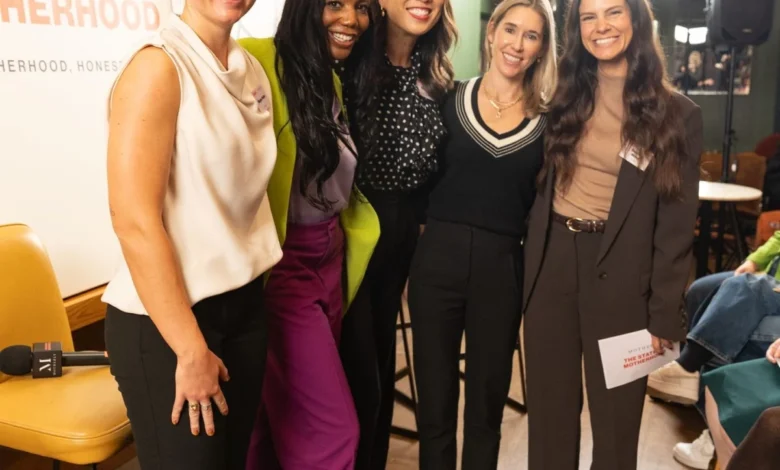
The modern American mother is facing a profound paradox: she is more informed and connected than any generation before her, yet she reports record levels of exhaustion and social isolation. This systemic tension took center stage at the Motherly State of Motherhood event, which convened a diverse coalition of corporate executives, policymakers, and advocates to confront the data-driven reality of the 21st-century parental experience. The gathering sought to shift the narrative from individual struggle to collective responsibility, highlighting that the challenges facing mothers are not personal failings, but rather the result of a societal infrastructure that has failed to keep pace with changing family dynamics.

Data collected from over 60,000 respondents since 2018 reveals a clear, downward trend in maternal well-being. The 2026 findings are particularly stark: 42% of mothers report feeling more burned out than they did the previous year, while 70% describe motherhood as significantly lonelier than they had anticipated. These statistics serve as a diagnostic tool, indicating that the traditional support systems—ranging from community networks to workplace policies—are no longer functioning effectively for the contemporary family.
A Decade of Declining Well-being: The Data Context
The State of Motherhood survey has functioned as a longitudinal study on the American family since its inception in 2018. Over the past eight years, the data has consistently pointed toward two major themes: a forced reduction in professional engagement and a decline in desired family size. These are not merely lifestyle choices but are frequently cited as pragmatic responses to the prohibitively high cost of childcare and the lack of robust, federally mandated paid family leave.

In 2026, the data highlights that Gen Z mothers are experiencing the "crunch" of parenthood earlier than their predecessors. This cohort is entering a workforce that demands high productivity while simultaneously navigating a social landscape where childcare costs frequently exceed mortgage payments. The disconnect between the ideal of a supportive, village-based upbringing and the reality of atomized, single-household parenting has created a vacuum of support that contributes directly to the reported mental health struggles.
The Structural Infeasibility of Modern Parenting
During the event, a panel of experts including Reshma Saujani, founder and CEO of Moms First, and Lauren Smith Brody of The Fifth Trimester, framed the current crisis as "impossible by design." The discussion centered on the structural misalignment of the American workday and the school day. With the typical school day concluding at 2:30 p.m. and the standard workday extending to 6:00 p.m. or later, families are left with a three-and-a-half-hour gap that must be filled by expensive, often scarce, childcare services.

This mismatch is compounded by the "second shift" of domestic labor and the expectation that mothers act as the primary caregivers, project managers, and emotional anchors of the family. The consensus among the panelists was that individual resilience strategies—such as better time management or self-care—are insufficient to combat a problem that is, at its core, a failure of policy. The speakers argued that only legislative action, specifically the passage of comprehensive paid leave and universal, affordable childcare, can provide the necessary foundation for maternal stability.
Jennifer Garner on Advocacy and Corporate Responsibility
Actress and activist Jennifer Garner provided a grounded perspective on the intersection of advocacy and commerce. As an ambassador for Save the Children and co-founder of Once Upon a Farm, Garner emphasized that the struggle for quality nutrition is an issue of dignity. Her company’s push to become the first WIC-certified organic baby food provider in 22 states illustrates the potential for private-sector entities to act as vehicles for social equity.

Garner’s transition of her company into a Public Benefit Corporation (PBC) in 2021 serves as a case study for "mission-driven" business. By legally mandating that the company balance profitability with social and environmental impact, the firm has sought to address the systemic gaps in childhood nutrition. Her remarks highlighted that the "balance" often demanded of mothers is a myth; instead, she argued for a constant, intentional negotiation of priorities that centers on the well-being of the child and the health of the community.
Navigating the Future: Tech, Health, and Community
The event also addressed the role of technology and health innovation in alleviating maternal stress. Dr. Bayo Curry-Winchell offered a clinical perspective on maternal advocacy within the healthcare system, urging mothers to demand thorough answers from clinicians and to move beyond passive receipt of medical advice.

Simultaneously, the discussion touched upon the impact of Big Tech on family life. Ailen Arreaza of ParentsTogether argued that the shame many mothers feel regarding their children’s screen time or exposure to harmful content is misplaced. She noted that companies must be held accountable for the design of their products. This sentiment was echoed by Michelle Jawando of the Omidyar Network, who suggested that the regulatory environment is finally catching up to the "move-fast-and-break-things" era of Silicon Valley. She pointed to recent legislative wins in California regarding AI companion chatbots as evidence that society is beginning to prioritize child safety in the digital realm.
Legislative Outlook and Political Will
A significant point of discussion was the potential for bipartisan progress on family-centric legislation. Despite the current political polarization, panelists expressed a guarded optimism. Lauren Smith Brody noted that behind-the-scenes negotiations between Democratic and Republican offices often reveal shared goals regarding the necessity of supporting families.

Reshma Saujani was more emphatic, predicting that the political pressure applied by mothers as a voting bloc would force legislative action by 2029. The premise is that both sides of the aisle are increasingly recognizing that the "motherhood vote" is a decisive factor in national elections. By framing childcare and paid leave not as "social handouts" but as essential infrastructure for a functioning economy, advocates are attempting to shift the rhetoric to appeal to a broader base of fiscal and social conservatives.
The Path Forward: From Awareness to Action
Motherly CEO Sharon Yi concluded the event with a definitive call to action. She outlined the organization’s evolution from a digital information resource into a multi-platform community-building force. The expansion into vertical video, podcasts, and hyper-local events is designed to meet mothers where they are, facilitating the kind of peer-to-peer support that is currently lacking in many suburban and urban environments.

The implication of this shift is clear: the era of the isolated, "super-mom" who navigates systemic challenges alone is being challenged. In its place, there is a push toward collective organizing. The goal is to ensure that the 2026 data—the burnout, the loneliness, and the feeling of impossibility—serves as the high-water mark of a crisis that is currently being addressed through legislative pressure, corporate accountability, and the rebuilding of physical community networks.
As the United States moves toward the end of the decade, the discourse surrounding motherhood is undergoing a fundamental transformation. It is moving away from the private sphere of the home and into the halls of corporate boardrooms and legislative chambers. Whether this translates into tangible, systemic change remains to be seen, but the event made it clear that the status quo is increasingly untenable for the modern American family. The conversation has shifted from "how can I do more?" to "why is this so hard, and how do we fix the system?"—a question that will likely dominate the social and political landscape for the foreseeable future.
Related posts: