Get a Free Stokke PramPack and the Evolution of Stroller Travel Logistics

The travel landscape for parents navigating air travel with young children has shifted significantly over the past decade, with high-end manufacturers increasingly focusing on the protection of premium gear. A notable historical promotion, originally launched in May 2014, offered consumers a complimentary Stokke PramPack upon the purchase of a qualifying Stokke stroller. While this specific promotional window concluded on June 30, 2014, the initiative served as a landmark case study in how luxury baby gear brands incentivize the adoption of protective travel accessories. The Stokke PramPack, designed to accommodate almost any stroller on the market, remains a benchmark for durability and logistical convenience in the industry, reflecting a broader trend where stroller safety and portability are treated with the same gravity as infant car seat standards.
The Evolution of Stroller Portability and Protection
When the Stokke PramPack was first introduced to the market, the segment for specialized luggage for baby gear was in its infancy. Before the widespread adoption of universal travel bags, parents were often forced to gate-check strollers in their raw, unprotected state, leading to frequent cosmetic damage and, in more severe cases, mechanical failure of folding mechanisms and wheels.
The Stokke PramPack was engineered to address these vulnerabilities. By utilizing a semi-rigid structure that could be rolled up when empty, it provided an airline-approved solution that balanced bulk with high-impact protection. The 2014 promotion, which allowed customers to receive the product for free via the coupon code "FREEPRAMPACK," was a strategic move by retailers to familiarize a wider demographic with the necessity of dedicated stroller travel luggage. By bundling the purchase of a premium stroller—such as the Stokke Xplory or Crusi—with the PramPack, the company effectively established a standard of care for luxury baby equipment that has since become an industry expectation.
Industry Context: The Kind + Jugend Influence
The importance of such protective accessories is further underscored by the continuous evolution of strollers showcased at major industry events, most notably the Kind + Jugend trade show. This event, which brings together global manufacturers such as UPPAbaby, Britax, and Stokke, serves as the primary stage for unveiling advancements in weight reduction and structural integrity.
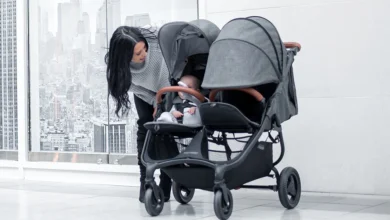
Recent industry reports from the 2026 exhibition cycle highlight a persistent focus on two competing priorities: the demand for lightweight, "lite" models, and the requirement for robust, secure travel systems. For instance, the transition from the standard Valco Neo Twin to the "Lite" version—weighing in at a mere 24 pounds—illustrates the consumer demand for convenience. However, as strollers become lighter and more complex with sophisticated folding hinges and EVA wheels, the susceptibility to damage during transit increases. This makes the legacy of the PramPack initiative even more relevant; as strollers become lighter, the need for protective, padded transport solutions becomes a logistical necessity rather than a luxury.

Comparative Analysis of Travel Gear Safety
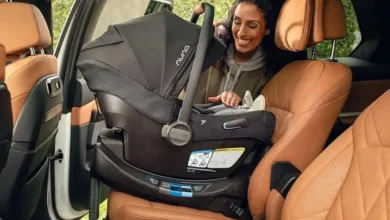
The intersection of travel logistics and safety is perhaps best exemplified by the rigorous standards applied to infant car seats, such as the Maxi-Cosi Mico Max Plus. Unlike strollers, which are subject to general consumer product safety regulations, car seats undergo intensive side-impact testing and mechanical validation.
Current market data indicates that consumers who invest in premium strollers are statistically more likely to invest in high-end infant carriers. The Mico Max Plus, which incorporates Air Protect technology and an anti-rotation stability leg, serves as a corollary to the stroller protection market. Just as the PramPack protects the structural integrity of the stroller, the engineering within the car seat protects the occupant. The integration of these two—the stroller and the car seat—into a cohesive travel system has been the driving force behind the success of retailers who focus on "end-to-end" travel solutions.
Chronology of Retail Promotions and Consumer Behavior
- Early 2010s: The "travel system" concept gains mass market traction, requiring parents to transport both bulky strollers and infant car seats via commercial aviation.
- May 9, 2014: Retailers launch the Stokke PramPack promotional campaign, acknowledging the high cost of stroller repairs and the lack of airline accountability for damaged gear.
- June 30, 2014: The promotional period concludes, marking the transition of the PramPack from a "bonus" item to a standalone, essential accessory for the premium baby gear market.
- 2017–2026: Market trends shift toward hyper-lightweight equipment, such as the Valco Neo Twin Lite, which further necessitates protective casing for gate-checking.
- November 2026: Industry leaders at Kind + Jugend focus on "compact-folding" technologies, signaling that the future of the stroller industry lies in modular, portable designs that require specialized transport bags for longevity.
Economic and Practical Implications for Parents
The primary motivation for the 2014 promotion was the mitigation of financial loss for both the retailer and the consumer. A high-end stroller is a significant capital investment, often ranging from $600 to over $1,500. When such equipment is damaged during transit, the repair process is often arduous, requiring original manufacturer parts and specialized labor.

By providing a protective sleeve, the brand effectively extended the lifecycle of the product. Data from secondary market resale platforms indicates that strollers maintained in original condition—thanks to the use of protective bags like the PramPack—retain significantly higher resale value. This "long-term value" proposition is now a cornerstone of marketing for brands like UPPAbaby and Stokke. When consumers consider the total cost of ownership, the inclusion of a travel bag is no longer viewed as an accessory, but as a protective insurance policy for the asset.
The Future of Travel Logistics for Families
As airlines continue to tighten baggage restrictions and the design of strollers becomes more intricate, the necessity for universal travel protection will likely continue to grow. Modern strollers, such as the upcoming models previewed at recent international expos, feature integrated electronics, complex folding mechanisms, and exposed suspension systems that are highly susceptible to the rough handling common in airport baggage logistics.
The legacy of the 2014 Stokke PramPack promotion remains a pertinent reminder of the gap between product design and travel reality. Manufacturers are increasingly looking toward "integrated protection"—features where the stroller itself includes a self-contained cover or a reinforced frame capable of withstanding the rigors of flight. Until such technology becomes standard, the industry continues to rely on aftermarket solutions to bridge the gap.

Conclusion
While the offer for a free Stokke PramPack concluded over a decade ago, its impact on consumer expectations remains palpable. It set a standard for accountability, forcing the industry to acknowledge that the sale of a stroller does not end at the register; it extends to the successful, undamaged arrival of the product at the consumer’s destination. As the market for baby gear continues to innovate with lighter materials and more compact designs, the fundamental requirement remains unchanged: protection is paramount. Whether through bundled promotions or the purchase of standalone travel gear, the modern parent is now better equipped than ever to navigate the complexities of global travel with their children’s equipment securely in tow. The shift from seeing travel accessories as optional to essential is perhaps the most significant development in the baby gear sector since the inception of the modular travel system.