
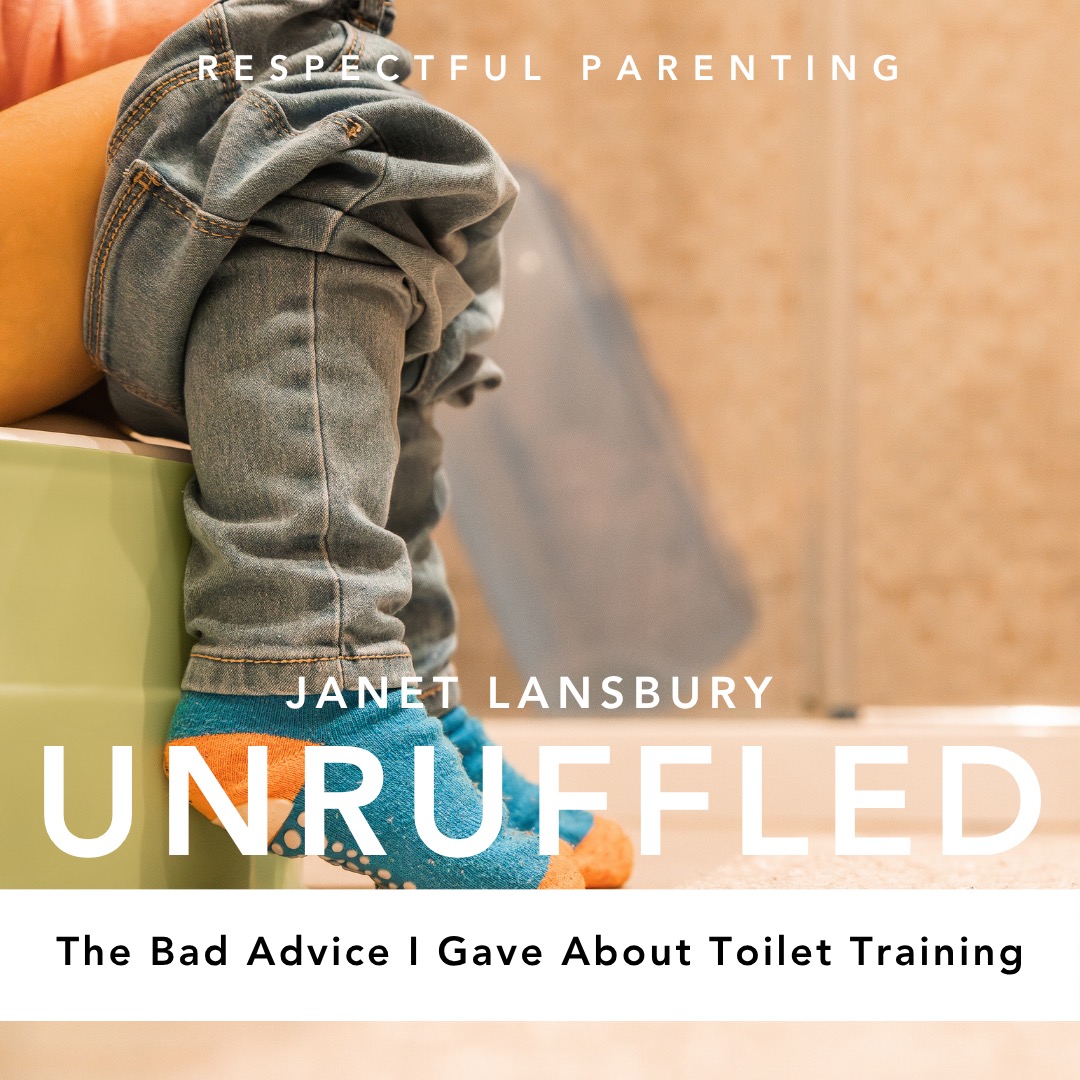
In a candid reflection on her popular "Unruffled" podcast, renowned parenting expert Janet Lansbury recently revisited a piece of advice she offered to a parent struggling with toilet training, ultimately acknowledging that her guidance proved unhelpful for that particular family. The episode, titled "The Bad Advice I Gave About Toilet Training," delves into the nuanced complexities of child development, parental instincts, and the efficacy of various parenting philosophies. This self-assessment by Lansbury, known for her child-led, RIE-inspired approach, underscores the highly individualized nature of parenting and the critical role of a parent’s unwavering conviction.
A Four-Year Potty Training Saga: A Detailed Chronology
The journey began approximately a year prior, when a parent reached out to Lansbury for advice regarding her three-and-a-half-year-old daughter. The child, described as "physically, cognitively, and verbally ready for about one-and-a-half years," exhibited intense resistance, declaring she was "absolutely set on being in diapers ‘forever.’" She would not approach a potty, and any discussion of it was met with strong aversion. The parent, in her initial correspondence, expressed deep concern, feeling she was "enabling a phobia" in her "fearful and avoidant kid," whose temperament was further characterized as highly sensitive and strong-willed.
The family’s attempts at toilet learning had a complex history. When the daughter turned two, exhibiting classic readiness signs such as hating diaper changes, body awareness, communicating elimination needs, and engaging positively with potty books and role-play, the parents initially attempted a popular, directive "full-on" training method. This approach, however, resulted in significant distress and physical resistance from the child, leading the parents to abandon it after several days. They resolved to "let go of all the pressure" and await the child’s readiness, embracing a more child-led stance.
Over the subsequent year, the parents maintained a low-pressure environment, occasionally mentioning the potty as an option and allowing the child to observe them using the toilet. The daughter frequently initiated independent role-playing with her stuffed animals on the toilet, indicating an internal processing of the concept. Despite these efforts and the parents’ genuine attempt to convey an "fully-accepting attitude," there was "no budging or interest" from the child. Doubt began to resurface as the daughter approached her third birthday.
Seeking further guidance, the parents consulted their pediatrician and a child therapist. Both professionals recommended a more structured approach, advising the parents to assert that "This is what we’re doing now," given the child’s age and presumed capability. Following this advice, the parents made a second concerted effort. The daughter willingly participated in selecting a potty and underwear, but the moment she experienced the sensation of needing to urinate, she became profoundly anxious, hiding and refusing to use the potty. This intense fear and physical withholding prompted the parents to retreat again after two days, concerned about exacerbating her anxiety. They reiterated their belief in her capability but allowed her to return to pull-ups, emphasizing she could use the potty "when you’re ready."
Six months later, the situation remained unchanged. The daughter continued to express strong refusal, emphatically stating she would "never" use the potty, even as her same-aged peers became toilet trained. The parent described a "wall" whenever the topic arose, leading her to consistently back off.
The Turning Point: A Parent’s Instinctive Shift
As the daughter neared her fourth birthday, the parents reached a decisive point. The mother, despite Lansbury’s earlier advice to continue with the child-led approach, felt a strong conviction that "four would be the limit." She was "unwilling to have a four-year-old without developmental disabilities in diapers" and determined that "there was simply going to be no choice anymore." This marked a significant departure from the gentle, child-led philosophy previously attempted and advocated by Lansbury.
The transition was arduous. The first few days were described as "grueling," characterized by intense fear and resistance from the child, necessitating a "really hard push." However, the parents reported a breakthrough. Within a week of this firm, parent-led approach, the daughter had not had an accident and was willingly using the toilet. The parent noted that her daughter was now "proud of herself" and "acting her age in a lot of other ways too," concluding that "she needed this."
The Philosophy of Child-Led Learning and Broader Context
Janet Lansbury’s philosophy, deeply rooted in the RIE (Resources for Infant Educarers) approach, champions trusting children’s innate abilities and motivation. In the context of toilet learning, this typically translates to allowing children to initiate and lead the process when they are developmentally ready and express interest. This approach minimizes pressure, views accidents as learning opportunities, and emphasizes patience and respect for the child’s autonomy. Proponents argue that it fosters a positive relationship with bodily functions and empowers children with a sense of accomplishment.
However, toilet training is a complex developmental milestone, with significant variations in timing and method across cultures and individual children. While many children show readiness between 18 months and 3 years, the average age of completion can range up to 4 years. Studies indicate that a mix of child-led readiness cues and consistent parental guidance often yields success. The debate between "child-led" and "parent-led" methods is ongoing, with some experts advocating for more structured approaches, especially for children who exhibit strong avoidance or who pass the typical readiness window. For instance, some pediatric guidelines suggest intervention if toilet training is not progressing by age 4, acknowledging that prolonged resistance can sometimes indicate underlying anxieties or learned behaviors rather than a lack of developmental readiness.
Janet Lansbury’s Initial Counsel and Self-Correction
In her original advice to the parent, Lansbury focused on what she perceived as "mixed messaging" from the parents. She suggested that the child’s strong resistance, exemplified by statements like "I’m going to be in diapers forever," was a reaction to a perceived parental agenda, even if subtle. Lansbury advised the parent to make a "clear choice one way or the other," ideally opting for "full-on trust" in the child’s motivation, removing herself entirely from the process. She also highlighted the parent’s admitted "anxious overthinker" temperament, suggesting that this parental anxiety could be transmitted to the child, creating an uncomfortable environment of uncertainty. Furthermore, Lansbury gently questioned the parent’s "Velcro child" description, proposing that a lack of clear boundaries in separation could contribute to the child’s overall anxiety and resistance to autonomy.
Upon receiving the update, Lansbury candidly admitted her advice was "unhelpful." Her primary learning was that she had suggested the parent "stretch to a belief system that she absolutely was not in." While Lansbury believed in the merits of the child-led approach, it did not resonate with this parent’s deep-seated instincts, which increasingly felt that her daughter’s resistance was a "phobia" requiring intervention. Lansbury acknowledged that the parent’s doubts, despite attempts to "convey" trust, likely translated into "mixed messaging" that the child sensed, perpetuating the "resistance." She ultimately concluded that the parent’s "hundred percent certainty" in her chosen directive approach was the key to success, regardless of the method itself.
Analysis: The Nuance of Parental Instinct and Expert Advice
This case study offers profound implications for understanding the dynamics between parenting advice, individual child temperaments, and parental instinct.
-
The Primacy of Parental Instinct: Lansbury’s self-correction powerfully underscores that parenting advice, however well-intentioned or evidence-based, must align with a parent’s core instincts and beliefs to be effective. When parents attempt to implement strategies that feel fundamentally "wrong" or create internal conflict, this lack of conviction can manifest as "mixed messaging," which children are highly attuned to. This internal dissonance can inadvertently exacerbate a child’s anxiety or resistance, making progress more challenging. The parent’s eventual success stemmed from her own "hundred percent certainty" that a firm push was necessary, a conviction that superseded external advice.
-
Individual Differences in Child Development: The case highlights that while many children may naturally lead their own developmental milestones, some, particularly those with highly sensitive, strong-willed, or demand-avoidant temperaments, may require different approaches. For this child, what appeared as lack of motivation was, in the parent’s view, a significant emotional block or "phobia." In such instances, a gentle, hands-off approach might inadvertently reinforce avoidance rather than foster autonomy. The "strong and firm push" acted as a form of scaffolding, helping the child overcome an emotional hurdle she might not have navigated independently. This challenges a rigid interpretation of "child-led" and suggests a spectrum of responsiveness required from parents.
-
The Impact of Parental Emotional State: Lansbury’s observation about the parent’s "anxious overthinker" temperament and the potential for this anxiety to be transmitted to the child is crucial. Children often mirror their parents’ emotional states. When a parent is internally conflicted or anxious about a developmental milestone, the child may internalize this, leading to their own anxiety and resistance. The parent’s ultimate certainty, even in a directive approach, provided a clear, consistent emotional landscape for the child, which likely contributed to the breakthrough.
Broader Implications for the Parenting Discourse
This incident resonates within the broader discourse on parenting philosophies, particularly the ongoing discussions around "gentle parenting" versus more traditional or directive methods. Lansbury’s reflection serves as a powerful reminder against dogmatism in parenting. It advocates for an approach that prioritizes the unique needs of each child and family, emphasizing that there is no single "right" way to parent. The "goodness of fit" between a parenting strategy and a parent’s authentic self, as well as the child’s temperament, emerges as a critical factor in achieving positive outcomes.
Ultimately, the successful resolution of this four-year toilet training journey reaffirms that effective parenting is a deeply personal endeavor. While expert advice and research offer valuable insights, they serve as guides rather than rigid prescriptions. The ability of a parent to listen to their own instincts, adapt strategies, and approach challenges with unwavering conviction, irrespective of prevailing trends, is paramount to fostering a child’s development and well-being. As Lansbury concludes, the goal is successful outcomes for children and relieved, confident parents, and the path to that success can be as varied as the families themselves.
Originally published by Janet Lansbury on October 05, 2025.
Related posts: