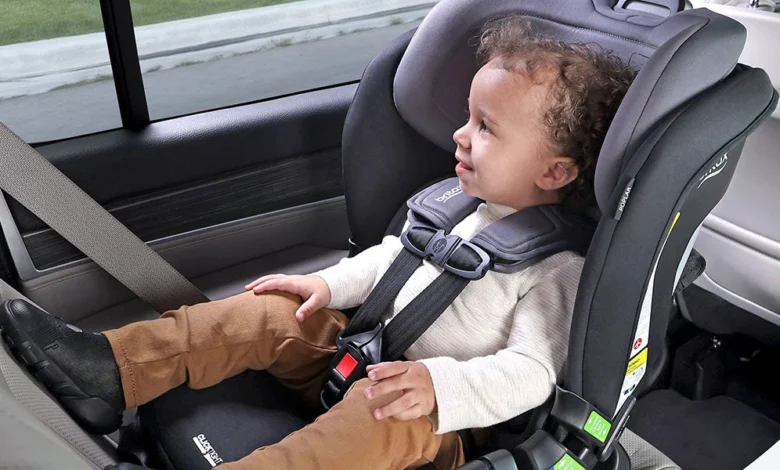
Parenting is defined by an ongoing series of safety-conscious decisions, but few carry the weight and long-term implications of choosing the correct car seat orientation for young children. As automotive safety technology continues to evolve, the consensus among pediatric experts and traffic safety engineers has shifted definitively toward the practice of extended rear-facing travel. While the transition to forward-facing seats is often viewed as a developmental milestone for a child, data suggests that delaying this transition is one of the most effective ways to mitigate the risk of severe injury or fatality in the event of a vehicular collision.
The Biomechanics of Pediatric Safety
To understand why rear-facing seats are objectively safer, one must examine the fundamental differences between the anatomy of an adult and that of a young child. Infants and toddlers possess skeletal structures that are significantly more pliable than those of older children or adults. Specifically, their vertebrae are not yet fully ossified, and their neck muscles are relatively weak. Furthermore, a child’s head is disproportionately large and heavy compared to the rest of their body, accounting for a larger percentage of their total mass.
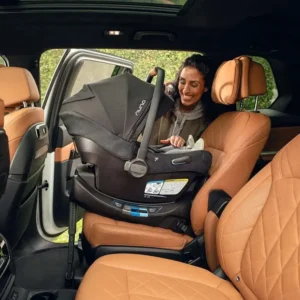
In a forward-facing position, during a frontal impact—the most common type of traffic accident—the torso is restrained by the harness system, but the head and neck are thrust violently forward. This motion, known as internal decapitation or severe whiplash, places immense tension on the delicate spinal cord and brain stem. Conversely, a rear-facing car seat acts as a protective cradle. During a collision, the seat shell absorbs the kinetic energy, and the child is pressed backward into the structure of the seat. This evenly distributes the forces of the crash across the entire back, shoulders, and head, rather than concentrating them on the vulnerable neck and spine.
Evolution of Safety Standards and Official Recommendations
The evolution of these recommendations has been driven by decades of crash test data and real-world accident reports. In the mid-20th century, car safety for children was largely nonexistent, with many infants held on parents’ laps. The implementation of mandatory car seat laws began in the late 1970s, but it was not until the 21st century that the focus shifted from simply "using" a seat to "how" that seat is oriented.
In 2011, the American Academy of Pediatrics (AAP) updated its policy, recommending that children remain in rear-facing car seats until at least two years of age, or until they reach the maximum height or weight limit allowed by the seat manufacturer. This was a pivotal shift from previous guidelines, which had often suggested moving to forward-facing at one year of age or 20 pounds. Current best practices have moved even further, with many child passenger safety technicians (CPSTs) encouraging parents to maintain the rear-facing position until the child hits the upper limits of their convertible car seat, which for many modern models, extends to 40 or 50 pounds—typically around the age of four.
Statistical Evidence and Crash Analysis
The data supporting extended rear-facing use is robust. Studies published in journals such as Injury Prevention have consistently demonstrated that children under the age of two are 75 percent less likely to be killed or severely injured in a crash when seated in a rear-facing position compared to those in a forward-facing seat.
When analyzing side-impact collisions, the rear-facing design continues to offer superior protection. Because the side-impact protection features of a car seat are designed to work in conjunction with the seat’s orientation, the rear-facing position ensures that the child’s head remains within the protective "shell" of the seat, reducing the risk of contact with door panels, shattered glass, or intruding vehicle structures. While forward-facing seats have improved significantly with the introduction of top tethers and advanced side-impact shielding, they cannot replicate the inherent physics of the rear-facing cradle.
Addressing Parental Misconceptions
Despite the overwhelming evidence, many parents remain hesitant to keep their children rear-facing for an extended period, often citing three primary concerns: legroom, motion sickness, and social interaction.
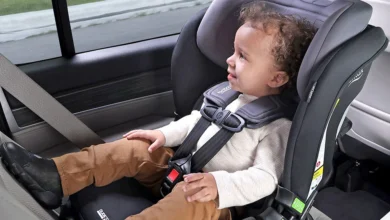
Regarding legroom, there is a pervasive myth that children will suffer leg injuries or discomfort because their legs are bent or resting against the back seat. Industry experts note that children are anatomically more flexible than adults and rarely find this position uncomfortable. Furthermore, crash statistics indicate that lower-extremity injuries are significantly more common in forward-facing children, as their legs are left unsupported and exposed to the impact of the seat in front of them during a crash.
Motion sickness is another concern, though it is often manageable. While some children may experience discomfort due to the rear-facing orientation, experts suggest that this is often a result of the child’s sensitivity to motion rather than the seat position itself. Parents are encouraged to ensure the child has a clear view of the road or side windows and to avoid heavy feeding immediately before travel.
Finally, the desire to maintain eye contact or interact with the child is a frequent justification for forward-facing. However, safety advocates emphasize that in the hierarchy of needs, occupant protection must take precedence over visual engagement. The use of shatterproof mirrors can provide parents with the ability to monitor their child without compromising safety.
Industry Implications and Future Trends
The automotive and car seat manufacturing industries have responded to these safety findings by innovating new product designs. Today’s convertible car seats are vastly different from the rudimentary plastic shells of the 1990s. High-strength steel frames, energy-absorbing foam, and anti-rebound bars have become standard features in premium models. Anti-rebound bars, in particular, are designed to prevent the seat from rotating toward the vehicle seat back during a rebound phase of a crash, further enhancing the safety of the rear-facing setup.
Manufacturers now market seats specifically based on their "extended rear-facing" capabilities, with weight limits that accommodate toddlers well into their preschool years. This shift in the market reflects a broader societal change where safety is no longer viewed as a "minimum requirement" but as a priority for informed consumers.
Public Health and Long-Term Impact
From a public health perspective, the widespread adoption of extended rear-facing travel represents a low-cost, high-impact intervention. Unlike many other safety measures that require significant infrastructure investment or complex behavioral changes, switching the direction of a car seat requires only an informed decision by the parent.
The societal implications are clear: reduced mortality and morbidity rates among children lead to lower long-term healthcare costs and fewer tragic losses for families. As vehicle technology moves toward semi-autonomous driving and advanced driver-assistance systems (ADAS), the car seat remains the final line of defense for the smallest passengers.
In conclusion, while the progression through the stages of childhood is something parents naturally look forward to, the orientation of a car seat is not a milestone that should be rushed. By adhering to the most current safety guidelines and prioritizing the physics of rear-facing protection, parents can ensure that they are doing everything within their power to safeguard their children during every journey, whether it is a short trip to the grocery store or a long-distance commute. The evidence is unambiguous: for as long as the seat’s height and weight specifications allow, the safest seat is a rear-facing one.