As the winter season reaches its midpoint, early childhood educators across the country are navigating the steady, predictable rhythms of the February classroom. By this stage in the academic year, preschool children have typically mastered daily routines, transitions, and classroom expectations, creating an environment optimized for deeper engagement, communication, and hands-on exploration. Rather than introducing entirely new concepts, early childhood specialists note that February serves as an ideal month to leverage classroom familiarity, using seasonal adaptations of standard materials to maintain high student interest while reinforcing foundational academic and social-emotional skills.
The Pedagogical Value of Routine and Repetition in Winter
Educational research consistently underscores the importance of routine in early childhood development. According to developmental psychologists, predictable daily schedules reduce anxiety and cognitive load among children aged three to five, freeing up mental capacity for complex tasks such as symbolic play, early literacy, and cooperative problem-solving.

By February, preschool classrooms operate with noticeably fewer administrative transitions. Educators report that instructional time previously spent managing classroom movement can instead be redirected toward rich conversations, guided exploration, and targeted skill practice. This developmental milestone allows teachers to recycle familiar math, literacy, and sensory centers while swapping out thematic elements—such as introducing pink sensory bins, heart-shaped counters, or winter science materials—to spark renewed curiosity.
"When children recognize the format of an activity, they do not have to waste cognitive energy figuring out the rules," explains Dr. Elena Vance, an early childhood curriculum specialist. "Instead, they immediately dive into the content. February provides a rare sweet spot in the school year where classroom management aligns seamlessly with active learning."
Reimagining Valentine’s Day Through Literacy and Communication
Traditional elementary school celebrations surrounding February 14 often lean heavily on commercialized candy exchanges and arts-and-crafts assemblies. However, modern preschool pedagogy increasingly emphasizes moving away from passive exchanges and toward purposeful communication, social connection, and early literacy development.

Early childhood frameworks utilize the Valentine’s Day motif to target essential pre-reading skills. Classrooms frequently integrate thematic alphabet writing cards, dry-erase tracing lines, and letter-matching puzzles featuring uppercase and lowercase characters. These tactile exercises strengthen fine motor control—pincer grasps, finger dexterity, and hand-eye coordination—while simultaneously reinforcing letter recognition.
Furthermore, educators incorporate rhyming puzzles and name-recognition games structured around seasonal themes. By matching rhyming pairs or sorting heart-shaped letter tiles, students engage in phonological awareness, a critical building block for future reading success. These targeted interventions allow children to practice verbal articulation and peer-to-peer communication naturally within the context of play.
Cultivating Friendship and Kindness Through Structured Social Curricula
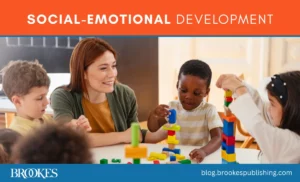
February is historically associated with themes of love and affection, making it a natural calendar anchor for intentional social-emotional learning (SEL). Preschool classrooms utilize this period to implement dedicated kindness circles and structured units focused on empathy, conflict resolution, and community building.

Child development data indicates that children aged three to five are actively developing the capacity for perspective-taking, though they still require significant adult scaffolding to navigate peer conflicts. Curriculum developers have responded by integrating daily reflection prompts, cooperative games, and literature-based discussions centered on kindness.
Classroom strategies to support these behavioral milestones include:
- Kindness Circles: Daily or weekly group meetings where children publicly acknowledge kind acts performed by their classmates.
- Cooperative Building Tasks: Engineering centers that require two or more children to collaborate to complete a structure.
- Role-Playing Scenarios: Using puppets or dramatic play to model how to share materials, invite peers into a game, and express emotional needs using verbal communication.
"Social-emotional competence is the bedrock of all subsequent academic learning," notes Marcus Holloway, an elementary school principal and former preschool educator. "When we teach children how to articulate their feelings and care for their peers in February, we see a direct correlation in improved classroom climate for the remainder of the academic year."

Winter Science and Empirical Observation
While calendar pages point toward the impending arrival of spring, February typically delivers some of the most severe winter weather across many regions. Rather than retreating entirely indoors, progressive preschool programs harness the season as a living laboratory for empirical observation and scientific inquiry.
Science centers during this month frequently feature hands-on weather and material-state investigations. Educators set up ice cube sensory tables equipped with magnifying glasses, pipettes, warm water, and watercolor paints. As children observe frozen water melting under various conditions, they begin to grasp rudimentary concepts of thermodynamics, states of matter, and cause-and-effect relationships.
Key observational activities utilized in February curricula include:

- Ice Transformation Tracking: Documenting how quickly ice melts indoors versus outdoors or when treated with salt and warm water.
- Weather Logging: Creating daily visual charts depicting temperature, cloud cover, and precipitation patterns.
- Texture Comparison: Examining the structural differences between snow, slush, frost, and liquid water using tactile exploration tools.
These concrete, sensory-driven experiences encourage young learners to formulate hypotheses, make qualitative comparisons, and build descriptive vocabularies. By verbalizing their observations, students bridge the gap between intuitive exploration and formal scientific methodology.
Structuring Math and Literacy Centers for Success
Maintaining consistency in math and literacy centers is a cornerstone of effective February instructional design. By utilizing familiar center layouts—such as counting mats, pattern blocks, and sorting trays—teachers ensure that students transition smoothly from January expectations without experiencing cognitive fatigue.
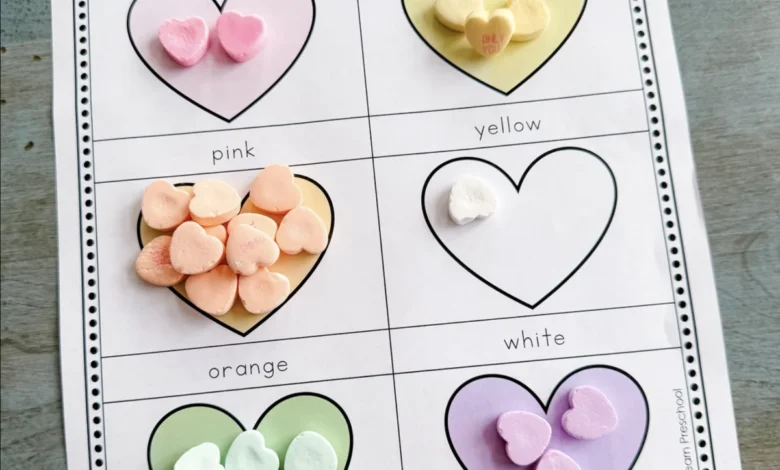
Recent curriculum releases emphasize modular math activities that scale easily to match individual developmental levels. For instance, Valentine-themed counting mats allow teachers to adjust numerical ranges, keeping figures small (typically between one and ten) to foster mathematical confidence. Children use heart-shaped manipulatives to correspond with written numerals, bridging abstract symbols with physical quantities.

Similarly, literacy stations feature cyclical games such as self-correcting rhyming puzzles and syllable-counting card sorts. Because the operational mechanics of these games remain consistent throughout the winter term, students can rotate through centers independently, promoting self-regulation, task persistence, and executive functioning skills.
Dramatic Play: Fostering Language and Collaborative Roles
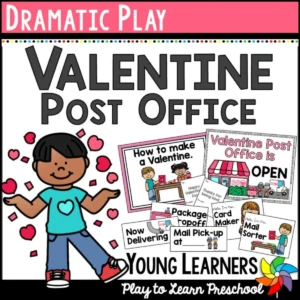
Dramatic play centers represent one of the most dynamic components of the preschool environment. In February, educators often transform these spaces into thematic environments such as a flower shop, a Valentine post office, or a community bakery.
Open-ended dramatic play yields substantial developmental dividends. Unlike rule-bound board games, dramatic play areas provide an unstructured canvas where children negotiate roles, delegate responsibilities, and adapt narratives dynamically. Within a simulated flower shop, for example, students practice transactional language—exchanging play money for bouquets, taking telephone orders, and writing customer names on delivery tags.

Linguists and educators emphasize that dramatic play is a primary vehicle for pragmatic language development. Children learn conversational turn-taking, normative social scripts, and vocabulary specific to community professions. Because these centers are inherently flexible, children of varying developmental abilities can participate comfortably at their own pace, entering or exiting the play scenario without disrupting the collective group dynamic.
Broader Implications and Long-Term Educational Impact
The strategic curation of February preschool activities extends far beyond immediate classroom engagement. Educational analysts point out that maintaining a balance of predictable routines, targeted skill reinforcement, and social-emotional instruction during the late winter months helps prevent mid-year burnout among both students and educators.
By focusing on depth over novelty, early childhood programs build sustained academic resilience. Children who master the art of collaborative play, fine motor precision, and basic scientific observation in a supportive February environment are demonstrably better prepared for the transition to kindergarten and primary school structures.

As early childhood education continues to evolve in response to empirical research, the emphasis remains steadfast: the most effective learning environments are those that honor the developmental realities of young children. By keeping February activities simple, flexible, and grounded in meaningful human interaction, educators lay a sturdy foundation for lifelong intellectual and social growth.