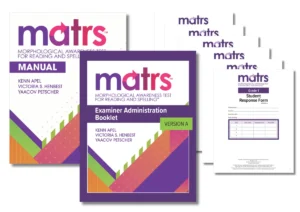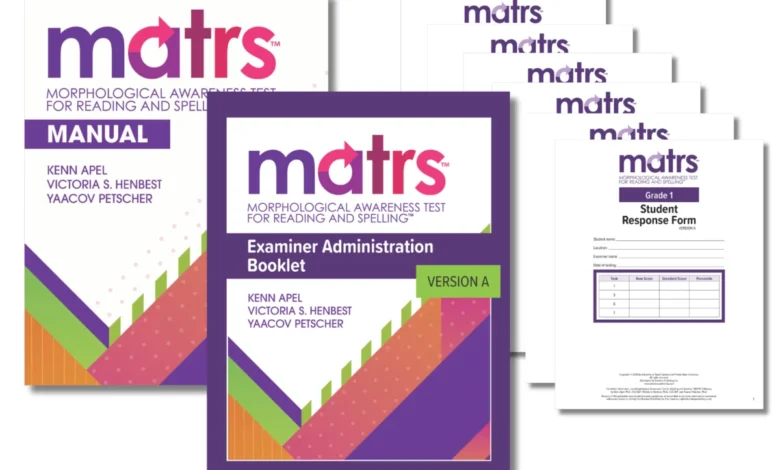
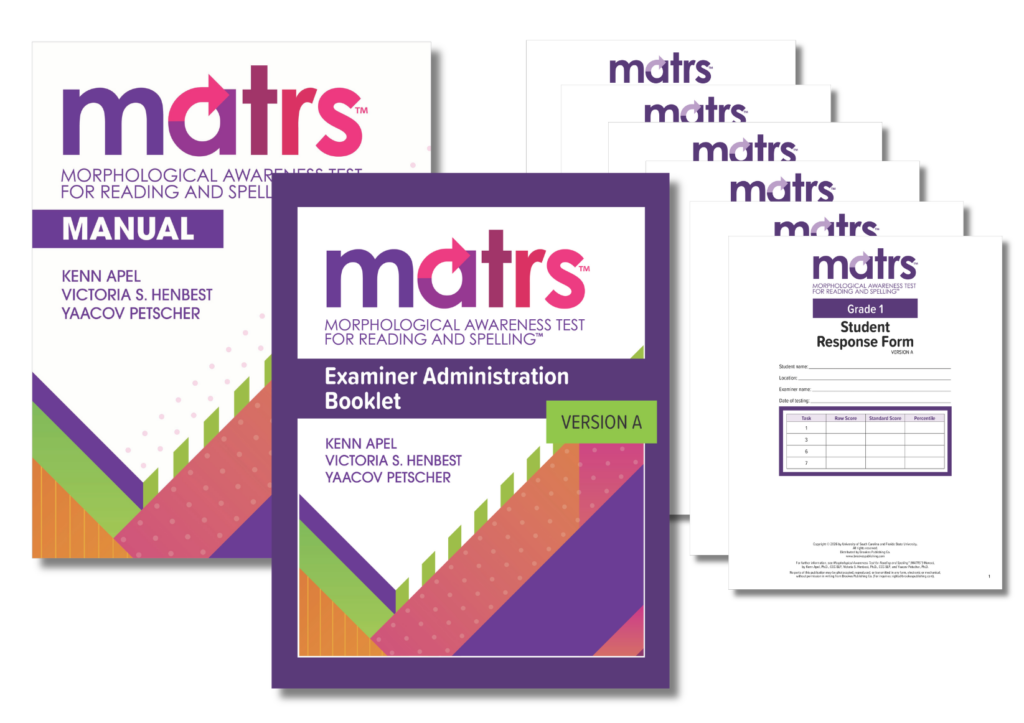
The introduction of the Morphological Awareness Test for Reading and Spelling (MATRS) marks a pivotal development in the field of educational diagnostics, offering a comprehensive solution for educators and specialists who frequently encounter students with persistent, unexplained difficulties in literacy acquisition. Developed by Dr. Kenn Apel and Dr. Victoria Henbest, the MATRS is designed to fill a critical gap in standardized assessment by focusing on morphological awareness—a skill that has increasingly been recognized as a cornerstone of successful reading and writing, yet has historically been underserved by traditional testing batteries. For students in the first through sixth grades, this tool serves as a prescriptive diagnostic, moving beyond the identification of surface-level errors to reveal the underlying linguistic deficits that impede academic progress.
The Evolution of Literacy Assessment and the Role of Morphological Awareness
To understand the significance of the MATRS, it is necessary to examine the broader context of literacy instruction over the past several decades. For much of the late 20th and early 21st centuries, phonological awareness—the ability to recognize and manipulate the sounds of spoken language—was viewed as the primary predictor of early reading success. While phonics remains a vital component of literacy, researchers have increasingly noted that many students who master basic decoding still struggle with more complex reading and spelling tasks as they progress into higher grades.
Morphological awareness involves the ability to consciously consider and manipulate morphemes, which are the smallest units of meaning in a language. In English, these include base words such as "act," "play," or "sense," as well as the prefixes and suffixes that modify them, such as "re-," "un-," "-ion," or "-ed." While phonology deals with sounds, morphology deals with the architecture of meaning. A student with strong morphological awareness understands that the word "magician" is related to "magic," and that the "ian" suffix denotes a person who practices a specific craft. Without this awareness, students often view words as arbitrary strings of letters, making spelling and vocabulary acquisition significantly more difficult.
The release of the MATRS comes at a time when the "Science of Reading" movement is gaining momentum across the United States and internationally. This movement emphasizes evidence-based practices that align with how the human brain learns to read. By providing a standardized, norm-referenced tool to measure morphological processing, Apel and Henbest are providing the missing empirical link required to fulfill the comprehensive requirements of modern literacy frameworks.
Technical Specifications and the Diagnostic Framework
The MATRS is distinguished as the only standardized, norm-referenced diagnostic test currently available that focuses exclusively on morphological awareness. In the realm of educational testing, "standardized and norm-referenced" means the tool has been tested on a large, representative sample of students, allowing clinicians to compare an individual student’s performance against a national average. This is a critical requirement for qualifying students for special education services, such as those provided under the Individuals with Disabilities Education Act (IDEA).
The test evaluates four specific components of morphological awareness, ensuring a holistic view of a student’s linguistic capabilities:
- Relational Awareness: The ability to recognize that words share a common root and meaning, even when the pronunciation or spelling changes (e.g., knowing that "sign" and "signature" are related).
- Syntactic Awareness: Understanding how adding a morpheme changes a word’s grammatical category, such as turning the verb "teach" into the noun "teacher."
- Orthographic Awareness: The knowledge of how the spelling of a base word might change when a suffix is added, such as dropping the "e" in "bake" to create "baking."
- Semantic Awareness: The ability to extract meaning from unfamiliar words by analyzing their constituent morphemes.
By breaking down the assessment into these components, the MATRS allows educators to move away from "one-size-fits-all" interventions. If a student performs well in relational awareness but fails in orthographic awareness, the teacher can target the specific spelling rules associated with suffixation rather than wasting time on general vocabulary drills.
Addressing the Dyslexia Connection
One of the most profound implications of the MATRS is its utility in identifying and supporting students with dyslexia. The International Dyslexia Association (IDA) has long maintained that dyslexia is a specific learning disability characterized by difficulties with accurate and/or fluent word recognition and by poor spelling and decoding abilities. Crucially, the IDA’s definition explicitly states that these difficulties "typically result from a deficit in the phonological component of language that is often unexpected in relation to other cognitive abilities."
However, recent updates to clinical understandings of dyslexia have expanded this to include morphological processing. Many students with dyslexia struggle not just with the sounds of words, but with the structural meaning of those words. The MATRS provides a formal mechanism for clinicians to document these "underlying difficulties with phonological and morphological processing" mentioned in the IDA definition. For school districts, this provides a more robust evidentiary basis for dyslexia diagnoses, ensuring that students receive the specialized instruction they require.
Chronology of Development and Research Background
The development of the MATRS is the culmination of years of academic research by Dr. Kenn Apel and Dr. Victoria Henbest. Dr. Apel, a recognized authority in the field of communication sciences and disorders, has spent decades investigating the relationship between linguistic awareness and literacy. His research has consistently shown that morphological awareness contributes unique variance to reading and spelling outcomes, independent of phonological awareness and vocabulary.
The timeline for the MATRS development involved rigorous field testing and data collection to ensure the validity and reliability of the norms. This process included:

- Pilot Testing: Initial versions of the test were administered to small groups to refine the clarity of instructions and the difficulty level of items.
- Norming Studies: The test was administered to a diverse demographic of students across grades 1-6 to establish a baseline of "typical" performance for each age group.
- Reliability Verification: The developers conducted test-retest and inter-rater reliability studies to ensure that the scores remained consistent across different examiners and time periods.
The final product, published by Brookes Publishing, reflects a shift in the industry toward tools that are not only diagnostically accurate but also practically applicable in a busy school environment.
Supporting Data: The Literacy Crisis and the Need for New Tools
The necessity for tools like the MATRS is underscored by recent data regarding national literacy rates. According to the National Assessment of Educational Progress (NAEP), often referred to as "The Nation’s Report Card," approximately two-thirds of fourth-grade students in the United States perform below the "proficient" level in reading. These statistics have remained stubbornly stagnant for years, despite various federal and state initiatives.
Educational analysts argue that one reason for this stagnation is the "fourth-grade slump," a phenomenon where students who were able to decode simple words in early grades begin to struggle as the curriculum shifts from "learning to read" to "reading to learn." In the fourth grade and beyond, the vocabulary found in textbooks becomes increasingly complex, often relying on multisyllabic words derived from Latin and Greek roots. A student without morphological awareness is effectively locked out of this higher-level curriculum.
By introducing the MATRS in the first grade, educators can identify at-risk students years before they hit the fourth-grade slump. Early intervention is statistically proven to be more cost-effective and academically successful than remedial efforts in later middle school or high school years.

Official Responses and Educational Impact
Initial reactions from the educational community have been largely positive, with many speech-language pathologists (SLPs) and reading specialists praising the test’s ease of administration. "Oftentimes, we see students who fall through the cracks because they aren’t ‘dyslexic enough’ on standard phonics tests, yet they can’t spell to save their lives," noted one literacy coach during a preliminary review of the tool. "Having a standardized way to point to a morphological deficit changes the conversation in an IEP [Individualized Education Program] meeting."
The developers, Apel and Henbest, have emphasized that the MATRS was designed with the practitioner in mind. The test features clear "discontinue" rules to prevent student frustration and a streamlined scoring system that allows for rapid results. Furthermore, the inclusion of an instructional planning guide ensures that the data gathered during the test translates directly into classroom practice.
Broader Implications for the Future of Education
The launch of the MATRS is likely to influence how teacher preparation programs approach literacy. As morphological awareness moves from a niche research topic to a standardized diagnostic category, there will be increased pressure on universities to ensure that new teachers are fluent in the structures of the English language.
Furthermore, the MATRS sets a new standard for what a diagnostic tool should achieve. In an era of data-driven instruction, schools are no longer satisfied with knowing that a student is failing; they need to know why. By pinpointing morphological deficits, the MATRS provides a level of granularity that empowers teachers to be more effective and students to be more successful.

As school districts across the country continue to grapple with the long-term effects of pandemic-related learning loss, the focus on foundational skills has never been more intense. The MATRS arrives as a critical instrument in the educator’s toolkit, promising to unlock the door to literacy for students who have long struggled in silence. By addressing the "missing link" of morphological awareness, the MATRS does more than just test students—it provides a roadmap for their future academic success.