Transforming the Early Childhood Classroom: How Educator Curriculums Are Integrating Interactive Bear-Themed Units to Boost STEM and Literacy Skills

Early childhood educators across the country are increasingly turning to thematic units to foster holistic development in preschool classrooms, with bear-themed curricula emerging as a prominent pedagogical tool. By combining foundational sciences, mathematics, literacy, and sensory exploration, these multidisciplinary programs utilize children’s natural fascination with wildlife to bolster cognitive and social-emotional growth.
According to developmental psychologists and early education specialists, thematic learning frameworks help young children synthesize information by connecting abstract concepts to concrete, relatable subjects. Bears—ranging from familiar teddy bears to massive polar and grizzly bears inhabiting diverse ecological niches—provide an ideal anchor for multifaceted classroom instruction. As schools emphasize experiential learning, educators are discovering that bear-themed activities seamlessly bridge indoor play with empirical inquiry, laying crucial groundwork for future academic success.
The Evolution and Structural Framework of Thematic Preschool Curriculums
The integration of animal-based themes into early childhood education is rooted in constructivist learning theories, which posit that children construct knowledge actively through interaction with their environment. Historically, preschool instruction relied heavily on disjointed lessons; however, modern curriculum design favors interconnected units that span multiple developmental domains simultaneously.
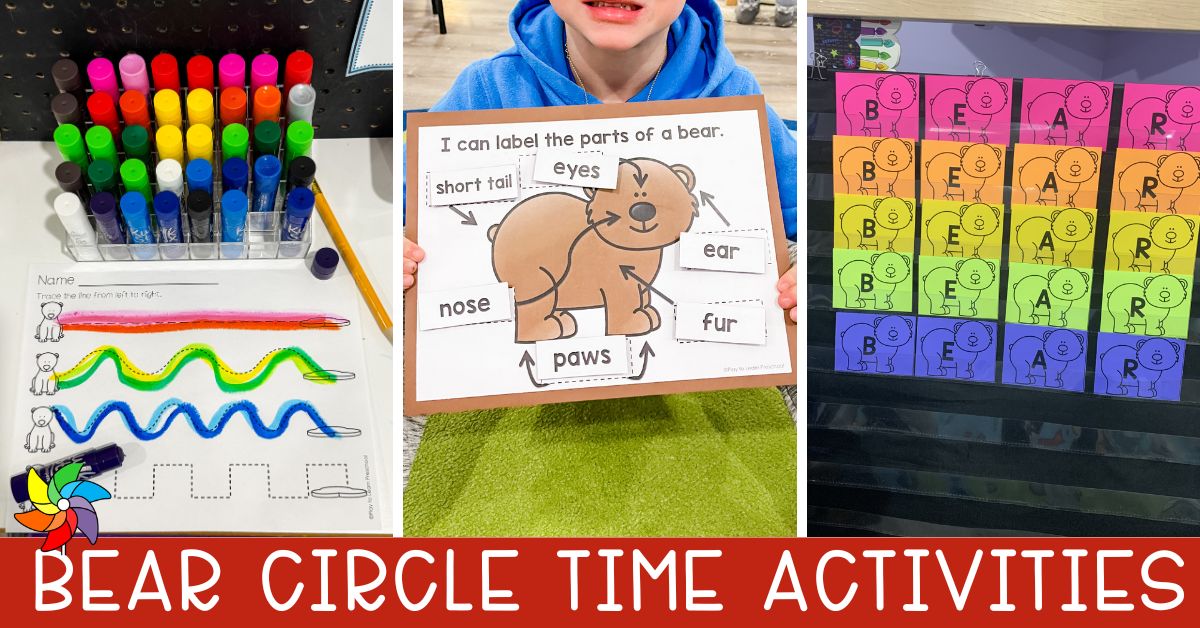
The structured rollout of a typical bear unit begins during circle time, where teachers introduce the biological diversity of ursine species. Rather than focusing solely on fictional depictions, contemporary lesson plans incorporate real-world zoology, comparative anatomy, and ecological habitats. By examining photographs of various species—such as the American black bear, the Asiatic black bear, the giant panda, the brown bear, and the polar bear—children learn fundamental observational skills. They begin to identify biological variables, noting differences in coloration, geographic distribution, and physical scale.

To reinforce these concepts, educators frequently employ diagnostic sorting exercises on classroom carpets. Activities that challenge students to distinguish between "bear" and "not-bear" traits help clarify anatomical specifics. Through guided discussions, children identify diagnostic physiological markers, including rounded ears, short tails, robust paws, dense fur layers, and non-retractable claws. This taxonomy-lite approach introduces early scientific vocabulary and categorization skills, aligning with national early learning standards for science and inquiry.
Leveraging Digital Technology and Remote Wildlife Observation
A significant barrier in historical preschool education has been the physical unavailability of exotic or wild animals for classroom study. Modern technological integration has successfully bridged this gap, allowing young learners to observe wildlife in real time through live-streaming webcams established by major zoological institutions and wildlife conservation organizations.

Classrooms equipped with internet-connected displays now regularly tune into live feeds such as the Smithsonian National Zoological Park’s Giant Panda Cam, international monitoring systems covering panda habitats at the Wolong Zoo in China, and North American Bear Center feeds tracking black bear behavior. Additionally, students can observe brown bears hunting for salmon in their natural Alaskan habitats via Katmai National Park webcams or view polar bears through San Diego Zoo portals.
To transform passive viewing into active scientific inquiry, educators have established dedicated observation stations within the classroom. Equipped with clipboards, pencils, and structured data-recording charts, children document observed behaviors—such as foraging, climbing, resting, or swimming. Older preschool cohorts often aggregate these findings into simple tally charts, introducing foundational data collection and statistical analysis at an early developmental stage.
Scientific Inquiry: Exploring Hibernation and Ecological Adaptation

Science curricula within early childhood education emphasize environmental adaptation and seasonal changes, making hibernation a focal point of bear-themed units. Through interactive science centers, students explore how endothermic animals conserve energy during periods of resource scarcity.
The introduction of specialized "hibernation stations" allows children to manipulate tactile models of dens and forest environments, using props like pinecones, artificial foliage, and plush representations of wildlife. This hands-on approach reinforces newly acquired academic vocabulary, including terms such as "hibernation," "adaptation," "habitat," and "omnivore."
Educational researchers note that kinesthetic engagement with biological concepts enhances memory retention among four- and five-year-olds. By physically simulating the seasonal transition from active foraging to winter dormancy, children gain a tangible understanding of ecological balance and mammalian survival strategies.

Mathematical Development and Sensory Integration
Mathematics instruction in preschool environments relies heavily on manipulative objects that promote spatial awareness, counting, and pattern recognition. Bear-themed units utilize specialized plastic and translucent counters to advance mathematical competencies in small-group settings.
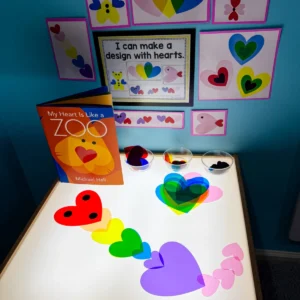
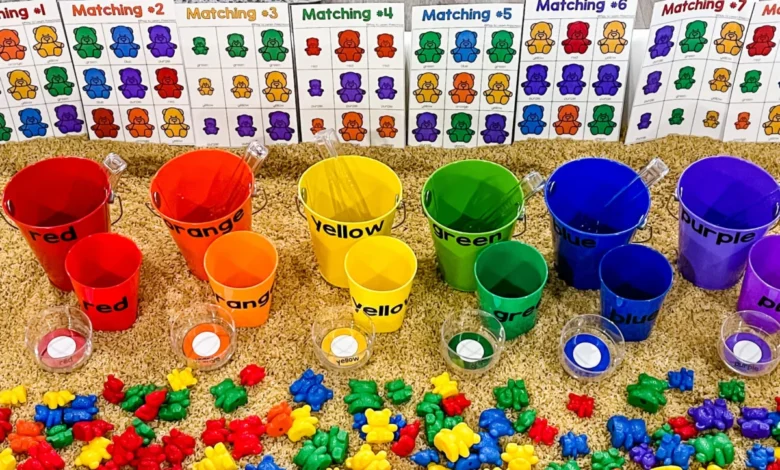
Within math centers, children utilize bear counters for cardinality exercises, color sorting, and sequential patterning. Educators report that transitioning these activities to light tables enhances visual engagement, allowing students to explore light refraction while simultaneously sorting objects by attributes such as color, mass, and dimension. Students regularly engage in comparative mathematics, utilizing vocabulary such as "greater than," "fewer," and "equal" while organizing counters into miniature plastic containers functioning as metaphorical caves.

Concurrently, sensory tables are frequently reconfigured to simulate woodland ecosystems. Filled with organic materials such as shredded paper, smooth stones, and textured wood chips, these tactile environments encourage fine motor development through scooping, burying, and sorting tasks. Incorporating hidden objects—such as miniature plastic bears embedded within the sensory filler—promotes problem-solving skills and sustained attention spans.
Literacy Enhancement Through Thematic Reading and Story Retelling
Literacy development remains a cornerstone of preschool curricula, and bear-themed units offer expansive opportunities for both receptive and expressive language growth. Traditional fairy tales, such as Goldilocks and the Three Bears, are frequently paired with contemporary literature including Karma Wilson’s Bear Snores On.

To foster comprehension and narrative sequencing, classrooms utilize tactile storytelling tools such as felt boards and interactive character cutouts. By physically manipulating characters in chronological order, children demonstrate reading comprehension and story recall. Literacy experts emphasize that tactile retelling builds narrative competence, a critical precursor to advanced reading comprehension in elementary school.
Furthermore, cozy reading corners outfitted with soft plush toys and dedicated bear literature encourage independent literacy habits. Educators note that allowing children to "read" to stuffed companions reduces performance anxiety and fosters a positive emotional association with books.
Culminating Events and Community Engagement: The Teddy Bear Picnic

The conclusion of a multi-week bear unit is frequently marked by a community-building event: the traditional preschool teddy bear picnic. Designed to encourage parental involvement and social integration, this activity invites students to bring a personal plush toy from home to share with their peers.
During the event, children participate in group presentations, introducing their companion items and engaging in collaborative sorting exercises based on physical characteristics such as size, color, and apparel. The event typically culminates in a shared group snack, often featuring specialized thematic food items such as bear-shaped toast, reinforcing the cross-curricular integration of nutrition and fine arts.
Broader Pedagogical Implications and Future Outlook

The sustained popularity of bear-themed educational units highlights a broader shift in early childhood pedagogy toward integrated, experiential learning models. By dissolving strict boundaries between subjects like mathematics, science, and literacy, educators create cohesive learning environments that mirror real-world problem-solving.
As school districts nationwide continue to refine early learning frameworks to meet rigorous developmental benchmarks, thematic units focused on accessible subjects like wildlife offer a proven methodology for engagement. Educational analysts suggest that early exposure to empirical observation, data recording, and ecological concepts equips young learners with the critical thinking skills necessary for long-term academic achievement in STEM and humanities fields alike.