Mastering Classroom Management: Proven Strategies for Addressing Seven Common Behavioral Challenges

Managing a classroom environment requires a sophisticated balance of academic instruction and social-emotional guidance. Educators today face an increasingly complex landscape of behavioral issues, ranging from acute emotional outbursts to chronic anxiety and social disconnection. According to recent data from the National Center for Education Statistics (NCES), over 80% of public schools have reported that the COVID-19 pandemic negatively impacted student social-emotional development, leading to a marked increase in classroom disruptions. Addressing these challenges is no longer an ancillary task but a central component of modern pedagogy. By integrating evidence-based strategies—such as those developed by experts at Brookes Publishing—teachers can transform reactive classroom management into proactive, student-centered support systems.
The Evolution of Classroom Behavior Management
The philosophy of classroom management has shifted significantly over the past two decades. Historically, schools relied heavily on punitive, exclusionary disciplinary measures. However, research in developmental psychology has demonstrated that such approaches often exacerbate the very behaviors they intend to curb. Current best practices emphasize Social-Emotional Learning (SEL), a framework that prioritizes the development of self-awareness, self-management, social awareness, relationship skills, and responsible decision-making.
The necessity for these interventions is backed by longitudinal studies showing that students with strong social-emotional competencies achieve higher academic results and demonstrate greater long-term success. As schools move toward trauma-sensitive environments, the focus has shifted from "controlling" student behavior to "regulating" emotional states.
1. Navigating Anger and Emotional Dysregulation
Anger in the classroom is frequently a secondary emotion, masking underlying feelings of frustration, fear, or perceived injustice. Experts suggest that rather than suppressing anger, educators should facilitate discussions that normalize the emotion while teaching appropriate expression.
When a student becomes angry, the environmental context—who is present and what the student hopes to achieve—dictates the appropriate response. Teachers are encouraged to present students with a menu of management strategies. By allowing students to analyze these strategies, educators empower them to self-select techniques based on the specific situation. This cognitive approach moves the student from a reactive state, driven by the amygdala, to a logical, prefrontal cortex-based decision-making process.

2. Resolving Peer Conflict Through Structured Models
Conflict is an inevitable feature of the social ecosystem within a school. While it is often viewed as a disruption, it also serves as a critical learning opportunity for interpersonal development. The "Strong Kids" curriculum and similar frameworks advocate for a consistent, four-step problem-solving model that provides students with a roadmap for de-escalation.
The effectiveness of this model relies on consistency. When teachers apply the same logic to every dispute, students internalize the process, eventually requiring less adult intervention. Furthermore, the rise of peer mediation programs has shown promise. By training students to act as neutral mediators, schools foster a culture of restorative justice rather than retributive punishment. This transition from "punisher" to "facilitator" allows teachers to preserve the teacher-student relationship while still addressing the root causes of the conflict.
3. Systematic Approaches to Reducing Bullying
Bullying remains a persistent issue that erodes the sense of safety required for learning. Modern anti-bullying initiatives have moved beyond simple "zero-tolerance" policies, which often fail to address the social dynamics at play. Instead, current strategies focus on the role of the "upstander"—a peer who intervenes or reports bullying behavior.

Practical instruction involves teaching students specific, age-appropriate scripts for intervention. When students feel empowered to speak up, the social currency of the bully is diminished. Data from the Cybersecurity and Infrastructure Security Agency and various educational research bodies indicate that school-wide climates characterized by high empathy and clear communication are significantly more effective at reducing bullying incidents than those that rely solely on surveillance or strict codes of conduct.
4. Improving Emotional Regulation via Trauma-Sensitive Movement
Emotional regulation is defined as the ability to monitor and control one’s internal state. For students who have experienced trauma, the nervous system may be in a constant state of hyper-arousal or hypo-arousal, making standard learning tasks difficult.
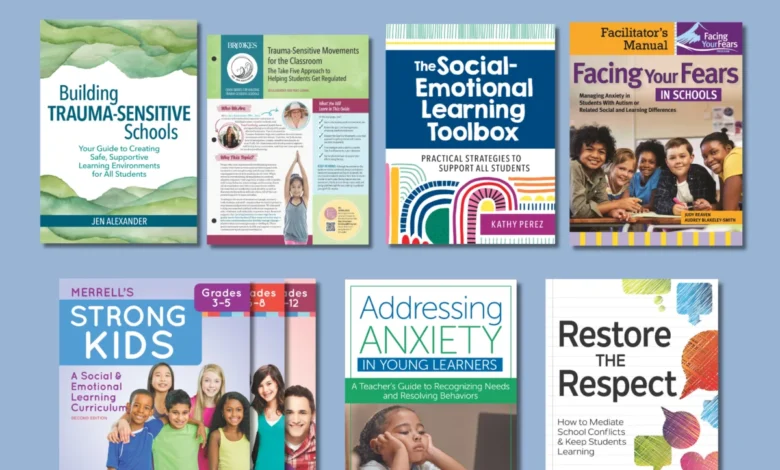
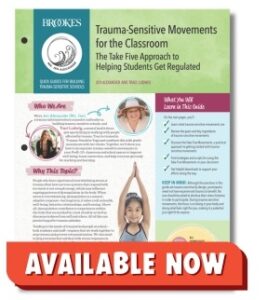
Trauma-informed experts, such as Jen Alexander, advocate for the use of "Take Five" movements—short, physical exercises that help students transition between activities or regain focus. The use of games, such as "Mime," serves a dual purpose: it acts as a physical outlet for restless energy and provides a grounding mechanism that helps students return to a state of calm. Integrating these movements into the daily routine minimizes the time lost to behavioral redirection and optimizes the brain for instruction.
5. Alleviating Student Anxiety
Anxiety in the classroom often presents as withdrawal, non-compliance, or physical illness. To address this, educators are increasingly using techniques like the "worry bug" activity. This psychological distancing exercise helps students conceptualize their worries as external entities that can be managed, rather than intrinsic, overwhelming traits.
When a student is experiencing an anxiety spike, the goal is to provide immediate, low-stakes calming techniques. These might include breathing exercises, grounding techniques (e.g., identifying five things they can see), or providing a "cool-down" space. By acknowledging that anxiety is a common, manageable human experience, teachers reduce the stigma and help students regain control over their focus.
6. Nurturing Empathy as a Foundational Skill
The absence of empathy is frequently at the center of classroom conflicts. Empathy is not a static trait; it is a skill that can be cultivated through deliberate practice. The "5 Steps to Cultivate Empathy" framework focuses on perspective-taking, active listening, and emotional identification.
By integrating empathy-building activities—such as role-playing exercises or reflective journaling—into the standard curriculum, teachers create a classroom culture where students are more likely to consider the impact of their actions on others. This proactive social-emotional training is considered a primary defense against the development of negative behavioral patterns.
7. Increasing Positive Thinking and Resiliency
The psychological concept of "positive thinking" in a classroom context does not imply ignoring reality; rather, it refers to the development of a growth mindset. Exercises that encourage students to identify "three good things" or reflect on personal strengths help combat the negativity bias that often accompanies academic struggle.
By fostering a classroom environment that celebrates effort and progress, educators can improve student engagement. Research suggests that students who feel positive about their academic environment are more resilient in the face of setbacks, leading to fewer behavioral incidents and higher rates of task completion.

Broader Implications and Institutional Response
The adoption of these strategies represents a fundamental shift in how the American education system views the "whole child." The implications are significant: by addressing the emotional and social needs of students, schools report lower turnover rates for teachers, higher levels of student attendance, and improved test scores.
However, the successful implementation of these practices requires institutional support. It is not enough to ask individual teachers to manage complex emotional landscapes; schools must provide the necessary training, time, and resources to embed these strategies into the daily fabric of the classroom.
As we look toward the future of education, the integration of social-emotional learning appears to be the most viable path forward for creating inclusive, productive, and safe learning environments. While there is no "magic formula," the combination of structured problem-solving, trauma-sensitive movement, and a commitment to empathy provides a robust foundation for meeting the challenges of the modern classroom. Educators who prioritize these tools are not merely managing behavior; they are equipping students with the essential life skills required to navigate the complexities of the 21st-century world.
Related posts: