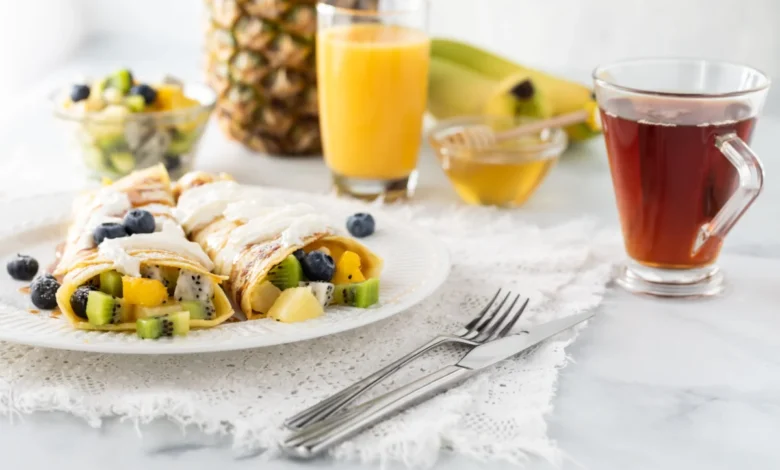
The culinary landscape of weekend brunches and family-focused breakfast menus has seen a notable shift toward vibrant, visually striking dishes that balance indulgence with nutritional value. Among the latest recipes gaining traction in home kitchens is a streamlined approach to French-style crepes infused with a vivid medley of tropical fruits. Designed to bridge the gap between gourmet presentation and everyday practicality, this recipe utilizes modern kitchen appliances—specifically the blender—to simplify the traditional, labor-intensive crepe-making process.
The Origins and Evolution of the Crepe
To understand the mechanics of this modern recipe, one must look at the rich history of the crepe itself. Originating in the Brittany region of northwestern France during the 13th century, crepes were initially made from buckwheat flour (known locally as sarrasin or ble noir) and served as a staple sustenance. Over time, as refined white flour and dairy became more accessible, lighter wheat-flour variations emerged, giving rise to the sweet crepe (crêpe sucrée) commonly enjoyed today.
Unlike American pancakes, which rely heavily on chemical leavening agents such as baking powder or baking soda to achieve a thick, fluffy consistency, authentic crepes are defined by their distinct lack of leavening. This fundamental difference produces a paper-thin, highly flexible canvas. Historically, this structural elasticity made crepes ideal for folding, rolling, and enclosing various components ranging from simple granulated sugar and butter to complex savory ragus and delicate fruit compotes.
Modern Adaptation and Kitchen Efficiency
The contemporary version of the tropical fruit crepe modernizes centuries-old French culinary techniques for the busy home cook. Traditional crepe preparation requires meticulous hand-whisking of dry and wet ingredients to prevent the formation of flour lumps, followed by extended resting periods. The modern adaptation streamlines this workflow by introducing the kitchen blender.
Culinary experts note that adding liquid ingredients to the blender canister first, followed by flour and salt, prevents dry flour from adhering to the bottom and sides of the container. A brief pulse yields a uniform, remarkably smooth batter. Crucially, contemporary food science supports the traditional recommendation to let the batter rest. Allowing the mixture to sit lets individual starch granules in the flour fully absorb the surrounding liquid, while trapped air bubbles dissipate. This resting phase ensures that the resulting crepes cook evenly without tearing, developing a delicate, tender bite rather than a tough or rubbery texture.
Nutritional Profile and Kid-Friendly Appeal
Public health advocates and pediatric nutritionists have long emphasized the importance of incorporating diverse, nutrient-dense whole foods into children’s diets. The tropical fruit crepe formulation specifically addresses this by replacing refined confectionary fillings with a colorful assortment of fresh produce.
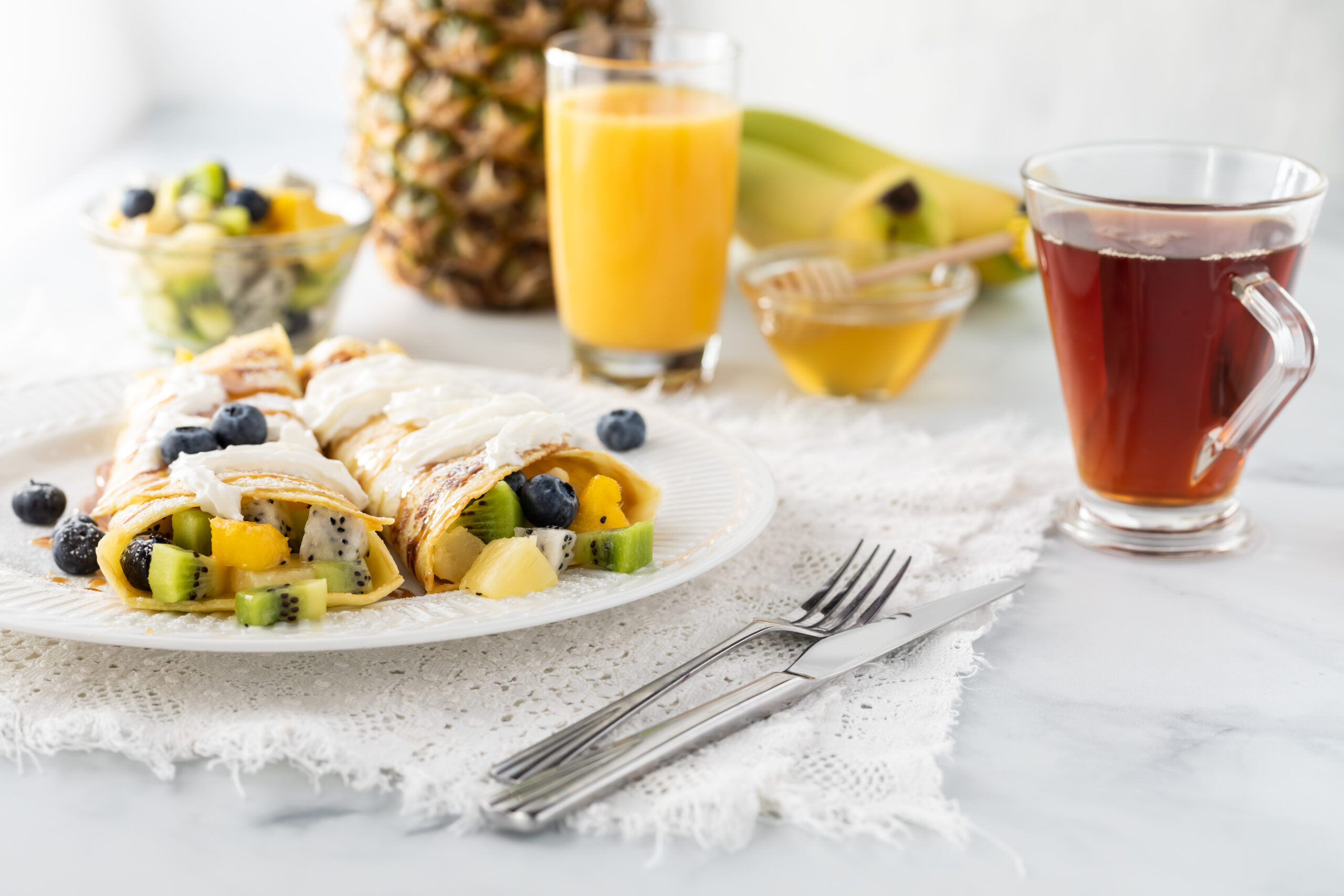
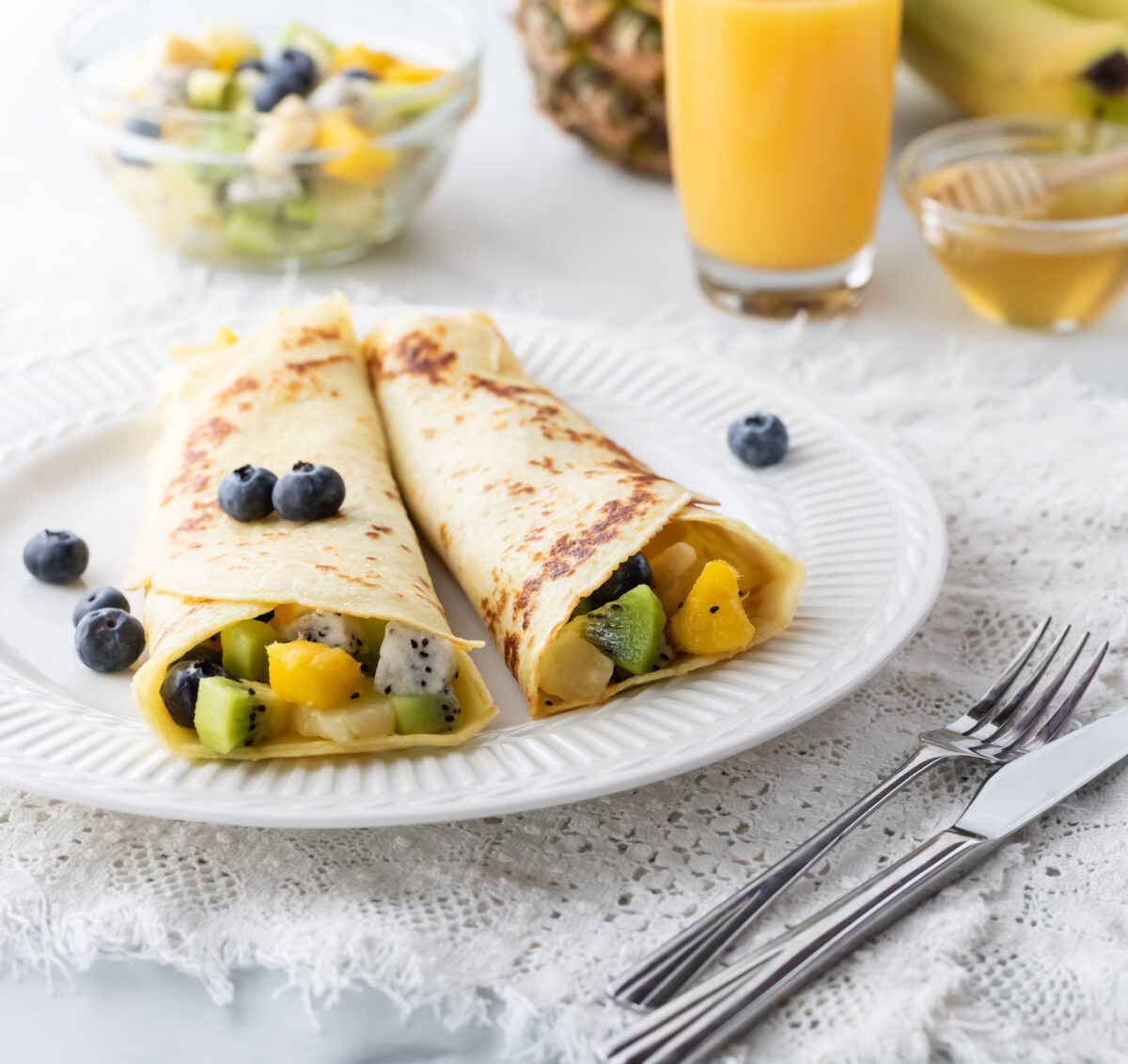
The recipe features a curated mix of green kiwi, golden pineapple, pink or white dragon fruit (pitaya), and deep-blue berries. According to nutritional data from agricultural and health authorities, this specific chromatic variety ensures a broad spectrum of micronutrients. Kiwi is exceptionally rich in Vitamin C and dietary fiber; pineapple provides bromelain, a proteolytic enzyme associated with digestive health; dragon fruit supplies antioxidants such as betalains and hydroxycinnamates; and berries contribute anthocyanins, which are linked to cognitive and cardiovascular health. By pairing these nutrient-dense fruits with a lighter, portion-controlled carbohydrate base, the dish offers an appealing entry point for introducing children to complex flavor profiles and varied textures.
Technical Mastery: Tips for Precision Cooking
Achieving restaurant-quality crepes at home relies heavily on thermal control and mechanical technique. Professional chefs and culinary instructors highlight several critical variables for success:
- Thermal Equilibrium: Utilizing a medium-heat setting on a high-quality nonstick skillet is paramount. Excessive heat causes the batter to coagulate instantaneously upon contact, preventing the cook from tilting and swirling the pan to achieve an even, paper-thin layer. Conversely, insufficient heat yields a pale, rubbery product that lacks the characteristic delicate lacing.
- Batter Viscosity: Crepe batter must maintain a consistency significantly thinner than traditional pancake batter—resembling heavy cream or whole milk. If the resting period causes the starch to thicken the mixture unduly, introducing a tablespoon or two of milk restores the required fluidity.
- Portion Discipline: For standard 8- to 10-inch skillets, precisely measuring approximately one-quarter cup of batter per crepe prevents excess thickness, which compromises the flexibility needed for folding.
- The Trial Run: Culinary tradition dictates that the inaugural crepe frequently serves as a diagnostic tool. It allows the cook to evaluate pan temperature, butter distribution, and batter viscosity, ensuring subsequent iterations achieve optimal golden-brown perfection.
Versatility and Customization in Modern Meal Prep
The adaptability of the tropical fruit crepe recipe contributes significantly to its widespread appeal across various dietary frameworks and meal planning schedules. For households managing dairy sensitivities, standard cow’s milk can be seamlessly substituted with plant-based alternatives such as almond, oat, or soy milk, while butter can be replaced with coconut oil or specialized plant-based spreads. Furthermore, incorporating whole-wheat flour into up to 50 percent of the dry mixture enhances the dietary fiber content without sacrificing structural integrity.
Meal-prep efficiency is another primary driver of the recipe’s popularity. Unlike many breakfast items that must be consumed immediately upon preparation, plain crepes exhibit exceptional resilience when stored correctly. By stacking cooked, cooled crepes with sheets of parchment paper between each layer, home cooks can store the base in an airtight container within a refrigerator for up to three days, or freeze them for up to two months. This capability allows families to bypass the time-consuming mixing and cooking phases on busy weekday mornings, requiring only a rapid reheat in a skillet or microwave before assembly.
Broader Economic and Culinary Implications
The resurgence of gourmet breakfast items designed for home execution reflects a broader consumer trend toward experiential dining within the domestic sphere. As global supply chains expand the availability of tropical produce—making items like fresh dragon fruit and imported kiwis accessible in standard supermarkets year-round—home cooking trends increasingly mirror upscale café and brunch culture.
Culinary economists observe that preparing elevated breakfast dishes at home serves as a cost-effective alternative to dining out, aligning with shifting household budget priorities. By demystifying techniques historically confined to professional French kitchens—such as crepe flaking, batter blending, and precise thermal management—recipes like the tropical fruit crepe empower home cooks to elevate everyday ingredients into sophisticated culinary presentations. As these accessible yet refined recipes continue to circulate through digital food platforms and culinary publications, they reinforce the value of combining aesthetic appeal, nutritional variety, and operational simplicity in modern domestic cooking.