Pedaling for a Cure: One Father’s Epic 5,000-Mile Cross-Country Journey to End Type 1 Diabetes

The morning air in La Push, Washington, was crisp as Pat McAleer wheeled his heavily laden touring bicycle to the edge of the Pacific Ocean. Dipping his front tire into the saltwater on July 15, McAleer officially marked the beginning of a punishing, self-supported 5,000-plus-mile expedition across the United States. Dubbed Ride Pat Ride, the three-month solo odyssey is not merely an exercise in endurance athletics; it is a meticulously planned, high-stakes fundraising campaign dedicated to accelerating research for type 1 diabetes (T1D)—a chronic autoimmune condition that hit close to home more than a decade ago.
For McAleer, the motivation behind the grueling miles is deeply personal. In 2009, his daughter Mary Kate, then just 10 years old, received a life-altering diagnosis of type 1 diabetes. Overnight, the family was thrust into a rigorous daily routine of blood glucose monitoring, carbohydrate counting, and insulin administration. Navigating the unpredictable highs and lows of the condition required immense resilience from a young child, leaving an indelible mark on her parents.
“Since then, my wife Molly and I have been 100 percent committed to improving the lives of people with T1D,” McAleer stated. Driven by that unwavering dedication, he resolved to take on a challenge that would test the absolute limits of his physical and mental fortitude while mobilizing a nationwide network of supporters. By turning his love for long-distance cycling into a platform for advocacy, McAleer aims to bridge the gap between individual endurance and collective medical progress.
To date, the initiative has generated nearly $150,000, bringing McAleer significantly closer to his base fundraising goal of $250,000. Because Pat and Molly are personally financing all operational expenses, travel, gear, and sustenance associated with the journey, 100 percent of every contribution goes directly to Breakthrough T1D. The funds are channeled straight into cutting-edge scientific research aimed at improving daily management technologies and ultimately discovering functional cures for the condition.
An Inauspicious Start and Early Roadblocks

Even the most thoroughly prepared transcontinental expeditions are bound to encounter unforeseen hurdles, and Ride Pat Ride hit its first major obstacle almost immediately. Just six miles into the trek, a stray branch caught in the mechanism of McAleer’s bicycle, violently tearing off the derailleur and rendering the machine entirely inoperable.
Rather than letting the mechanical failure derail his mission, McAleer adapted. He successfully hitched a ride to the nearby town of Forks, Washington, caught a connecting bus to Port Angeles, secured the necessary repairs, and was back in the saddle in remarkably short order. By Day 5 of the journey, he was already facing down one of the most formidable natural challenges of the Pacific Northwest: conquering the 5,477-foot Washington Pass in the heart of the North Cascades.
The early weeks of the itinerary proved to be a crucible of environmental extremes. As McAleer pushed eastward, regional wildfire activity blanketed portions of the route in thick, hazardous smoke. Undeterred, he donned a specialized respirator mask to filter out falling ash and microscopic particulates, steadily grinding out the miles through compromised air quality. Shortly after clearing the smoke, he confronted another punishing ascent, scaling the 5,575-foot Sherman Pass before navigating the rugged terrain of the Idaho panhandle and crossing into the vast landscapes of eastern Montana.
Logistics of a Solo Transcontinental Expedition
Executing a solo cycling tour of this magnitude requires an exhaustive logistical strategy. With no trailing support vehicle or dedicated crew following his path, McAleer must haul every essential item independently on his bicycle. His mobile inventory includes specialized performance clothing, high-calorie nutrition supplies, an extensive array of spare mechanical parts and specialized repair tools, a complete lightweight camping kit for nights spent off the grid, and an advanced solar-powered bicycle computer to track navigation and battery metrics.
This autonomous approach demands rigorous daily discipline. Each evening involves scouting a secure campsite or establishing a temporary shelter, managing dietary intake to sustain high caloric output, and performing preventative maintenance on the bicycle to preempt mechanical failures. Despite the physical isolation inherent in solo touring, McAleer has found unexpected community along the roadways, encountering curious locals, fellow cyclists, and families touched by diabetes who track his progress online and occasionally join him for brief stretches of the ride.

The Road Ahead: Route Geography and Major Milestones
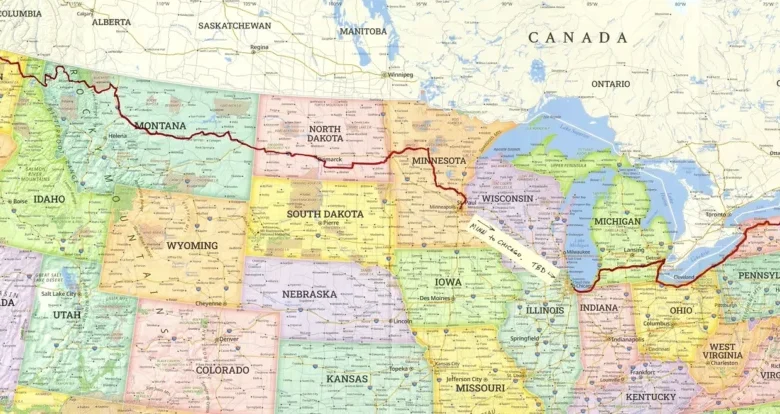
Following the completion of his traverse through the northern Rockies, McAleer charted a course along the Adventure Cycling Association’s renowned Northern Tier Route. This established corridor guides him through a diverse cross-section of the American landscape, taking him from the high prairies of Montana into North Dakota, Minnesota, Wisconsin, Illinois, Indiana, Michigan, Ohio, and Pennsylvania, before culminating in the first major eastern waypoint: Buffalo, New York.
In Buffalo, the nature of the solo ride will temporarily shift into a collective display of solidarity. McAleer will rendezvous with a contingent of supporters outfitted in custom Ride Pat Ride Breakthrough T1D jerseys. Together, the group will trace the historic Erie Canal path eastward toward Albany before turning their wheels south toward New York City.
The urban leg of the tour carries significant institutional weight. While in New York City, McAleer is scheduled to sit down with Breakthrough T1D CEO Aaron J. Kowalski, Ph.D., for an in-depth public conversation regarding the evolving landscape of diabetes research, technological innovations in patient care, and the unique physiological demands of undertaking a cross-country endurance feat.
Following the metropolitan stopover, the final leg of the journey will direct McAleer southward through Washington, D.C., and Fredericksburg, Maryland, eventually steering back toward his home state of Virginia. The expedition will formally conclude at the historic Cavalier Hotel in Virginia Beach. There, precisely three months and more than 5,000 miles after dipping his front tire into the Pacific in La Push, McAleer will complete the transcontinental crossing by immersing his bicycle in the Atlantic Ocean.
“I hope to personally connect and perhaps ride with others—particularly those impacted by T1D,” McAleer noted, extending an open invitation to residents along his path. “If you live along my route, please reach out and let me know. I’d love to ride together or just join up for a coffee break, a meal, a cold beer, or whatever!”

Broader Impact and Grassroots Fundraising Models
McAleer’s transcontinental ride is a high-profile example of a growing movement in grassroots philanthropy, facilitated locally through platforms like Breakthrough T1D Your Way. This specialized do-it-yourself (DIY) fundraising framework empowers individuals to design customized community campaigns, athletic challenges, or commemorative events tailored to their personal passions, while the parent organization provides the digital infrastructure, promotional tools, and backend administrative support necessary to maximize financial return.
For members of the public inspired by McAleer’s feat but lacking the availability to undertake a multi-month expedition, organizations offer scaled alternatives. Structured initiatives such as the Breakthrough T1D Ride provide organized destination cycling events at multiple scenic locations nationwide throughout the year, alongside virtual participation options like My Ride, which allow cyclists to log miles and raise funds from any location on their own schedules.
As McAleer presses onward through the final stretches of his northern tier transit, his daily updates continue to draw engagement across social media channels, including dedicated Instagram and Facebook pages. Through sweat, mechanical setbacks, mountain passes, and wildfire smoke, the journey serves as both an extraordinary personal test of endurance and a powerful reminder of the relentless drive required to accelerate medical breakthroughs for millions of families living with type 1 diabetes.