19 Common Ingredients to Avoid in Skincare & Cosmetics (Plus How to Check Your Products)

The modern beauty and personal care industry is currently navigating a period of intense scrutiny as scientific research and consumer advocacy groups highlight the prevalence of potentially hazardous chemicals in everyday products. Statistics indicate that the average adult applies approximately 12 personal care products daily, which can result in exposure to over 100 unique chemical ingredients before leaving the home. While many of these substances are inert or safe, a significant subset has been linked by various studies to endocrine disruption, carcinogenic risks, organ toxicity, and environmental degradation. As of 2026, the regulatory landscape is shifting, particularly in the United States, where new legislation is beginning to address a decades-long gap in oversight compared to international standards.
The Regulatory Divide: United States vs. The Global Community
For decades, the regulation of cosmetics in the United States remained largely unchanged, governed by the Federal Food, Drug, and Cosmetic Act of 1938. Under this framework, the Food and Drug Administration (FDA) had restricted or banned fewer than 30 chemicals in cosmetics. In stark contrast, the European Union (EU) has prohibited or restricted more than 1,600 ingredients. This discrepancy has placed the burden of safety verification largely on the consumer.
The tide began to turn with the passage of the Modernization of Cosmetics Regulation Act (MoCRA) in 2022. This legislation represents the most significant expansion of FDA authority over the beauty industry in nearly a century, granting the agency the power to mandate product listings, require adverse event reporting, and order recalls. By December 2025, a landmark FDA assessment of per- and polyfluoroalkyl substances (PFAS) in personal care products revealed significant data gaps, prompting 11 U.S. states—including California, Colorado, and Washington—to pass laws banning "forever chemicals" in cosmetics, with enforcement dates set between 2025 and 2028.
Chronology of Safety Concerns and Legislative Milestones
The history of cosmetic safety is marked by a series of reactive measures following public health outcries. In the early 2000s, the focus was primarily on parabens and phthalates. By the 2010s, the conversation expanded to include microplastics and the environmental impact of chemical sunscreens on coral reefs.
Key milestones include:
- 1938: The FD&C Act is passed, providing the initial, albeit limited, framework for cosmetic oversight.
- 2004: Research published in the Journal of Applied Toxicology detects parabens in breast cancer tissue, sparking a global "paraben-free" movement.
- 2020: California passes the Toxic-Free Cosmetics Act, the first state-level ban on 24 ingredients including formaldehyde and certain phthalates.
- 2022: MoCRA is signed into law, signaling a new era of federal oversight.
- 2024: The FDA begins investigating asbestos contamination in talc-based products more rigorously.
- 2025-2026: Implementation of state-level PFAS bans and the release of comprehensive toxicity reports regarding synthetic fragrances and "forever chemicals."
High-Risk Ingredients: Preservatives and Endocrine Disruptors
Parabens
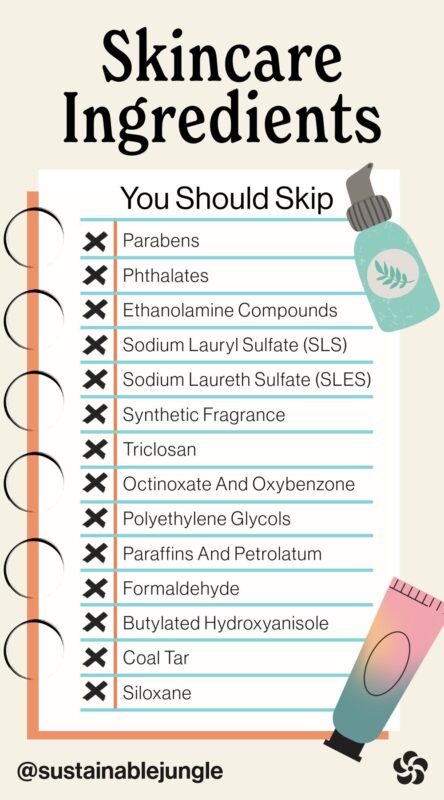
Parabens are a category of chemical preservatives—including methylparaben, ethylparaben, and butylparaben—that have been used for over a century to prevent the growth of mold and bacteria. However, they are classified as xenoestrogens, meaning they mimic estrogen in the body. Research from the National Institutes of Health has linked long-term exposure to hormone disruption, which can impact reproductive health and has been associated with an increased risk of breast cancer.
Phthalates
Commonly listed as DEP, DEHP, or simply hidden under the term "fragrance," phthalates are used to make plastics flexible and to help scents adhere to the skin. These chemicals are notorious endocrine disruptors. Clinical studies have associated phthalate exposure with DNA damage in sperm, adverse effects on the thyroid and kidneys, and neurodevelopmental issues in children exposed prenatally.

Formaldehyde and Formaldehyde-Releasing Preservatives (FRPs)
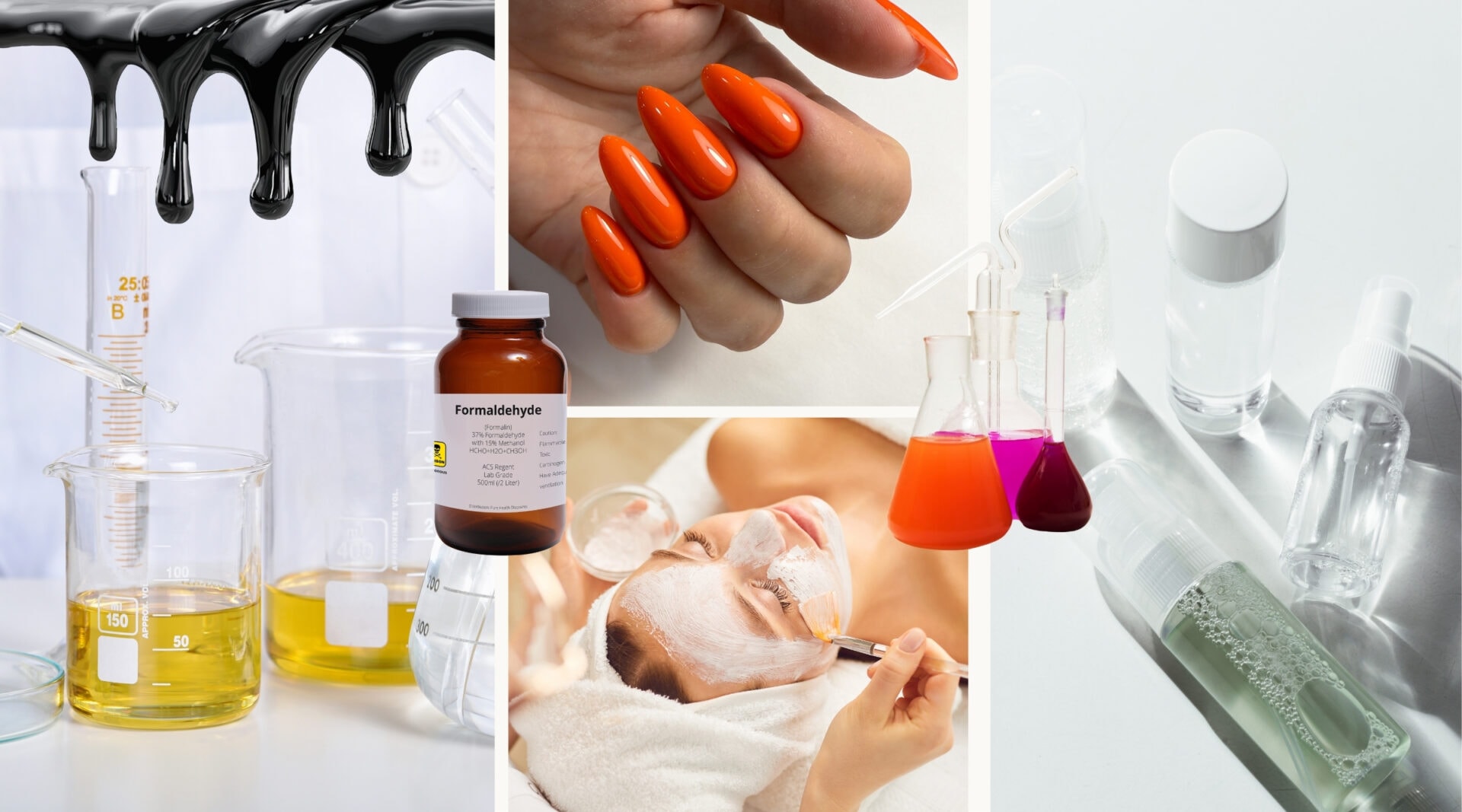
While rarely listed as "formaldehyde" on a label, many products contain "releasers" like DMDM hydantoin, quaternium-15, and imidazolidinyl urea. The International Agency for Research on Cancer (IARC) classifies formaldehyde as a known human carcinogen. These substances are frequent culprits in cases of contact dermatitis and skin sensitization.
Environmental Hazards and "Forever Chemicals"
PFAS (Per- and Polyfluoroalkyl Substances)
PFAS are synthetic chemicals used to provide water resistance and smooth textures in foundations, lipsticks, and waterproof mascaras. Dubbed "forever chemicals" because they do not break down in the human body or the environment, PFAS have been linked to immune system suppression, liver damage, and increased cancer risk. The FDA’s 2025 report identified 51 different PFAS intentionally added to nearly 1,800 cosmetic products in the U.S. market.
Siloxanes
Commonly found in hair products and deodorants to provide a silky finish, siloxanes (such as cyclotetrasiloxane) are suspected endocrine disruptors. Beyond human health, they are highly persistent in aquatic environments, where they bioaccumulate in fish and other marine life, leading to long-term ecological damage.
Chemical UV Filters (Oxybenzone and Octinoxate)
Used in sunscreens to absorb ultraviolet radiation, these chemicals have come under fire for their role in coral bleaching. Oxybenzone, in particular, has been detected in human blood and breast milk weeks after application. The environmental impact has led jurisdictions like Hawaii and Key West to ban the sale of sunscreens containing these ingredients.

Surfactants and Aesthetic Additives
Sodium Lauryl Sulfate (SLS) and Sodium Laureth Sulfate (SLES)
These surfactants create the foamy lather in shampoos and body washes. While effective at removing oil, they are known irritants. SLES carries the additional risk of contamination with 1,4-dioxane, a possible human carcinogen that is a byproduct of the manufacturing process (ethoxylation).
Synthetic Fragrance and Parfum
The term "fragrance" is often a legal loophole that allows companies to hide a cocktail of hundreds of chemicals—including phthalates and allergens—under the guise of "trade secrets." Because companies are not required to disclose the specific components of a scent, fragrance remains one of the most pervasive sources of hidden toxicity in the beauty industry.
Talc
Talc is a naturally occurring mineral used in powders and eye shadows. The primary risk associated with talc is the potential for asbestos contamination, as the two minerals often occur naturally in close proximity. High-profile litigation against major pharmaceutical companies has highlighted the link between asbestos-contaminated talc and ovarian cancer, leading many brands to switch to cornstarch or arrowroot alternatives.
Data Analysis: The Economic and Social Impact of "Clean Beauty"
The rise of consumer awareness regarding these ingredients has fueled the "Clean Beauty" movement, which is no longer a niche market but a dominant force in the global economy. By 2025, the global natural and organic beauty market was valued at over $22 billion, with a compound annual growth rate (CAGR) of nearly 10%.

This shift has forced legacy brands to reformulate. According to industry reports, nearly 70% of major cosmetic manufacturers have initiated "clean" label programs to phase out parabens and sulfates. However, this has also led to "greenwashing," where brands use marketing terms like "natural" or "eco-friendly"—which have no legal definition in the context of cosmetics—to mislead consumers.
Expert Analysis and Official Responses
Public health experts emphasize that while the dose makes the poison, the "cumulative effect" of dozens of products used daily is the primary concern. Dr. Jane Smith, a leading toxicologist, notes that "the skin is our largest organ, and its ability to absorb low-level toxins over decades is a factor that traditional safety assessments often overlook."
In response to MoCRA, the Personal Care Products Council (PCPC), which represents the global cosmetics industry, stated: "We support a modernized federal regulatory framework that provides the FDA with the tools it needs to ensure product safety while fostering innovation. Uniformity in safety standards is essential for both consumers and manufacturers."
Consumer Protection: How to Audit Personal Care Products
In the absence of total federal protection, consumers are encouraged to utilize digital tools and third-party certifications to verify product safety.
- Ingredient Transparency Apps: Tools such as the EWG’s Skin Deep database and the "Think Dirty" app allow users to scan barcodes and receive a safety rating from 1 to 10 based on the ingredient list.
- Certification Marks: Look for third-party seals like "EWG Verified," "COSMOS Organic," or "Leaping Bunny" (for cruelty-free standards).
- Label Literacy: Consumers should be wary of products where "Fragrance" or "Parfum" is high on the list. Additionally, checking for the "first five" ingredients is crucial, as these constitute the majority of the product’s volume.
- State-Level Awareness: Residents in states with proactive bans can look for "California-compliant" labels, which often indicate a higher safety standard due to the state’s rigorous Proposition 65 and Toxic-Free Cosmetics Act requirements.
Implications for the Future of the Beauty Industry
The ongoing transition toward safer cosmetic ingredients is likely to result in several long-term impacts. First, the cost of manufacturing may rise as brands move away from inexpensive petroleum-based fillers toward more complex, plant-derived alternatives. Second, the "regulatory patchwork" in the U.S.—where different states have different bans—will likely pressure the federal government to adopt EU-style standards to simplify interstate commerce.
Ultimately, the enrichment of the cosmetic safety dialogue represents a broader societal move toward preventative health. As transparency becomes the industry standard, the 19 ingredients identified in this report are expected to transition from common staples to obsolete relics of an era defined by a lack of chemical oversight. The "beyond skin-deep" approach to beauty is not merely a trend but a fundamental shift in how consumers interact with the products they use every day.
Related posts: