Transforming Early Childhood Literacy: How Classroom Post Office Centers Are Revolutionizing Preschool Learning Through Play

Early childhood educators across the country are increasingly turning to immersive dramatic play environments to foster foundational literacy and social-emotional skills in preschool and pre-kindergarten classrooms. Among these educational strategies, the implementation of themed classroom post office centers—specifically during the Valentine’s Day season—has emerged as a powerful pedagogical tool. By combining creative play with structured writing and administrative tasks, these interactive stations offer young children a tangible way to develop fine motor control, early math competencies, and meaningful peer-to-peer communication.
Background Context and Educational Evolution
The integration of dramatic play into preschool curriculums is rooted in decades of developmental psychology, which emphasizes that children learn best through active exploration rather than passive instruction. Historically, traditional preschool writing centers relied heavily on isolated worksheets or unstructured coloring pages, which often failed to engage young learners. In response, educators began transforming everyday classroom corners into functional civic spaces, such as grocery stores, veterinary clinics, and post offices.

The Valentine’s Day post office model capitalizes on a seasonal surge in enthusiasm for card-giving and peer appreciation. According to early childhood curriculum specialists, children are inherently motivated to communicate when there is a real-world social purpose behind the task—such as sending a greeting to a classmate or family member. By embedding literacy tasks within a familiar societal framework, schools can bridge the gap between abstract academic concepts and concrete, real-world applications.
Structuring the Classroom Post Office

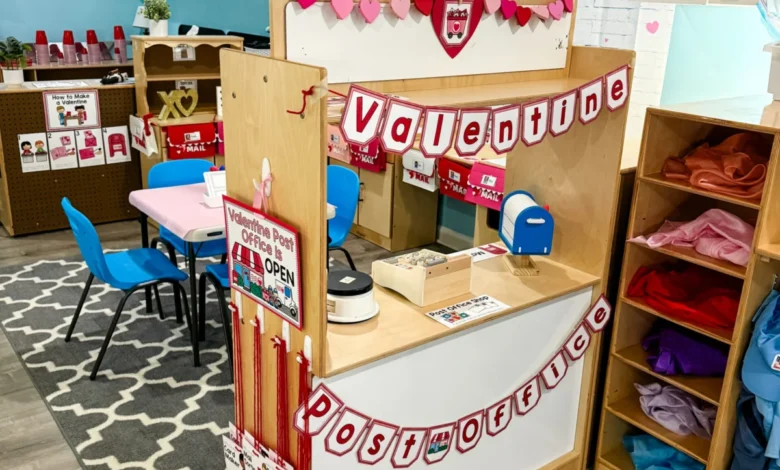
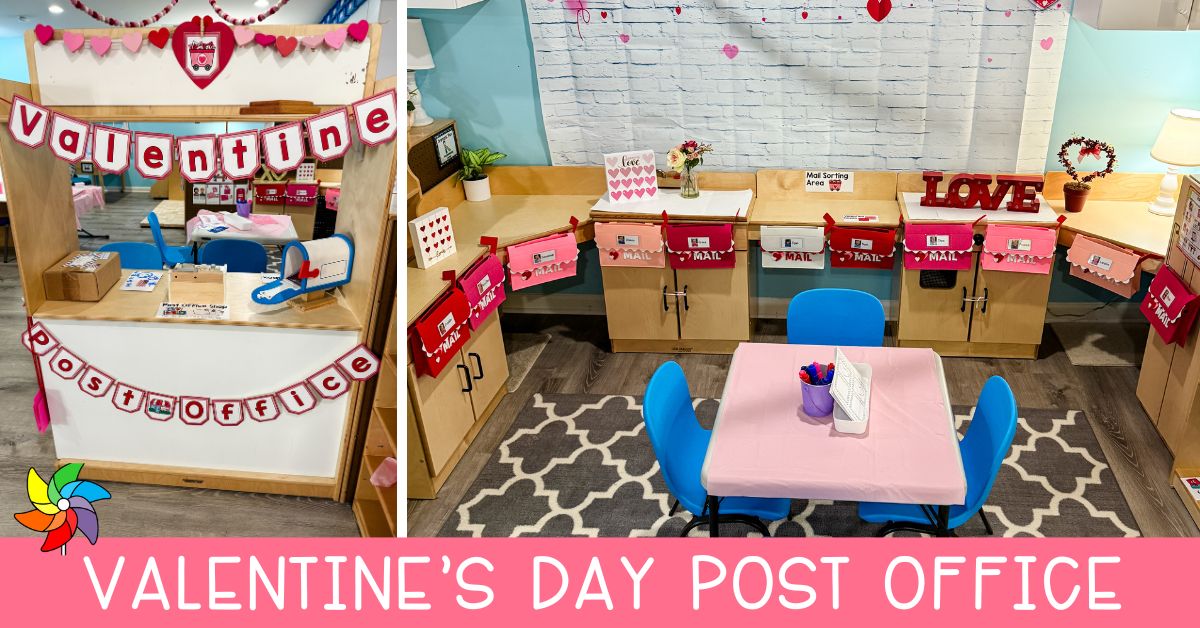
Establishing a functional post office requires careful spatial planning and the repurposing of standard classroom furniture. Educators typically utilize flat surfaces from existing dramatic play areas, such as play kitchens, dining tables, or dedicated storefront counters, to construct the mail processing hub.
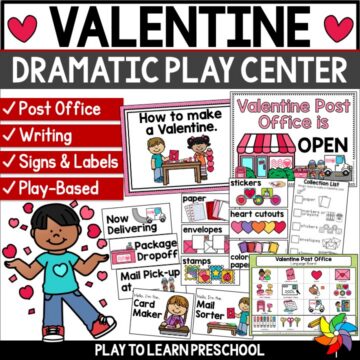
To maximize educational value, the center is generally divided into distinct zones: a sales counter, a sorting station, and a bank of personalized mailboxes. The sales counter functions as the retail nexus, where student "customers" acquire envelopes, stickers, and custom-designed stamps. Baskets containing these supplies are meticulously labeled with both text and accompanying images, a technique known as environmental print exposure, which reinforces word recognition among pre-readers.

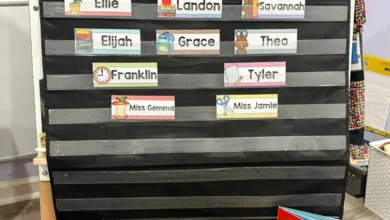
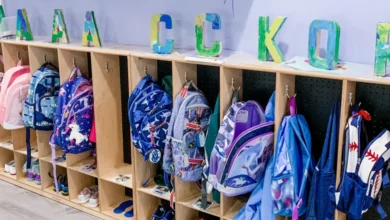
Nearby, the mailbox area features individual slots assigned to each student in the class, marked with both their printed name and a photograph. This ensures that even children who have not yet mastered alphabetic decoding can successfully identify and access their personal mailboxes. Additional props, such as "Open/Closed" signs, lanyards denoting specific job titles, and step-by-step visual sequencing charts, help students navigate the procedural expectations of the center independently.
Chronology and Daily Implementation

Implementing the post office center typically follows a structured phased rollout over several weeks leading up to February 14.
Phase one involves environmental preparation and teacher-led instruction on community roles. Educators introduce the concept of the postal system through read-alouds and group discussions. Students are introduced to specific job roles—such as customer, postal clerk, mail sorter, and delivery carrier—using descriptive lanyards. For instance, teachers explicitly define the workflow: customers write letters and purchase postage, cashiers process the transactions, sorters organize incoming mail, and carriers deliver the letters to their final destinations.

Phase two marks the grand opening of the center, during which children rotate through various roles during free-choice center time. Throughout this period, supplementary writing stations are established around the perimeter of the classroom. A dedicated "Card Making Station" provides folded cardstock, markers, crayons, and stamps, encouraging children to produce written artifacts autonomously. Furthermore, literacy-focused checklists prompt students to inventory their supplies or draft lists of classmates’ names before executing deliveries.
Phase three expands the exercise beyond the classroom walls. Many educators coordinate a class walk to a real-world neighborhood mailbox, allowing students to physically mail letters they have drafted to their families. This field experience reinforces civic awareness and solidifies the connection between classroom simulations and external societal infrastructure.

Supporting Data and Developmental Implications
While empirical research on specific seasonal dramatic play centers is ongoing, broader educational studies consistently highlight the benefits of play-based learning frameworks in early childhood education. According to data from early literacy coalitions, children who regularly participate in print-rich dramatic play environments demonstrate accelerated growth in vocabulary acquisition, narrative comprehension, and letter-sound correspondence compared to peers in traditional instructional settings.
Furthermore, fine motor skill assessments indicate that repetitive writing, cutting, and stamping activities—staples of postal-themed play—significantly improve pencil grip and hand-eye coordination among four- and five-year-olds. The collaborative nature of sorting and delivering mail also yields measurable improvements in prosocial behaviors, including sharing, cooperative problem-solving, and conflict resolution.
Expert Analysis and Official Responses

Educational administrators and curriculum directors have praised the versatility of the post office model. Dr. Elena Vance, an early childhood curriculum consultant, notes that thematic dramatic play successfully addresses multiple developmental domains simultaneously.
"When a preschooler sits down to write a Valentine’s card, they are not just playing," Dr. Vance explains. "They are practicing intentional pencil grip, spelling out phonetic representations of their friends’ names, and engaging in perspective-taking as they consider how their message will make the recipient feel. It is a comprehensive cognitive workout disguised as fun."

Moreover, specialists emphasize that low-cost implementation makes these centers highly accessible across diverse socioeconomic school districts. By utilizing recycled materials, discount store supplies, and printable curriculum templates, educators can establish rich learning environments without straining limited classroom budgets.
Broader Impact and Future Outlook

As educational standards continue to emphasize holistic child development over rote memorization, innovative approaches like the classroom post office are expected to remain a staple of progressive preschool pedagogy. By turning fundamental academic milestones—such as writing, sorting, and counting—into engaging social experiences, schools are cultivating a lifelong enthusiasm for learning.
Ultimately, the Valentine’s Day post office serves as more than just a seasonal classroom decoration. It stands as a micro-community where young learners practice empathy, refine their physical and cognitive abilities, and experience the profound satisfaction of connecting with others through the written word.