Transforming the Classroom: How Valentine’s Day Post Offices Foster Early Literacy and Social Skills in Preschool Education

Early childhood educators across the country are discovering innovative ways to merge imaginative play with fundamental academic development. Among the most popular seasonal initiatives gaining traction in preschool and pre-kindergarten classrooms is the implementation of the Valentine’s Day Post Office center. Designed to harness young children’s natural enthusiasm for exchanging greeting cards, this immersive dramatic play station seamlessly integrates early literacy, fine motor skill practice, and essential social-emotional learning into the daily curriculum.

The concept addresses a critical phase in early childhood education. According to developmental specialists, children between the ages of three and five learn best through play-based environments where academic concepts are contextualized by real-world experiences. By setting up a functional postal system within the classroom, educators provide a tangible purpose for reading, writing, and cooperative interaction.

Chronology and Classroom Implementation: Building the Postal Infrastructure
The rollout of a classroom post office typically begins weeks before Valentine’s Day, allowing educators adequate time to construct the physical environment and introduce foundational concepts. The implementation timeline generally follows a structured, multi-phase approach designed to maximize student engagement and comprehension.

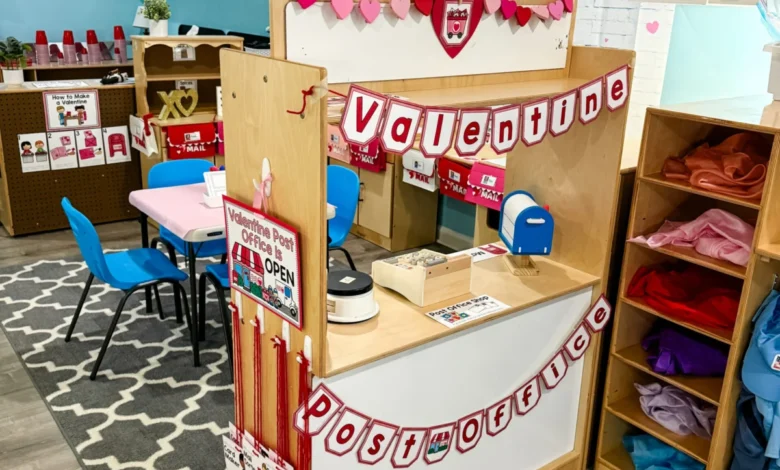
In the initial preparation phase, teachers repurpose existing classroom assets, transforming standard dramatic play areas—such as play kitchens, dining tables, and puppet theaters—into functional postal counters. This phase involves organizing essential supplies, including folded cardstock, crayons, markers, stickers, and envelopes, and sorting them into labeled baskets to promote environmental print awareness.

During the second phase, educators establish the core operational units: the sales counter and the individual mailbox station. Teachers assign personalized mailboxes featuring each student’s photograph and printed name, fostering a sense of identity and peer recognition. Visual aids, such as "Open" and "Closed" signs, language boards, and step-by-step visual sequencing charts, are introduced to guide students through the process of creating and sending mail.

The final operational phase involves role assignment and active play. Educators utilize lanyards to designate specific classroom roles, such as customers, cashiers, mail sorters, and mail carriers. By explicitly defining these responsibilities through teacher-led discussions before the center opens, students gain a clear understanding of workplace dynamics and cooperative play structures.

Academic and Developmental Implications
The integration of a post office dramatic play center yields measurable benefits across multiple developmental domains. Educational analysts note that traditional flashcard-based instruction often fails to maintain the attention span of preschool-aged children. In contrast, contextualized learning environments like the post office encourage sustained engagement.
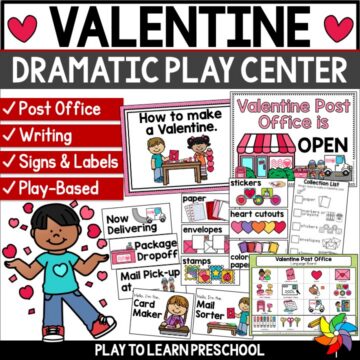
From a literacy perspective, the center provides natural opportunities for writing practice. When children draft cards for their classmates, they actively engage in emergent writing, experimenting with letter formation and invented spelling. The inclusion of student checklists—which utilize both text and pictorial representations—reinforces early reading skills by requiring children to verify their supplies and track their correspondence lists.

Furthermore, the mechanics of sorting mail introduce fundamental pre-math and categorization skills. Mail sorters must analyze names, symbols, and spatial layouts to ensure correspondence reaches the correct destination. Fine motor skills are similarly enhanced through intricate physical tasks, such as peeling stickers, manipulating envelopes, folding cardstock, and designing custom postage stamps.

Social-emotional development represents another cornerstone of the classroom post office initiative. Educators emphasize that the activity promotes empathy, kindness, and communication. By conceptualizing messages of appreciation for peers and family members, children learn to articulate positive emotions. Additionally, cooperative roles require negotiation, turn-taking, and adherence to shared community rules within the classroom ecosystem.

Community Integration and Real-World Connections
While classroom-based postal centers provide substantial educational value, many early childhood programs extend the initiative beyond school walls to foster community connections. A prominent trend among participating preschools involves organizing a class walk to a local United States Postal Service collection box.

Because traditional field trips involving vehicular transportation can be logistically challenging and costly for preschool programs, a neighborhood walk to mail real letters serves as an accessible alternative. Educators report that mailing tangible valentines to family members bridges the gap between the classroom curriculum and the outside world. Parents frequently respond with enthusiasm, noting the profound pride children exhibit when their hand-crafted correspondence arrives in household mailboxes.

Professional Perspectives and Future Outlook
Early childhood curriculum developers and child development experts view thematic dramatic play centers as a benchmark for modern pre-K education. As educational standards increasingly emphasize holistic learning frameworks, initiatives that blend academic rigor with creative expression continue to receive strong backing from academic communities.

Proponents argue that structured dramatic play helps mitigate the pressure often associated with early academic instruction, ensuring that children develop positive associations with reading and writing from an early age. As schools nationwide refine their seasonal curricula, the Valentine’s Day Post Office remains a shining example of how purposeful play can transform a simple classroom corner into a thriving hub of literacy, community, and joy.