Bringing the Wild Indoors: How Educators Are Transforming Early Childhood Classrooms with Comprehensive Bear-Themed Curriculums

Early childhood education experts and preschool directors nationwide are increasingly turning to thematic units to merge multiple core developmental domains into cohesive lesson plans. Among the most versatile and enduring of these instructional frameworks is the bear-themed curriculum. From fuzzy teddy bears and classic literary figures to awe-inspiring polar bears and giant pandas navigating icy or bamboo-laden habitats, bears serve as a powerful catalyst for classroom conversation, analytical thinking, and imaginative play. By bridging science, mathematics, literacy, and sensory exploration, a well-structured bear unit allows educators to meet early learning standards while keeping young students deeply engaged.

The integration of cross-curricular themes in early childhood settings is rooted in decades of developmental psychology and educational research. Child development specialists emphasize that children aged three to five learn best when concepts are presented through interconnected, multi-sensory experiences rather than isolated drills. A bear theme naturally lends itself to this pedagogical philosophy. A single session can seamlessly transition from a morning circle discussion regarding wildlife habitats to complex tactile sorting exercises in a math center, and finally to collaborative storytelling in a cozy reading corner.

To understand the scope of modern early childhood thematic planning, it is helpful to examine the structural rollout of a comprehensive bear curriculum. Most educators deploy these units over the course of one to two weeks, scaling the complexity of activities to match the developmental readiness of their students.

The implementation typically follows a structured chronological rollout within the classroom environment. In the initial phase, educators focus on foundational recognition and biological identification. Teachers introduce diverse bear species through high-resolution photographs, encouraging children to observe physical characteristics such as fur color, ear shape, and geographical location. This leads into tactile and visual sorting games designed to help children differentiate between bears and non-bear animals, reinforcing early biological classification skills and introducing anatomical vocabulary like claws, paws, and snouts.

Following the introductory identification phase, the curriculum progresses into live observation and scientific inquiry. Because real bears cannot safely enter a standard preschool classroom, modern educators utilize live webcams provided by accredited zoological institutions and wildlife conservation centers. Students routinely observe Giant Pandas via the Smithsonian National Zoo or the Wolong Zoo in China, North American black bears through the North American Bear Center, brown bears hunting salmon at Katmai National Park, and polar bears at the San Diego Zoo.

To transform passive viewing into active scientific inquiry, classrooms often establish dedicated observation stations equipped with clipboards, pencils, and structured recording charts. Young students document observed behaviors—such as sleeping, climbing, eating, or playing—while older preschoolers aggregate this data using simple tally marks. Educational analysts note that this approach introduces foundational data literacy and scientific methodologies at an age-appropriate level, moving children from passive consumers of media to active researchers.

As the unit advances into its second week, the curriculum broadens to encompass ecological concepts such as adaptation and hibernation. The introduction of a hibernation science center provides children with concrete contexts for seasonal changes. Through hands-on investigation of simulated dens, pinecones, and artificial fur, students explore how wildlife survives harsh winters. Educational specialists report that this phase significantly boosts domain-specific vocabulary, embedding terms like "hibernation," "habitat," and "adaptation" into everyday student dialogue.

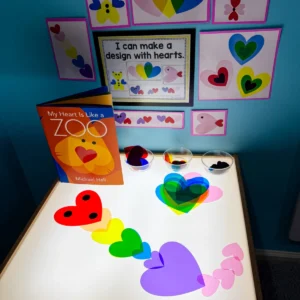
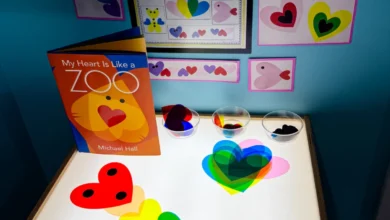
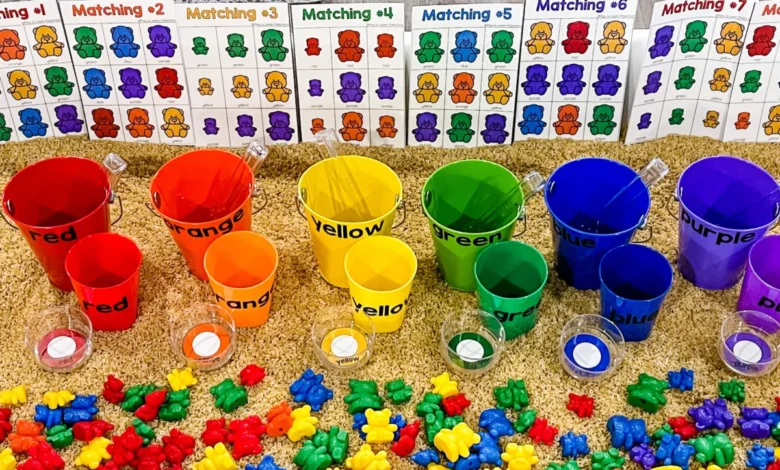
Mathematics and sensory exploration form another critical pillar of the bear unit. Classrooms frequently integrate bear-shaped counters—both opaque and translucent—into math centers and light tables. These manipulatives allow children to practice counting, color sorting, size comparison, and pattern creation. Furthermore, educators utilize the counters to introduce comparative terminology such as "more," "fewer," and "equal" as students house their plastic bears in makeshift cups or container "caves." Concurrently, sensory tables are transformed into simulated forest floors filled with shredded paper, rocks, and foliage, inviting children to practice fine-motor control through scooping, burying, and tactile excavation.

Literacy integration remains a cornerstone of the thematic approach, drawing upon centuries of folklore, classic fairy tales, and modern children’s literature. While traditional narratives like Goldilocks and the Three Bears anchor the literary component, contemporary selections such as Karma Wilson and Jean Chapman’s Bear Snores On expand the genre. To foster comprehension and narrative sequencing, classrooms deploy felt boards and laminated character pieces equipped with hook-and-loop fasteners. Early literacy experts observe that these interactive storytelling tools dramatically improve narrative recall, listening comprehension, and expressive language skills among preschoolers.
The culmination of a bear-themed curriculum typically features a community-building event: the traditional teddy bear picnic. Educators invite students to bring a stuffed bear from home, laying the foundation for social-emotional sharing and public speaking as children introduce their companions to the peer group. Group sorting activities on picnic blankets reinforce mathematical classification by grouping bears according to size, color, or clothing. Shared snack preparations, such as assembling bear-themed toast, provide practical life skills and reinforce fine-motor dexterity.

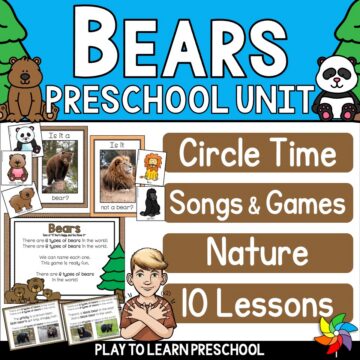
From an administrative and analytical perspective, the sustained popularity of the bear theme lies in its adaptability and cost-effectiveness. Comprehensive curriculum packages, such as specialized preschool unit guides priced around ten dollars, offer educators complete daily lesson plans, printable resources, and standardized center activities. School administrators and lead teachers note that such structured yet flexible units reduce lesson-planning burnout while ensuring alignment with state and national early learning guidelines.

Ultimately, the integration of a bear-themed curriculum demonstrates the profound efficacy of play-based learning in early childhood development. By anchoring abstract mathematical and scientific concepts in familiar, tangible imagery, educators cultivate a joyful classroom environment. As children observe, count, sort, build, and retell stories within a unified thematic framework, they build a robust foundation of critical thinking skills that will support their academic journey for years to come.
Related posts: