Winnow Review: A Probiotic That Binds Microplastics and Navigates the Modern Synthetic Crisis

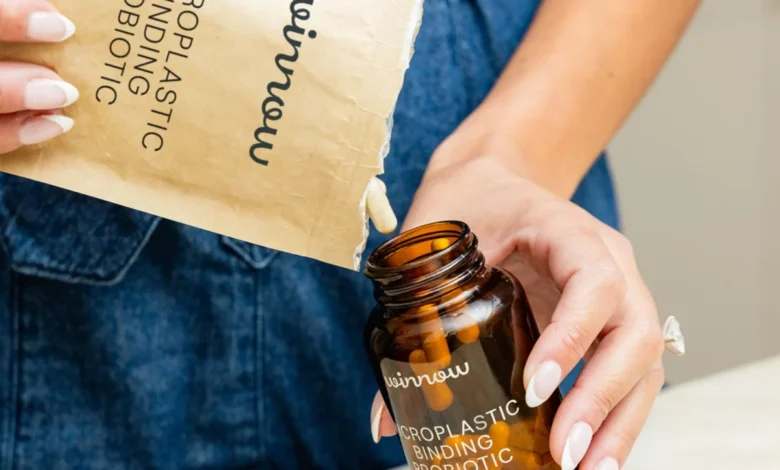
The ubiquity of synthetic polymer fragments has emerged as one of the defining environmental and public health challenges of the 21st century. Once thought to be confined to oceanic gyres and degraded landfills, microscopic plastic particles—collectively known as microplastics—are now routinely detected in the Earth’s most remote ecosystems, municipal water supplies, ambient atmospheric dust, and human biological samples, including placental tissue and newborn infants. These particles infiltrate daily human life through seemingly innocuous sources, ranging from single-use food packaging and bottled water to synthetic apparel, household dust, and plastic cutting boards. While a complete elimination of plastic exposure remains virtually impossible under current global manufacturing paradigms, recent biotechnology innovations aim to mitigate internal accumulation. Among these developments is Winnow, a daily probiotic formulation engineered not only to support human gastrointestinal health but also to physically bind ingested microplastics within the digestive tract.
The Emergence of Microplastic Contamination and Internal Exposure
For decades, the discourse surrounding plastic pollution centered primarily on macro-debris and its visible impact on wildlife. However, technological advancements in analytical chemistry over the last fifteen years have revealed a more insidious problem: the fragmentation of macro-plastics into microscopic and nanoscopic particles through mechanical wear, UV radiation, and thermal degradation.
Scientific literature published by leading academic institutions and environmental agencies underscores the pervasive nature of these pollutants. Researchers have identified microplastics in human blood, lungs, and breast milk, raising critical questions regarding their long-term toxicological profiles. While regulatory bodies and public health researchers continue to investigate the chronic systemic impacts of these synthetic polymers—which often act as vectors for endocrine-disrupting chemicals and heavy metals—consumers are left with few immediate options to reduce their internal burden aside from behavioral changes.
Recognizing this limitation, researchers and biotech firms have begun exploring novel remediation strategies that operate within the human body. Winnow represents a commercial entry point into this emerging field, bridging the gap between conventional probiotic supplementation and targeted gastrointestinal binding technologies.
Chronology and Scientific Development of Gut-Binding Probiotics
The concept of utilizing bacterial strains to capture foreign particles in the digestive tract is rooted in established microbiological principles, though its application to synthetic polymers is relatively recent.
In early preclinical investigations, researchers observed that certain strains of lactic acid bacteria possessed surface properties capable of adsorbing heavy metals and environmental toxins, facilitating their excretion. Building upon this foundational science, biotech developers began screening large libraries of bacterial strains specifically for their affinity toward synthetic micro- and nano-plastics.
A pivotal milestone in this domain occurred with peer-reviewed research published in scientific journals, which screened hundreds of bacterial strains to identify those with the highest microplastic adsorption potential. In subsequent animal model testing, administration of these specific strains demonstrated a measurable increase in the excretion of microplastics, concurrently reducing the accumulation of synthetic particles within intestinal tissues.
Winnow’s product development timeline reflects this evolving research. The formulation integrates two distinct scientific categories: a clinical backbone consisting of well-researched probiotic strains traditionally utilized for human gut health, and targeted strains identified through preclinical and internal laboratory testing for their ability to interact with common plastic polymers.
Mechanisms of Action: Surface Adsorption and Polymer Interaction
To understand how a dietary supplement can interact with synthetic materials in the human body, it is necessary to examine the physical chemistry of the gastrointestinal environment and bacterial cell walls.
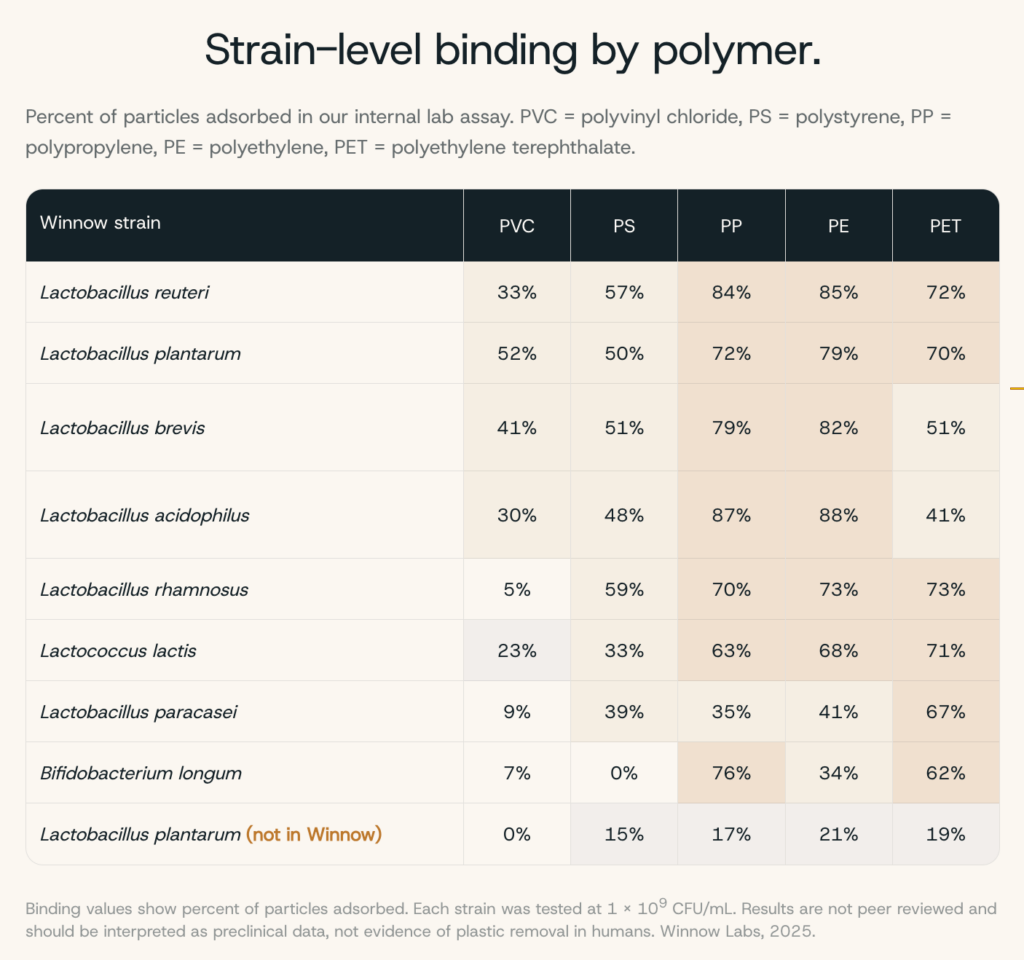
According to technical data provided by Winnow, the primary mechanism governing microplastic capture is surface adsorption. As probiotic bacteria traverse the intestinal tract, plastic particles physically adhere to the exterior surfaces of the bacterial cells. The company highlights specific macromolecular structures on the bacterial cell wall—such as exopolysaccharides (EPS) and S-layer proteins—as the primary binding sites responsible for this interaction.
Preclinical and internal laboratory testing conducted by the manufacturer evaluated the binding efficacy of the probiotic formula across a broad spectrum of common commercial plastic polymers, including:
- Polyethylene (PE)
- Polypropylene (PP)
- Polystyrene (PS)
- Polyethylene terephthalate (PET)
- Polyvinyl chloride (PVC)
Furthermore, laboratory data indicates that the multi-strain formulation outperforms individual bacterial strains in isolation. Specifically, Winnow reports that its combined multi-strain matrix bound approximately 1.8 times more of a blended plastic mixture than any single constituent strain tested individually. This synergistic enhancement suggests that diverse surface properties among the selected bacterial species optimize the capture of heterogeneous plastic particle shapes and chemical compositions.
Product Overview and Nutritional Profile
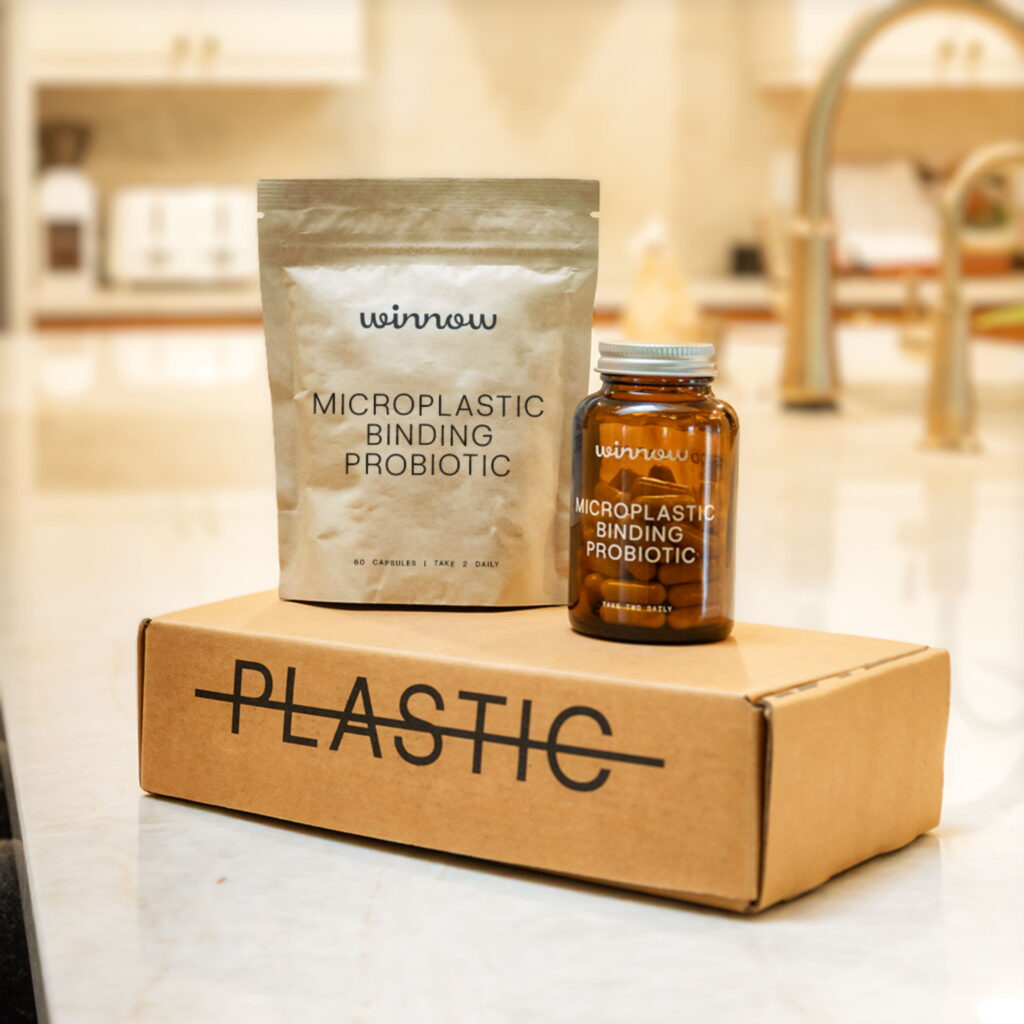
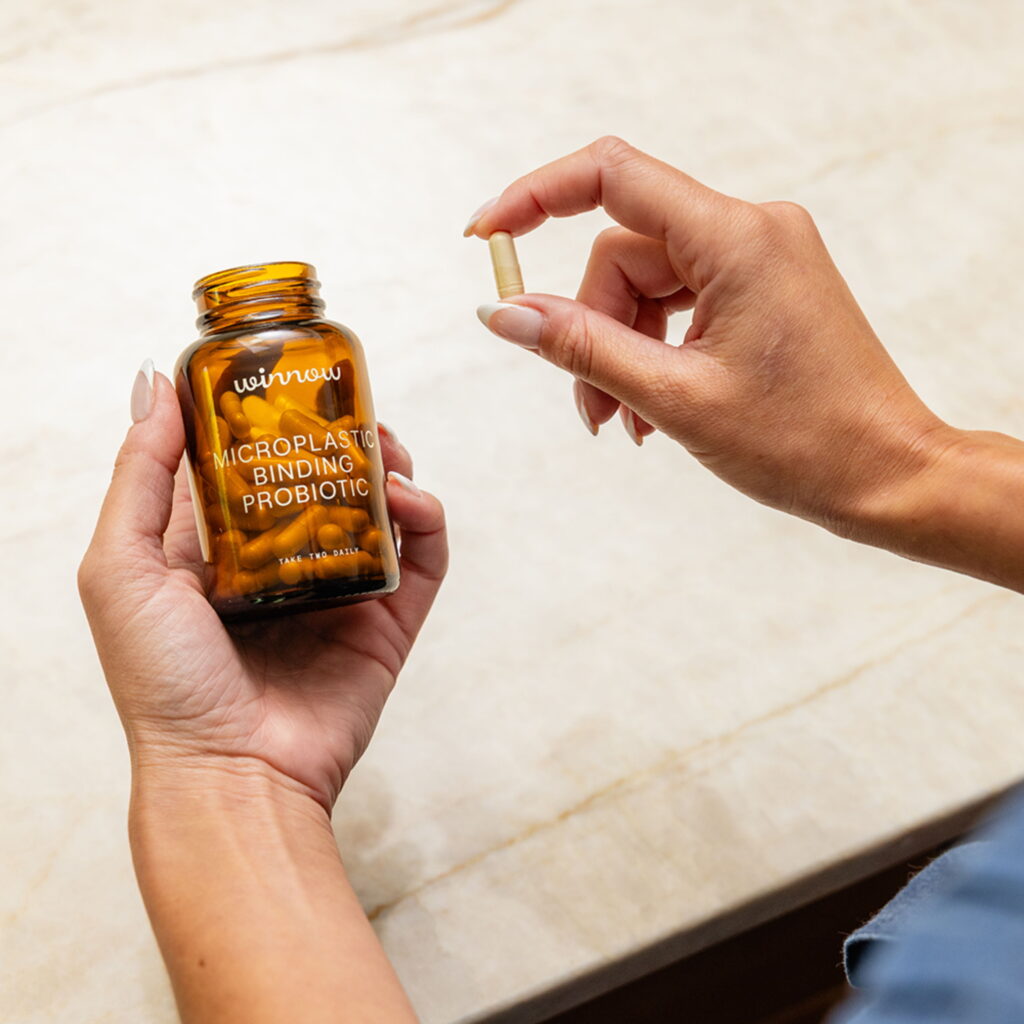
Winnow functions primarily as a daily dietary supplement designed to support gastrointestinal regularity, immune function, and intestinal barrier integrity. The clinical backbone of the formulation incorporates established human-researched strains, including Lactobacillus rhamnosus ATCC 53103, Lactobacillus reuteri DSM 17938, and Lactobacillus acidophilus ATCC SD5212.
Beyond its biological formulation, the product aligns its operational philosophy with environmental sustainability by utilizing entirely plastic-free packaging materials. This design choice addresses a common critique of the wellness industry, where health-oriented supplements are frequently housed in single-use plastic bottles and synthetic blister packs.
The integration of microplastic-binding capabilities into a standard probiotic routine offers consumers a dual-purpose intervention: maintaining microbiome balance while theoretically assisting the body in escorting persistent synthetic debris through normal digestive elimination.
Broader Implications and Public Health Context
Despite the innovative nature of microplastic-binding probiotics, public health experts and environmental advocates emphasize that supplements should not be viewed as a silver bullet for the global plastic pollution crisis.
Biochemical interventions do not address the root causes of environmental contamination. Experts stress that mitigating human exposure to microplastics requires systemic changes, including:
- Stringent governmental regulations on single-use plastics and packaging manufacturing.
- Improved water treatment infrastructure capable of filtering microscopic particulate matter.
- Accountability frameworks holding multinational corporations responsible for their plastic footprints.
- Broader adoption of safer, biodegradable material alternatives across consumer goods industries.
Moreover, while preclinical and animal studies yield promising data regarding the fecal excretion of bound polymers, extensive human clinical trials are ultimately required to definitively quantify the long-term clinical efficacy and safety of microplastic-adsorbing supplements in diverse human populations.
Practical Strategies for Reducing Daily Plastic Exposure
While biotechnology offers supplementary tools for managing internal exposure, public health guidelines continue to emphasize primary prevention—minimizing the ingestion and inhalation of microplastics at the source. Consumers seeking to lower their systemic burden can implement several evidence-based behavioral adjustments:
- Thermal Avoidance: Refrain from heating or microwaving food and beverages in plastic containers, as heat accelerates the leaching of polymer additives and micro-particles into sustenance.
- Hydration Habits: Minimize the consumption of bottled water, studies having shown that bottled beverages frequently contain significantly higher concentrations of microplastics compared to filtered tap water.
- Material Substitution: Transition food storage and preparation tools from plastic to inert materials such as glass, stainless steel, and solid wood. Periodically inspect and replace heavily scarred plastic cutting boards, which shed particulate matter directly into food during chopping.
- Indoor Environmental Controls: Regularly vacuum using high-efficiency particulate air (HEPA) filters and dust living spaces to reduce the inhalation of household dust, which often contains high levels of synthetic textile fibers and degraded plastic particles.
- Dietary Choices: Prioritize minimally processed, unpackaged foods when feasible to reduce contact with industrial packaging films and processing machinery.
Market Position and Future Outlook
The introduction of products like Winnow signals a shifting paradigm in consumer health, where nutritional supplementation intersects directly with planetary health concerns. As analytical methodologies improve and scientific understanding of microplastic toxicity deepens, the market for targeted remediation tools is expected to expand.
For individuals navigating an increasingly synthetic environment, these formulations provide an additional layer of physiological support. However, industry analysts note that the long-term viability and public acceptance of such products will depend heavily on continued transparent peer-reviewed research, independent clinical validation, and parallel advancements in global waste reduction policy.