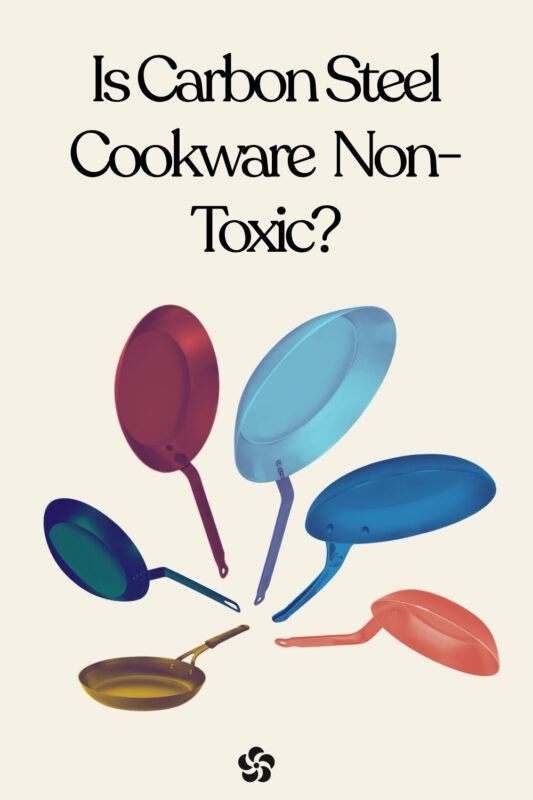
Is Carbon Steel Cookware Non-Toxic? A Deep Dive into Safety, Science, and Sustainability


The modern consumer’s kitchen is increasingly under scrutiny as scientific research continues to expose the health risks associated with conventional nonstick coatings. As "forever chemicals," or per- and polyfluoroalkyl substances (PFAS), become a focal point of regulatory bans across the United States and Europe, home cooks are returning to ancestral materials. Among these, carbon steel has emerged as a premier alternative, praised by professional chefs for its performance and by health advocates for its simple, chemical-free composition. However, as with any culinary tool, understanding the nuances of its safety profile—ranging from iron leaching to the chemistry of polymerization—is essential for making an informed choice.
The Composition and Origins of Carbon Steel
Carbon steel is an alloy fundamentally composed of approximately 99% iron and 1% carbon. Unlike stainless steel, it does not contain significant amounts of chromium or nickel, and unlike modern nonstick pans, it lacks any synthetic chemical liners. This simplicity is its primary safety feature.

Historically, carbon steel has been the workhorse of the professional culinary world. In French gastronomy, brands like De Buyer and Matfer Bourgeat have produced these pans for nearly two centuries. In Asian cuisine, the carbon steel wok has been the standard for over a millennium. The material’s popularity stems from its unique physical properties: it is lighter and more responsive to temperature changes than cast iron, yet it can withstand the high heat required for searing and stir-frying that would destroy a Teflon-coated pan.
The "Non-Toxic" Designation: Regulatory Context
While the term "non-toxic" is a frequent marketing staple, it is not a formal certification used by the U.S. Food and Drug Administration (FDA). Instead, the FDA Food Code (Section 4-101.11) mandates that materials used in cookware must be "safe under conditions of intended use" and must not "allow the migration of deleterious substances" into food.
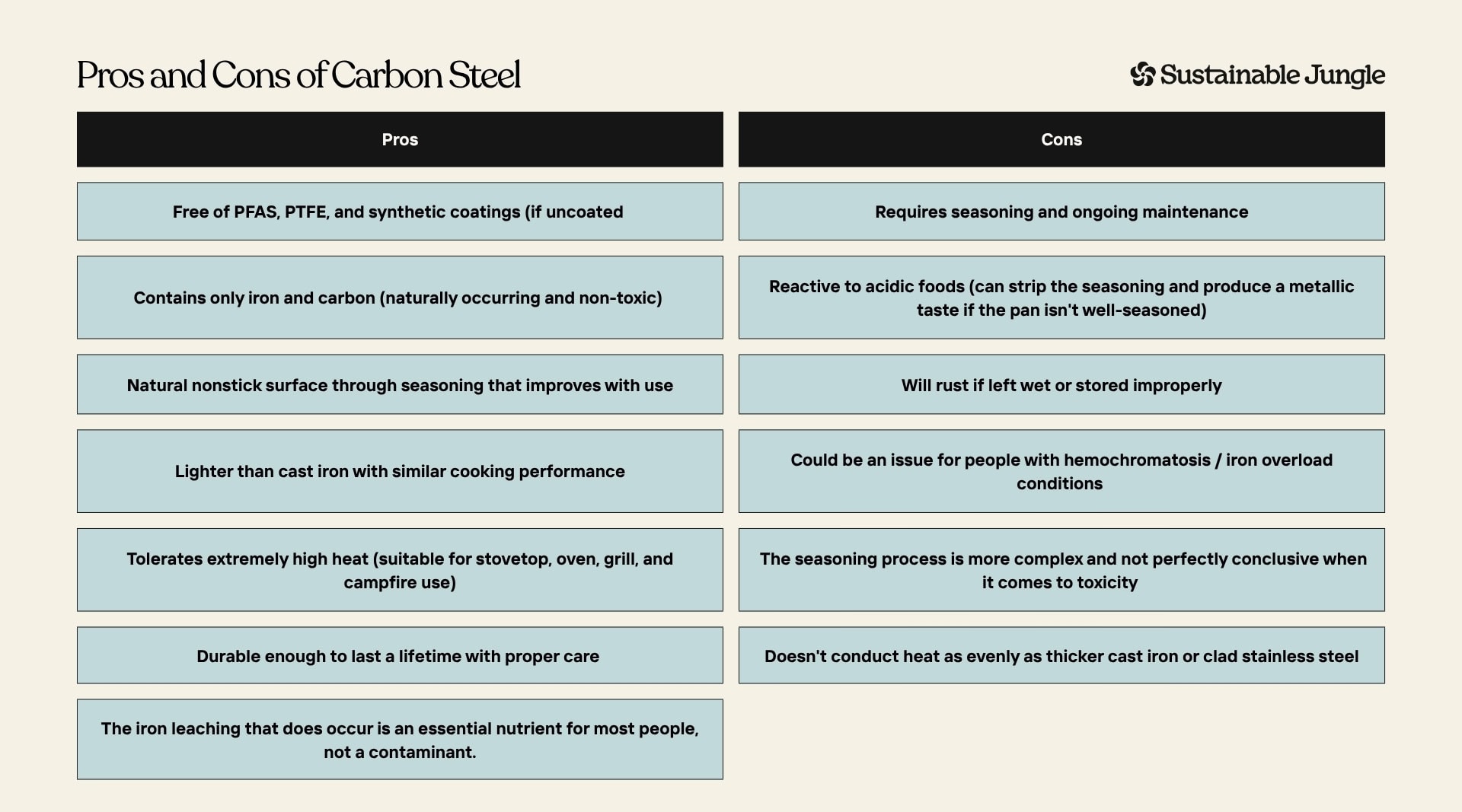
Carbon steel comfortably exceeds these standards because it contains no PFAS, PFOA (perfluorooctanoic acid), or PTFE (polytetrafluoroethylene). This is increasingly relevant as state-level legislation moves to eliminate these substances from the marketplace. For instance, states including Maine, Minnesota, and Vermont have passed laws that will effectively ban the sale of cookware containing intentionally added PFAS by 2026. Because carbon steel relies on a natural, oil-based seasoning for its nonstick properties, it remains exempt from such environmental and health regulations.

The Science of Iron Leaching
One of the few substances carbon steel can transfer to food is iron. While often viewed as a benefit, the science behind this leaching is complex and depends heavily on the type of food being prepared.
Peer-Reviewed Findings
Foundational research published in the Journal of the American Dietetic Association (1986) demonstrated that cooking in iron-based vessels significantly increases the iron content of food. The study found that acidic, liquid-based foods—such as applesauce or tomato sauce—absorbed the highest amounts. For example, the iron content in applesauce rose from 0.35 mg to 7.3 mg per serving when cooked in an iron skillet.
A subsequent 1991 study by Cheng and Brittin confirmed that even well-used pans continue to leach iron, though the rate decreases as the "seasoning" layer becomes more established. A 2021 systematic review published in PMC further supported the conclusion that iron cookware can be a viable tool for addressing iron deficiency anemia, a condition that affects nearly 1.2 billion people globally according to the World Health Organization (WHO).

Health Implications: Anemia vs. Hemochromatosis
For the average person, the addition of dietary iron via cookware is either neutral or beneficial. However, for individuals with hereditary hemochromatosis—a condition where the body absorbs too much iron—this leaching can be a medical concern. Clinical experts suggest that those with iron overload disorders should prioritize stainless steel or enameled cookware, particularly when preparing acidic dishes, to avoid unnecessary iron accumulation.
The Chemistry of Seasoning: Polymerization and Safety
The "seasoning" on a carbon steel pan is a dark, slick patina that acts as a natural nonstick surface. This layer is created through a chemical process known as polymerization.
The Polymerization Process
When a thin layer of unsaturated fat (cooking oil) is heated to its smoke point, the fatty acids undergo radical polymerization. The liquid molecules bond together to form a hard, plastic-like solid that is molecularly bonded to the iron surface. This is the same chemistry used in traditional linseed oil wood finishes. Once the oil has polymerized, it is no longer a liquid fat; it is a stable, cross-linked solid.
Addressing PAH Concerns
A point of debate regarding seasoning safety involves polycyclic aromatic hydrocarbons (PAHs). PAHs are compounds that can form when organic matter is heated to high temperatures. Research in Frontiers in Nutrition (2021) indicates that while the smoke produced during the seasoning process contains these volatile compounds, there is currently no peer-reviewed evidence suggesting that the finished, solid polymer layer leaches harmful levels of PAHs into food. To mitigate risks, experts recommend seasoning pans in well-ventilated areas or outdoors to avoid inhaling the fumes generated during the initial oil breakdown.
Comparative Analysis: Carbon Steel vs. Alternatives
To understand the safety of carbon steel, it must be measured against the prevailing market alternatives:
- VS. PTFE/Teflon: Traditional nonstick pans can release toxic fumes (polymer fume fever) if heated above 500°F (260°C). Carbon steel has no such temperature ceiling and contains no synthetic chemicals.
- VS. Stainless Steel: Stainless steel is highly stable but often contains 8–10% nickel. For the estimated 10–20% of the population with nickel allergies, carbon steel is a safer choice as it is nickel-free.
- VS. Ceramic: Ceramic-coated pans are PFAS-free but have a limited lifespan. Once the "sol-gel" coating wears down (usually within 2 years), the underlying aluminum may be exposed. Carbon steel has no coating to wear out and can last a lifetime.
- VS. Cast Iron: The two are nearly identical in safety. Carbon steel is simply a more refined version—lighter, smoother, and more responsive to heat.
Sustainability and Economic Impact
From an environmental perspective, carbon steel is one of the most sustainable materials available. The "Buy It For Life" (BIFL) movement frequently cites carbon steel as a core kitchen investment.

Longevity and Waste Reduction
The average nonstick pan is discarded every three to five years. In contrast, a carbon steel pan is virtually indestructible. If the seasoning is damaged or the pan develops rust, it can be stripped and re-seasoned, returning it to like-new condition. This prevents the cycle of municipal solid waste generated by disposable cookware.
Recyclability
Steel is the most recycled material on the planet. According to the World Steel Association, over 85% of steel products are recycled globally. Unlike multi-ply pans that bond different metals (like aluminum and copper) together, or pans with chemical coatings that are difficult to process, a carbon steel pan is a single-alloy product that can be melted down and repurposed indefinitely at the end of its life.
Market Outlook and Buying Recommendations
As consumer demand for "clean" cookware rises, the market for carbon steel is expanding beyond professional supply stores into mainstream retail. When selecting a pan, consumers should look for:
- Thickness: A gauge of at least 2mm to 3mm is necessary to prevent warping on high-heat burners or induction cooktops.
- Origin: Manufacturers in France, the USA, and Japan often adhere to stricter metallurgical standards, ensuring the iron is free from scrap metal contaminants.
- Handle Attachment: Riveted handles are the industry standard for durability, though welded handles offer a smoother interior surface that is easier to clean.
Conclusion: A Factual Synthesis
Carbon steel represents a rare intersection of professional performance, medical safety, and environmental responsibility. While it requires a higher level of maintenance than "shake-and-flip" nonstick pans, its lack of synthetic chemicals makes it a superior choice for the health-conscious consumer.
The evidence suggests that for the vast majority of the population, the only "additive" carbon steel provides is a small amount of dietary iron—a mineral that much of the world is currently lacking. By eliminating the risks of PFAS exposure and providing a durable, recyclable alternative to the "throwaway" economy of modern kitchenware, carbon steel stands as a benchmark for non-toxic living in the 21st century. For those seeking to simplify their chemical footprint, the move to carbon steel is not just a culinary upgrade, but a science-backed health decision.
Related posts: