High-Protein Raspberry Overnight Oats: A Nutritional and Meal-Prep Solution for Midlife Wellness


In the contemporary landscape of nutritional wellness, consumer fatigue surrounding protein-fortified products has reached a tangible peak. From specialty beverages marketed with enhanced amino acids to the exhaustive daily tracking of macronutrients, the cultural conversation around protein has frequently transformed from a health metric into an administrative burden. Yet, within the clinical and nutritional sciences, targeted protein intake—particularly during specific life stages—retains significant physiological relevance. Registered dietitians and nutritional researchers note that while the average population generally consumes sufficient daily protein without specialized supplementation, strategic distribution of protein, especially at breakfast, yields measurable metabolic and structural advantages. For individuals navigating midlife transitions, maintaining adequate daily protein intake is a critical component in mitigating the natural progression of age-related muscle mass loss, known clinically as sarcopenia. Furthermore, incorporating balanced macronutrients into the first meal of the day has been shown to stabilize postprandial blood glucose levels and extend subjective satiety, preventing the mid-morning energy crashes commonly associated with carbohydrate-dominant breakfasts. To address these physiological requirements without the friction of complex dietary tracking, culinary developers and nutritionists have increasingly turned to convenient meal-prep formats. Among these, overnight oats have emerged as a staple for time-constrained households seeking sustainable, nutrient-dense routines. Building upon traditional cold-soak oat recipes, recent formulation developments have introduced high-protein variants, such as the High-Protein Raspberry Overnight Oats, which deliver approximately 33 grams of protein per single-serving container while emphasizing whole-food integration, dietary fiber, and healthy fats.
The evolution of overnight oats as a mainstream dietary staple traces its origins to early twentieth-century nutritional movements, though its contemporary resurgence aligns closely with the modern demand for efficient, make-ahead meal preparation. Traditionally rooted in the Swiss tradition of Birchermueser—developed around 1900 by physician Maximilian Bircher-Benner for hospital patients—overnight soaking utilizes unheated rolled oats immersed in a liquid medium such as milk or yogurt. Over several hours of refrigeration, the starch structures within the oat groats undergo a hydration process, softening the grain and making its complex carbohydrates and soluble fibers, notably beta-glucan, readily accessible for human digestion without requiring thermal cooking. Over the past decade, the recipe format expanded significantly across digital culinary platforms, evolving from simple fruit-and-nut combinations into a customizable canvas for functional nutrition. The integration of high-protein components into these cold-soaking protocols represents a logical convergence of traditional meal-prepping efficiency and modern sports-nutrition science. By systematically incorporating ingredients such as Greek yogurt, cottage cheese, chia seeds, nut butter, and minimally processed protein powders, home cooks can elevate the protein content of a standard oat-based breakfast from a modest 5 to 10 grams up to 30 grams or more. This adaptation bridges the gap between sedentary dietary habits and the higher protein thresholds recommended by gerontological nutritionists for preserving lean body mass in adults aged forty and older.
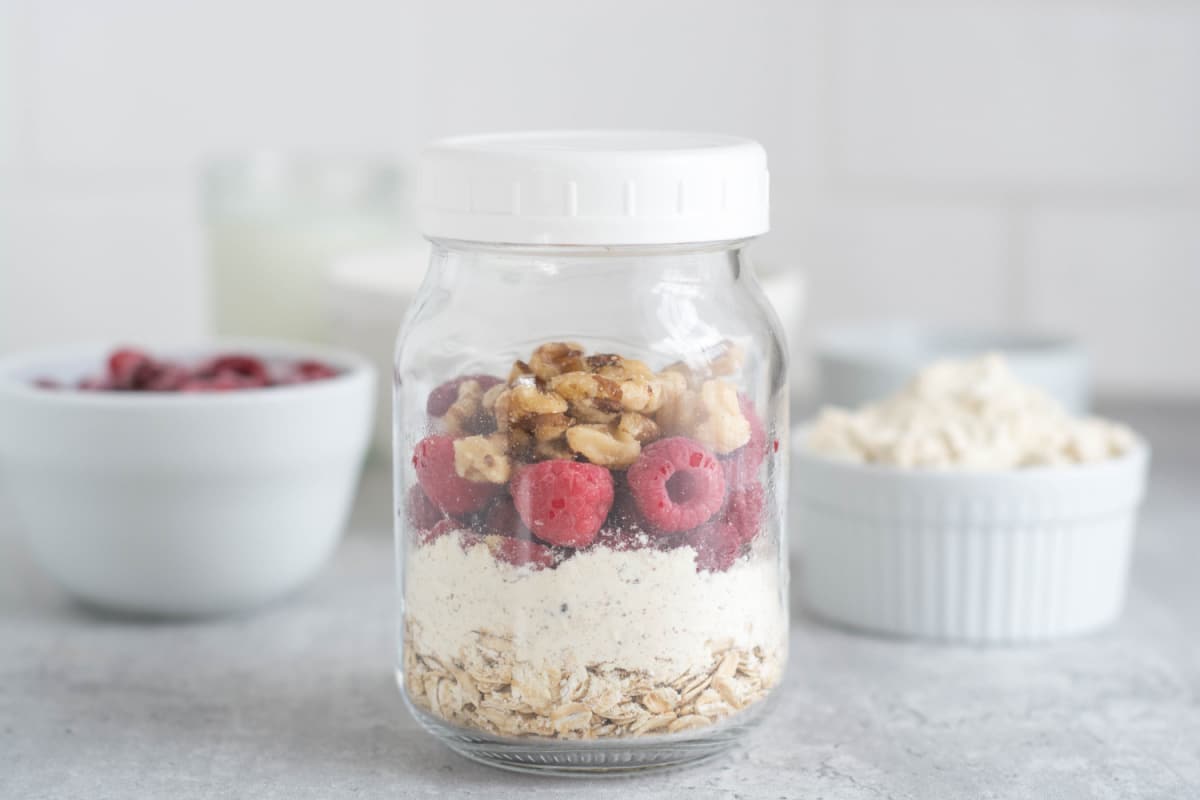
From a compositional standpoint, the High-Protein Raspberry Overnight Oats recipe is structured around a balance of macro- and micronutrients designed to support sustained energy release and metabolic stability. The foundational carbohydrate is sourced from rolled oats, which supply complex starches and substantial dietary fiber to promote gastrointestinal health and prolonged satiety. The primary lipid and mineral profile is enhanced through the inclusion of chopped walnuts, contributing heart-healthy omega-3 fatty acids—specifically alpha-linolenic acid—alongside magnesium and plant-based protein. The tart flavor profile and vibrant coloration are derived from fresh or frozen raspberries, a nutrient-dense berry offering high concentrations of vitamin C, manganese, and antioxidant polyphenols, particularly ellagic acid. The liquid base typically consists of dairy or fortified plant-based milk, which supplies calcium, phosphorus, and additional fluid for the starch-softening process. Finally, the protein density is maximized through the targeted addition of a quality protein supplement or naturally high-protein dairy alternatives, bridging the gap between whole-food nutrition and concentrated amino acid delivery.
To prepare the high-protein raspberry overnight oats efficiently for a standard five-day workweek, home practitioners utilize a scalable batch-cooking methodology that minimizes morning friction.
Ingredients Required per Serving:
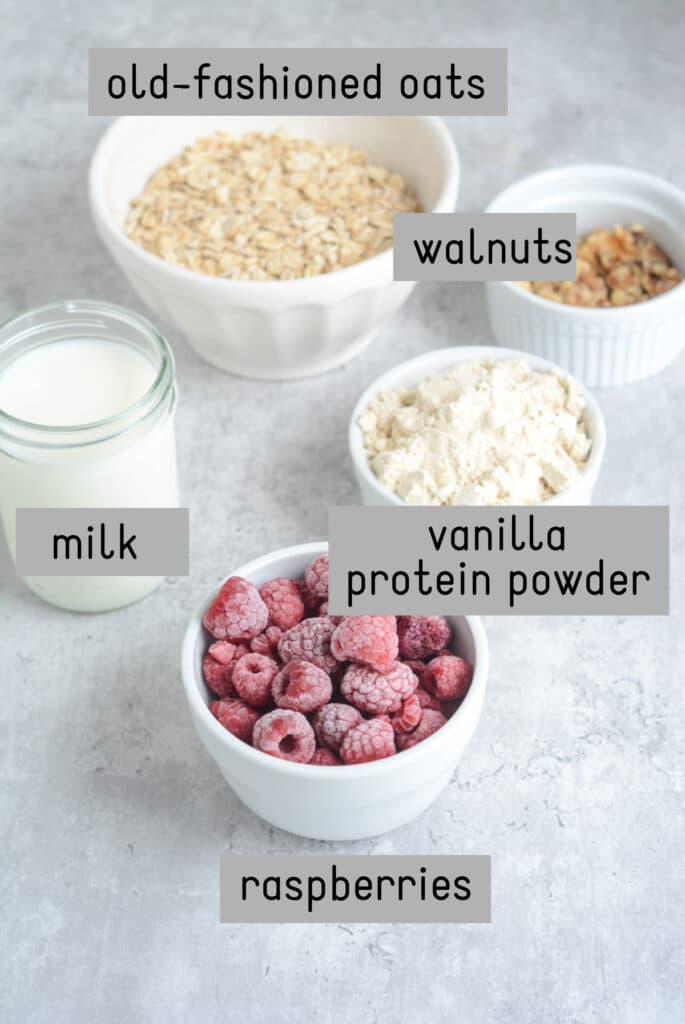
- 1/2 cup old-fashioned rolled oats
- 1 tablespoon chia seeds (optional, for enhanced texture and structural thickening)
- 1/2 scoop to 1 scoop protein powder (flavor profile dependent; whey isolate or plant-based alternatives are common)
- 3/4 cup milk of choice (dairy milk, unsweetened almond milk, or soy milk)
- 1/4 cup fresh or frozen raspberries (lightly crushed to release juices)
- 1 tablespoon chopped walnuts or sliced almonds
- Sweetener to taste (optional: 1 teaspoon of maple syrup or honey, depending on the sweetness of the protein powder used)
Step-by-Step Preparation Protocol:
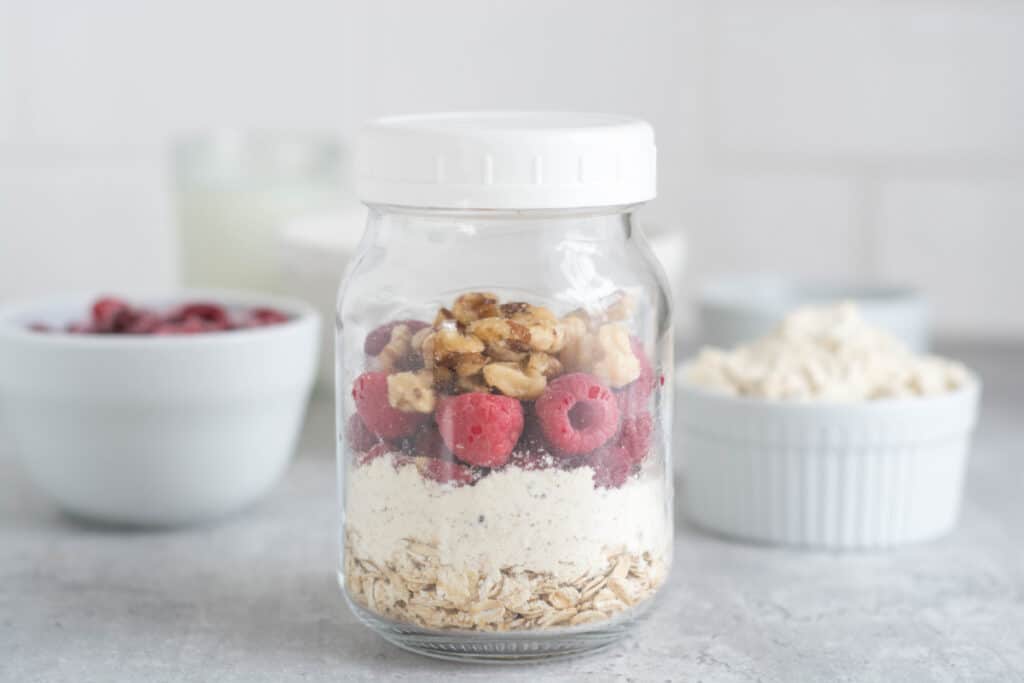
- Combine the dry components—including the rolled oats, chia seeds, and protein powder—directly inside a clean, sealable glass jar or airtight container, whisking or shaking lightly to ensure an even distribution of the protein powder.
- Pour the designated milk into the dry mixture, stirring thoroughly with a spoon or small whisk to eliminate any dry pockets of powder or oats.
- Fold in the crushed raspberries and chopped walnuts, distributing the fruit and nut pieces evenly throughout the liquid-soaked matrix.
- Secure the lid tightly on the jar and place it into the refrigeration unit for a minimum of four hours, though an overnight soak of 8 to 12 hours is optimal for complete starch hydration and flavor melding.
- Consume cold directly from the jar upon removal from the refrigerator, or transfer the contents to a microwave-safe bowl and heat gently for 60 to 90 seconds if a warm breakfast is preferred.
Nutritional science and dietary experts emphasize that while protein supplementation offers notable convenience, the selection of the protein powder itself warrants careful evaluation. Many commercially available protein supplements rely heavily on artificial sweeteners, sugar alcohols, or non-nutritive additives like stevia, which frequently impart a bitter aftertaste and can cause gastrointestinal discomfort in sensitive individuals. Furthermore, heavily processed formulations often contain extensive ingredient lists that contradict the principles of whole-food nutrition. Dietitians recommend seeking products characterized by short ingredient panels, minimal processing, and moderate natural sweetening profiles containing only a few grams of actual sugar. When premium, lightly sweetened options—such as specific unflavored or gently flavored whey isolates—are utilized, they provide the necessary amino acid density without overwhelming the natural tartness of whole fruit additions like raspberries. For individuals preferring to avoid protein powders altogether, the recipe remains nutritionally viable by omitting the supplement, though adjustments in liquid ratios and the addition of natural sweeteners like maple syrup may be required to maintain palatability and caloric balance.

The broader public health implications of adopting structured, high-protein meal-prep strategies reflect a growing shift toward preventive nutrition at the household level. As contemporary lifestyles demand increased time-management efficiency, reliance on commercially processed, high-sugar breakfast options has historically contributed to systemic metabolic challenges, including adult-onset type 2 diabetes and cardiovascular strain. By empowering consumers to prepare nutrient-dense, portion-controlled meals in advance, culinary nutritionists bridge the gap between clinical dietary guidelines and daily kitchen execution. The integration of high-fiber grains, antioxidant-rich fruits, and balanced proteins into a single, grab-and-go format addresses multiple chronic disease risk factors simultaneously. Public health analysts suggest that normalizing home-based meal preparation focused on macronutrient balance can significantly reduce reliance on ultra-processed convenience foods, fostering long-term metabolic resilience across diverse demographic groups without imposing the psychological burden of obsessive dietary tracking.