Finerenone is the First Therapy Approved in 30 Years for Kidney Disease and T1D

The landscape of therapeutic interventions for individuals managing type 1 diabetes (T1D) experienced a monumental shift today as the U.S. Food and Drug Administration (FDA) officially granted approval to finerenone, marketed under the brand name Kerendia. This regulatory milestone introduces the first new treatment option specifically indicated to reduce the urinary albumin-to-creatinine ratio (UACR) in adults suffering from chronic kidney disease (CKD) linked to type 1 diabetes in three decades. For a patient community that has faced a persistent stagnation in pharmaceutical advancements for this specific, high-risk complication, the decision marks a historic turning point.
Chronic kidney disease remains one of the most formidable long-term comorbidities associated with type 1 diabetes. Medical statistics indicate that approximately one-third of all individuals diagnosed with T1D will eventually develop some degree of CKD during their lifetimes. This condition significantly accelerates the risk profile for patients, compounding the already heavy daily management burden of T1D by drastically increasing the likelihood of progressing to end-stage renal disease—which ultimately necessitates dialysis or a kidney transplant—as well as elevating the incidence of fatal and non-fatal cardiovascular events. Despite these severe clinical realities, the therapeutic armamentarium available to physicians treating T1D-associated CKD has remained largely static since the late 20th century. The arrival of finerenone alters this paradigm, offering a targeted pharmacological defense against renal decline.
To understand the clinical significance of today’s FDA decision, it is necessary to examine the pharmacological mechanism of finerenone and its journey through global regulatory pipelines. Finerenone is administered as a once-daily oral tablet designed to target mineralocorticoid receptor overactivation. In the context of chronic kidney disease, the hormone aldosterone frequently becomes overactive, triggering a cascade of inflammation and progressive fibrosis that damages delicate renal structures over time. By acting as a selective non-steroidal mineralocorticoid receptor antagonist (MRA), finerenone blocks the detrimental pathways driven by aldosterone, thereby protecting the kidneys from ongoing structural degradation and mitigating further functional loss.

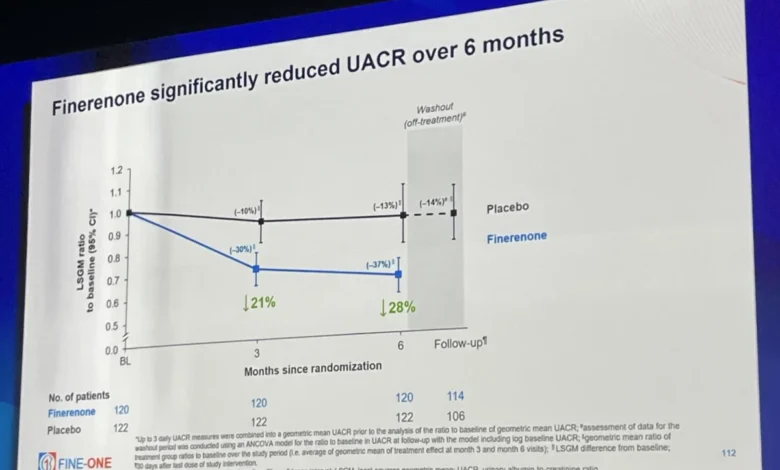
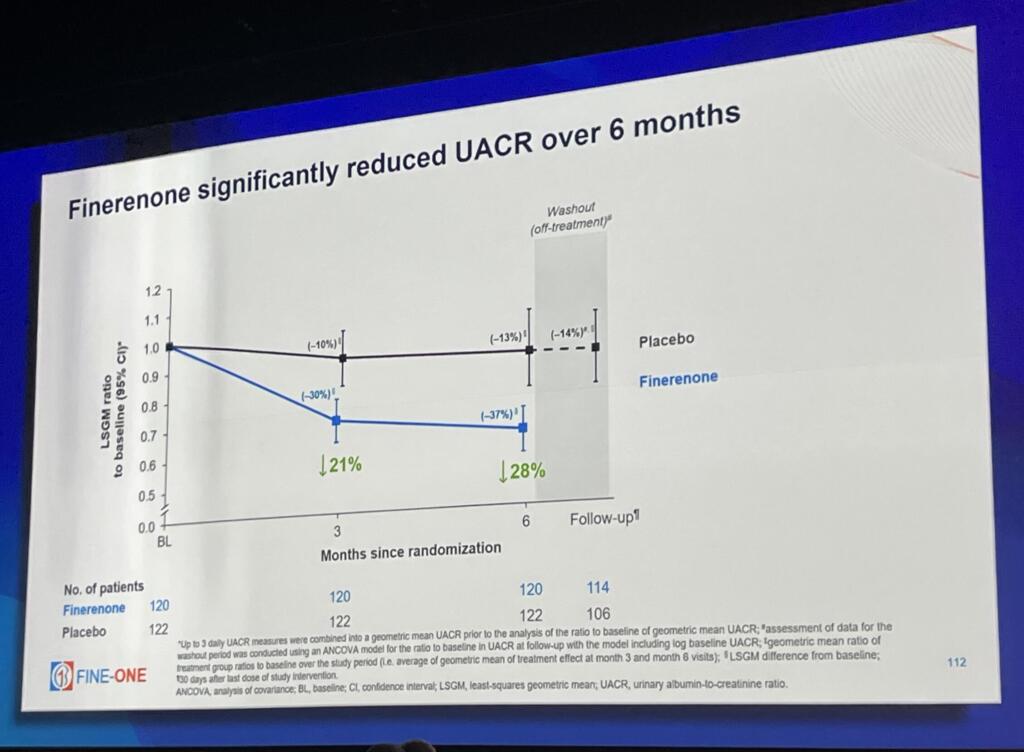
The path to this landmark approval was paved by extensive clinical development, most notably the landmark global Phase 3 FINE-ONE clinical trial sponsored by Bayer. The trial was meticulously designed to evaluate the safety and efficacy profile of finerenone specifically in populations living with CKD and type 1 diabetes—a demographic frequently segregated from broad renal protection trials due to the distinct pathophysiology separating type 1 and type 2 diabetes. The FINE-ONE study successfully met its primary endpoint, demonstrating that administration of finerenone yielded a statistically significant reduction in UACR compared to a placebo.
UACR serves as a primary clinical biomarker for renal damage, reflecting the leakage of albumin proteins through compromised glomerular filters in the kidneys. By successfully lowering UACR levels, clinicians can reasonably project a deceleration in the overall progression of kidney disease. While the FINE-ONE trial specifically targeted surrogate biomarker reduction, extensive foundational data from parallel trials involving type 2 diabetes cohorts have robustly established that sustained reductions in UACR directly correlate with long-term improvements in hard renal and cardiovascular endpoints. These vital findings were subsequently published in the New England Journal of Medicine, providing the peer-reviewed empirical foundation necessary to support regulatory review. Furthermore, clinical observations confirmed that the therapy was exceptionally well-tolerated by patients, showing a favorable safety profile with minimal serious adverse events reported throughout the study period.
The historical timeline of finerenone highlights its expanding therapeutic utility across overlapping cardiometabolic conditions. The drug initially gained regulatory clearance in July 2021 for the treatment of chronic kidney disease associated with type 2 diabetes, a decision that transformed nephrology care for millions of patients globally. Building upon this success, regulatory agencies expanded the drug’s indications in July 2025 to include specific adult populations suffering from heart failure. Today’s announcement regarding type 1 diabetes represents the culmination of years of targeted clinical research, successfully bridging a long-standing therapeutic gap for a specialized patient demographic.
The successful realization of this clinical milestone was significantly accelerated by strategic advocacy and collaborative funding models within the health sector. Breakthrough T1D, a leading global organization dedicated to type 1 diabetes research and advocacy, played a pivotal operational role by strategically collaborating with Bayer to support the execution of the FINE-ONE clinical trial. This partnership exemplifies a growing trend in modern biopharmaceuticals, wherein patient-focused nonprofit organizations actively co-invest in translational research to fast-track treatments for underserved complications.

Industry stakeholders and clinical leaders have been swift to voice their support following the FDA’s announcement. Jonathan Rosen, Ph.D., Research Director at Breakthrough T1D, emphasized the profound implications of the decision for the broader patient community. "Today, there are few treatments available for chronic kidney disease, a common complication of type 1 diabetes," Rosen stated. "The approval of finerenone (brand name Kerendia) is a huge win for the T1D community. Breakthrough T1D thanks the FDA for its review and approval and Bayer for their commitment to giving people with T1D a new therapeutic option for chronic kidney disease."
From a health economics and public health perspective, the introduction of finerenone into the T1D-CKD treatment landscape is anticipated to yield substantial downstream benefits. By halting or slowing the progression of renal damage at earlier stages, healthcare systems may witness a reduction in the incidence of costly and invasive interventions such as dialysis and kidney transplantation. Moreover, given the intrinsic link between renal dysfunction and cardiovascular morbidity in diabetic populations, mitigating kidney disease progression is expected to simultaneously lower the burden of heart-related complications among T1D patients.
Looking toward the broader horizon, the approval of finerenone serves as a validation of specialized clinical trial designs that intentionally include type 1 diabetes patients in renal and cardiovascular outcome studies. Historically, clinical trials evaluating novel diabetic kidney therapies frequently excluded individuals with T1D, leaving clinicians to extrapolate treatment guidelines derived from type 2 diabetes populations—a practice complicated by distinct underlying disease mechanisms, younger patient ages at onset, and unique glycemic management challenges. The success of the FINE-ONE trial establishes a robust precedent for future pharmaceutical development, signaling to industry sponsors that investigating therapies across the entirety of the diabetes spectrum is both clinically viable and commercially necessary.
As finerenone transitions from clinical trial protocols into real-world clinical practice, medical societies and endocrinology networks are preparing educational initiatives to ensure that primary care physicians, nephrologists, and endocrinologists promptly identify eligible patients. Given that early intervention is paramount in preserving renal function, optimizing the adoption of once-daily finerenone therapy among adults with T1D and early-stage CKD will be a critical objective for healthcare providers in the months ahead.
Ultimately, the FDA’s approval of finerenone transcends a routine pharmaceutical authorization; it represents the breaking of a thirty-year therapeutic drought for individuals navigating the compounded complexities of type 1 diabetes and chronic kidney disease. Supported by rigorous clinical data, strategic cross-sector partnerships, and an unwavering commitment from the patient advocacy community, this milestone opens a promising new chapter in preventative nephrology and patient care.