Early childhood education has undergone a significant paradigm shift over the past decade, moving away from rote memorization and isolated worksheet drills toward immersive, play-based learning environments. Among the most transformative developments in preschool pedagogy is the intentional integration of functional literacy into dramatic play centers. Rather than teaching the alphabet in a vacuum, modern educators are leveraging imaginative spaces—such as mock cafes, veterinary clinics, and grocery stores—to demonstrate how reading and writing function as essential tools in daily life. This approach not only fosters social and emotional growth but also builds a robust foundation for lifelong literacy skills long before children formally enter kindergarten.
The Evolution of Play-Based Literacy Frameworks

Historically, early childhood literacy instruction often mirrored traditional elementary school models, relying heavily on flashcards, tracing sheets, and sedentary writing exercises. However, extensive developmental research has consistently shown that young children learn best through active engagement, sensory exploration, and social interaction. Organizations such as the National Association for the Education of Young Children (NAEYC) have long advocated for playful, literacy-rich environments that respect the cognitive developmental stages of preschool-aged children.
By embedding text into the natural flow of dramatic play, educators bridge the gap between abstract symbols and real-world application. When children pretend to be waiters taking orders, veterinarians recording pet diagnoses, or postal workers sorting mail, they experience literacy as a purposeful, communicative act. This methodology transforms writing from a tedious school assignment into an empowering activity that makes young learners feel capable and "grown-up."
The Three Core Tiers of Functional Literacy in Preschool

According to leading early childhood literacy experts, implementing functional literacy within a dramatic play setting typically occurs across three progressive tiers. Each tier corresponds to a child’s evolving cognitive and developmental readiness, ensuring that all students—regardless of their current reading abilities—can actively participate and benefit.
Level 1: Environmental Print and Immersion
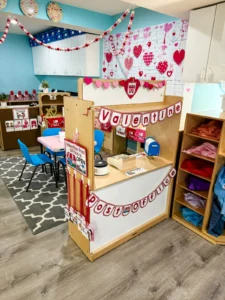
The foundational step in developing functional literacy is immersion in a print-rich environment. Environmental print encompasses the signs, logos, labels, and symbols that permeate everyday life, from street signs to grocery store aisle markers. In a preschool dramatic play area, this involves incorporating recognizable text into props and decor.

For pre-readers, environmental print demonstrates that text has a constant presence and a specific, reliable meaning. A "Café Open" sign, labeled storage bins for props, or directional arrows on a play mat help children understand that print carries a message. Furthermore, these authentic details enhance the immersive quality of the play center, making the scenario more enticing and engaging for the students.
Level 2: Reading for Information and Decision-Making
Once children become comfortable with environmental print, they naturally progress to the second tier: utilizing text to gather information and guide decisions. At this stage, children move beyond merely recognizing isolated words or symbols and begin treating print as an active resource.

In a restaurant dramatic play setup, for example, a child will look at a menu featuring both pictures and bold text to decide what to "order." In a pet shop center, children reference care instructions or price lists to determine how to treat a stuffed animal. This level encourages critical thinking, problem-solving, and comprehension, teaching young learners that reading serves a functional purpose in executing tasks and solving problems.
Level 3: Purposeful Writing and Communication
The pinnacle of functional literacy in an early childhood setting occurs when children are provided with a compelling, authentic reason to use writing tools. In a traditional classroom, asking a preschooler to practice writing their name can feel arbitrary. However, when that same child is working behind the counter of a mock taco stand and needs to write down a customer’s specific order on a notepad, the act of writing becomes entirely necessary and deeply motivating.

Providing clipboards, order pads, sign-in sheets, and dry-erase boards transforms the dramatic play area into a bustling communication hub. Children experiment with emergent writing—ranging from scribbles and mock letters to conventional spelling—driven by the intrinsic desire to communicate effectively within their play scenario.
Implementation Strategies for Early Childhood Educators
Integrating functional literacy into existing classroom spaces does not require a costly overhaul or a complete redesign of the curriculum. Early childhood specialists recommend a gradual, intentional approach. Teachers can start by auditing their current dramatic play themes and asking simple questions: Where do adults naturally read and write in this scenario?
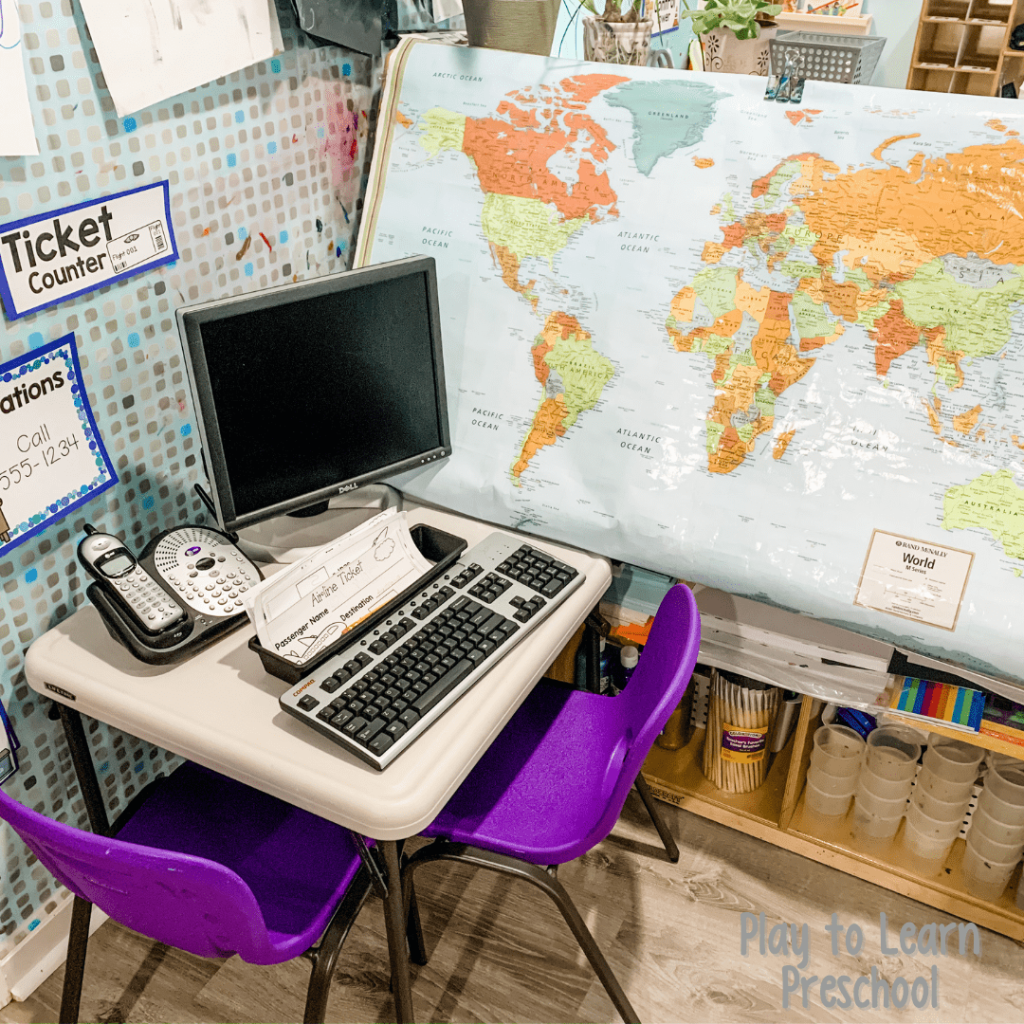
For instance, a doctor’s office dramatic play center can be instantly enriched by adding clipboards with patient charts, prescription pads, appointment reminder cards, and a check-in clipboard. A grocery store setup naturally accommodates shopping lists, price tags, and cash register receipts. By introducing these small, purposeful elements, educators create an environment where literacy learning happens organically through play.
Broader Implications and Long-Term Educational Impact
The widespread adoption of functional literacy frameworks in preschool classrooms carries significant implications for early childhood education policy and practice. Longitudinal studies in educational psychology indicate that children who experience literacy as a dynamic, meaningful tool rather than a set of mechanical rules develop stronger reading comprehension, vocabulary, and writing skills later in their academic careers.

Moreover, embedding literacy into social play supports holistic development. As children negotiate roles, share writing materials, and collaborate on pretend-play narratives, they simultaneously build crucial social-emotional competencies such as empathy, negotiation, and self-regulation.
As educational standards continue to emphasize comprehensive, student-centered learning, the integration of functional literacy within dramatic play serves as a model for effective pedagogy. By respecting the natural ways in which young children explore the world, educators can cultivate a generation of confident readers, writers, and critical thinkers who view literacy not as a chore, but as an indispensable key to understanding and engaging with the world around them.
Related posts: